Hawzu vs Zephyr the Zephyr Scale alternative — no Jira seats required
Zephyr Scale and Squad price on your Jira user count, so twelve testers inside a two-hundred-person Jira instance cost you two hundred seats. Hawzu is standalone, licensed per tester, and free for five people, $20 per member after.
Standalone QA — no Jira users to pay for.
Why teams move off Zephyr Scale
Zephyr Scale's problem isn't features. It's that the answer to "who needs a licence?" is decided by your Jira instance, not by your QA team.
Inside Jira, Zephyr Scale works. Test cases live next to the stories they verify, permissions follow your existing project roles, and nobody has to learn a second tool or remember a second password. For a team whose entire process already runs on Jira, that coherence is worth a lot and is the main reason to stay.
The bill is where it stops being comfortable. Marketplace apps are priced on your Jira user tier. If 200 people have Jira accounts and 12 of them run tests, you buy 200. Growth makes it worse in a way that has nothing to do with QA: hire twenty engineers who will never open a test case, and your test management cost goes up.
The same coupling shows up when you need to let someone in. A contractor doing a week of exploratory testing, an analyst signing off on UAT, a support lead verifying a fix — each of them needs a Jira seat before they can touch a test. Teams end up either over-licensing Jira or running that work in a spreadsheet, which is how test evidence starts leaking out of the system of record.
Hawzu decouples the two. It's a standalone platform with native requirements and defect tracking, so QA has its own system with its own user list — invite the contractor, don't buy them a Jira seat. Connect Jira when you want issues to flow, and keep engineering exactly where it is. What you gain on top is the release layer Zephyr doesn't have: executions gated to a release, coverage rolled up a requirement tree, and a scored go/no-go at the end of it.
See Hawzu in action
Anyone can claim they beat Zephyr. Here's exactly what we built.
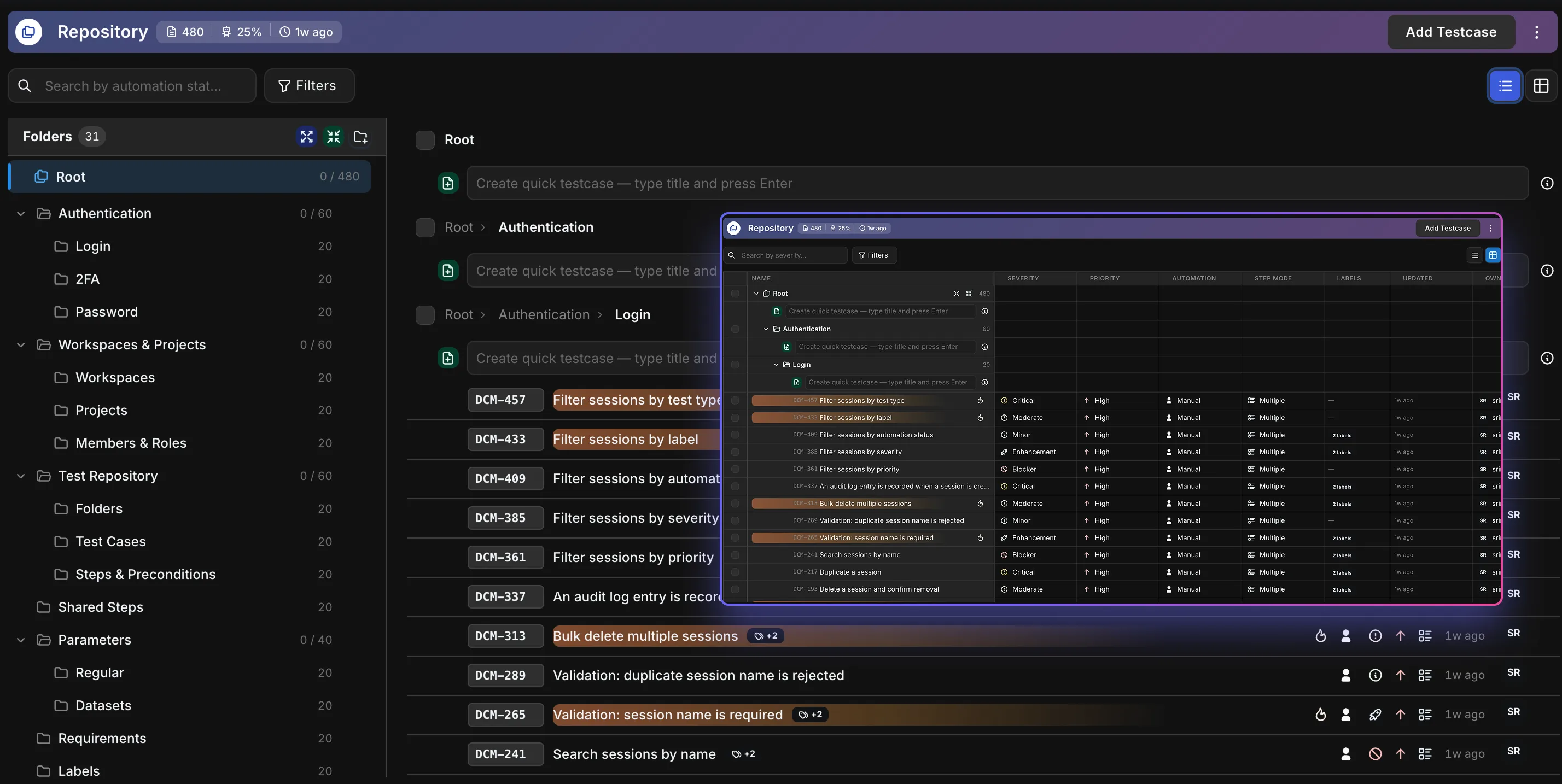
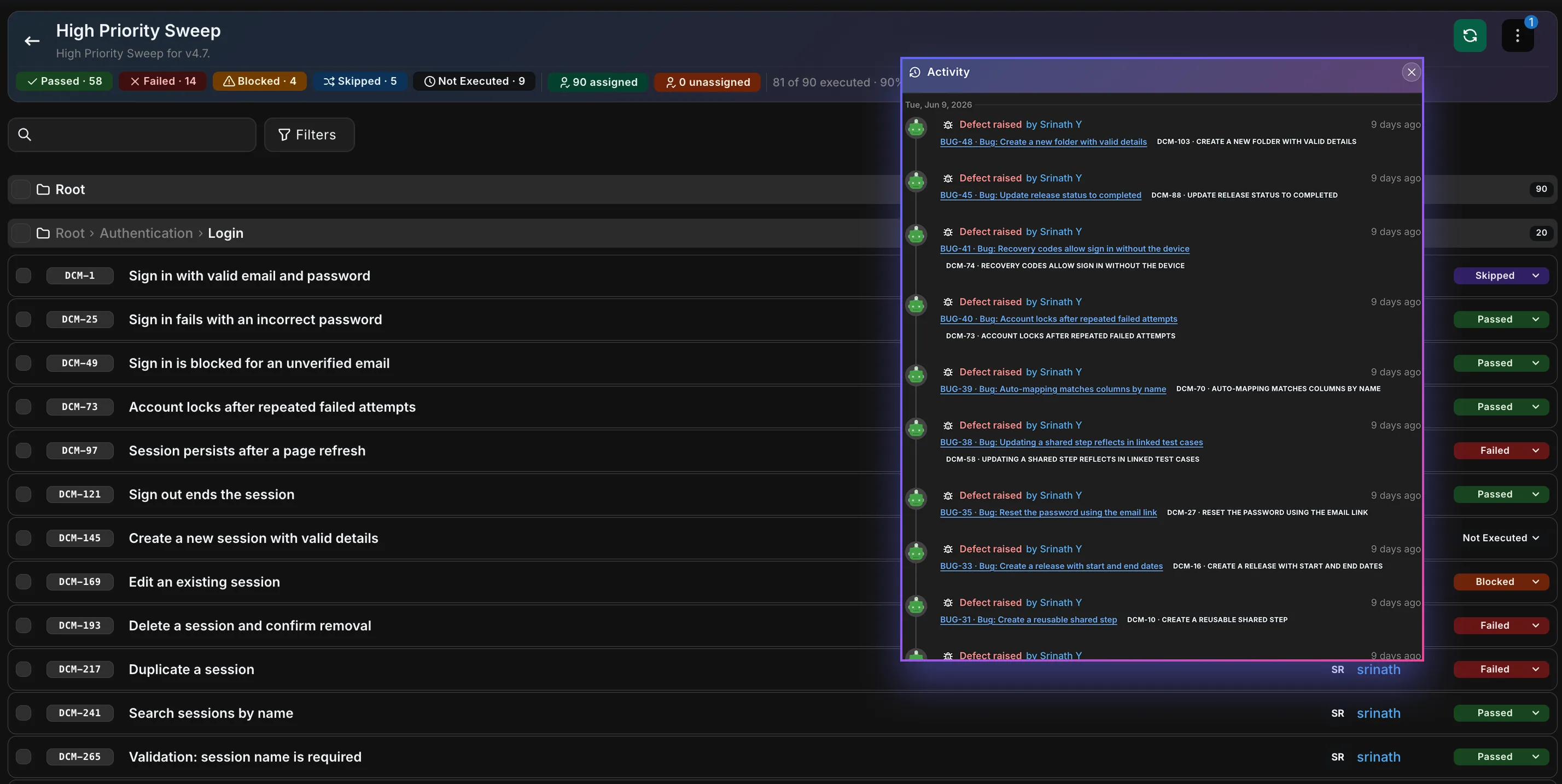
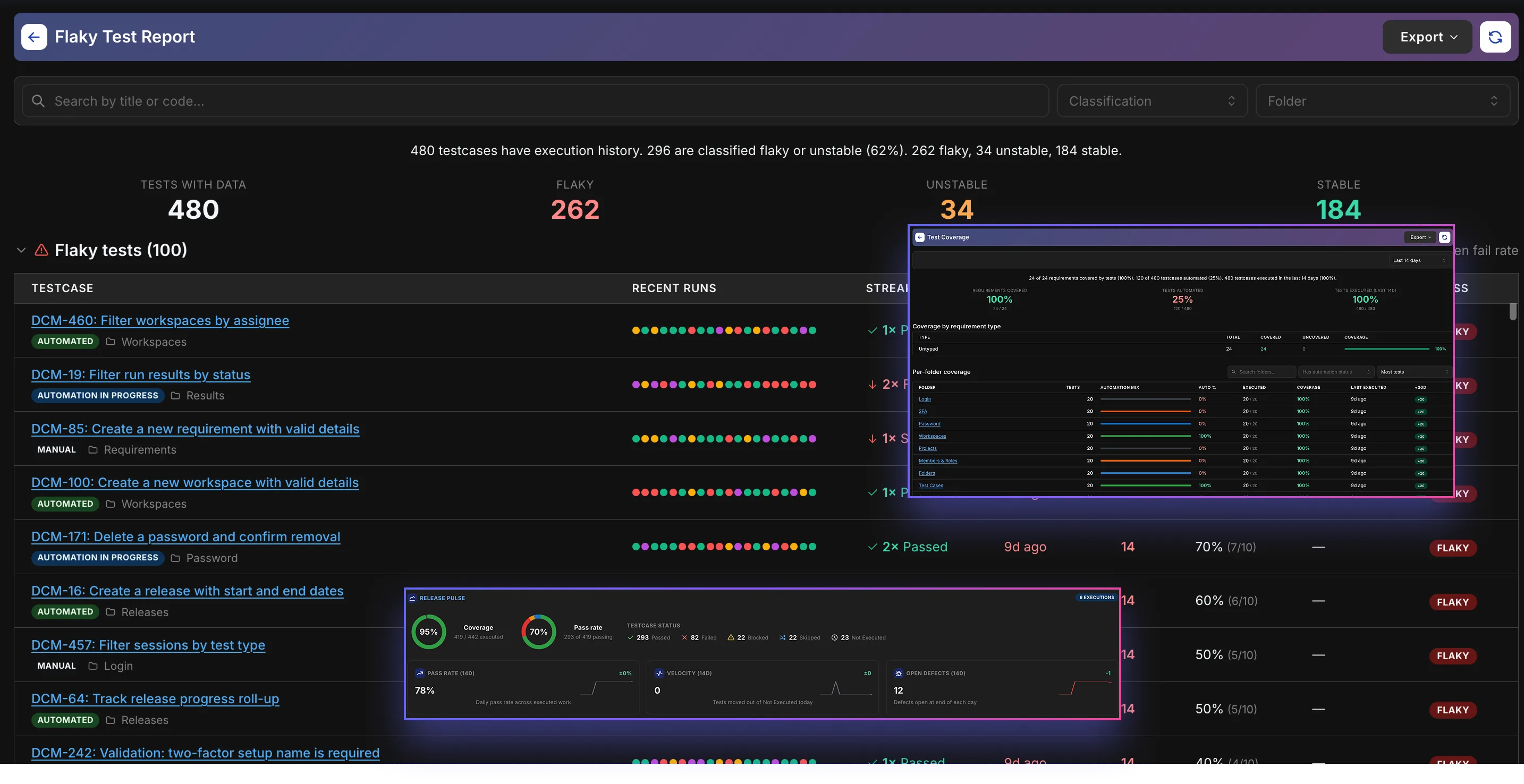
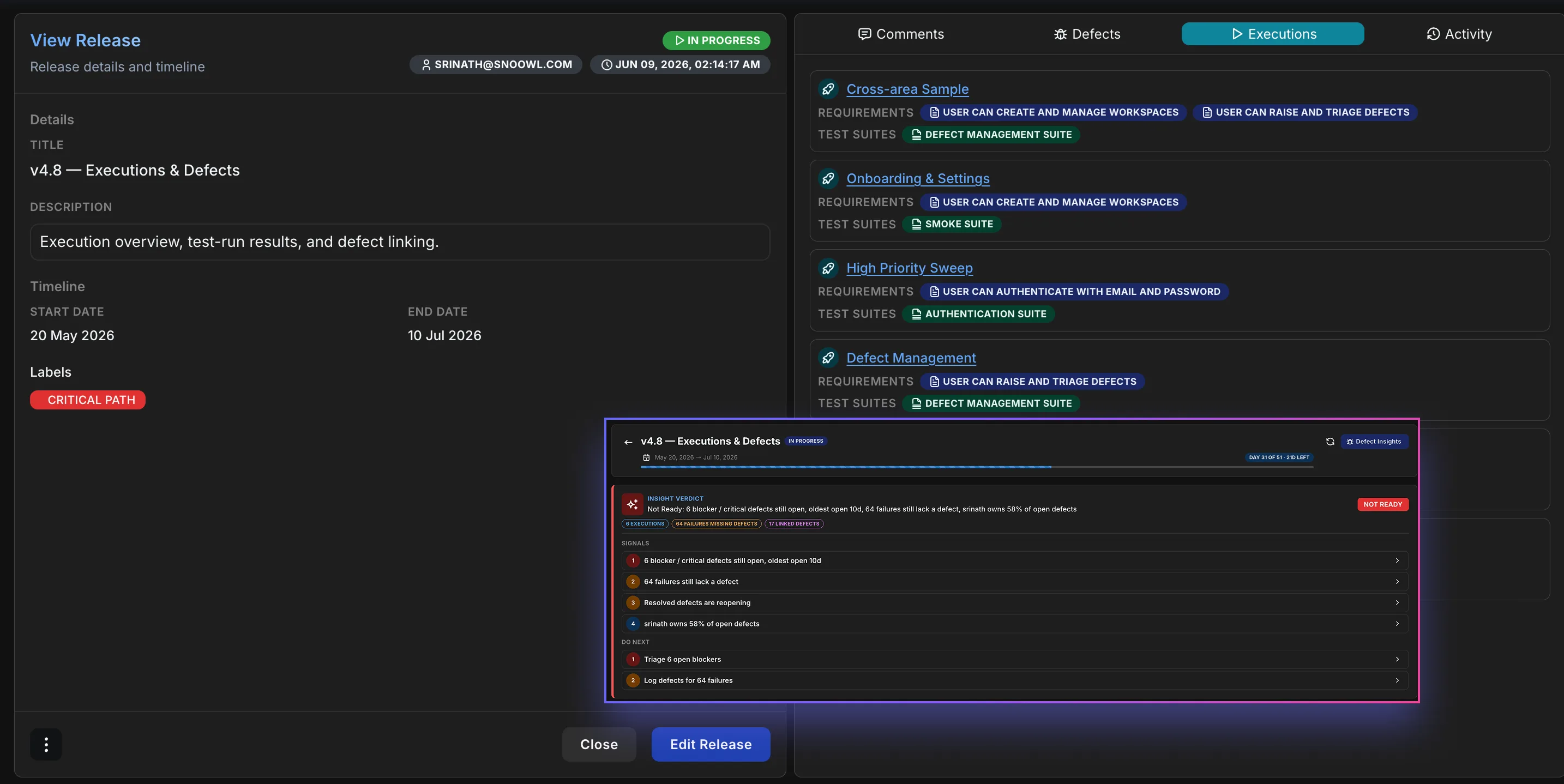
Hawzu vs Zephyr, at a glance
Comparison reflects publicly available information and is kept as fair as we can make it. Pricing checked 20 Jul 2026 against Zephyr's own published pricing. Details may change — check their site for the latest. Last updated 4 Oct 2026.
Why teams pick Hawzu
Standalone — no Jira required. Run Hawzu on its own, or connect any tracker (Jira, GitHub, GitLab, Azure DevOps, Linear) when you want.
Licence the people who test, not the people who happen to have Jira accounts — bring in contractors, analysts and UAT testers without buying Jira seats.
Native defects, requirements, releases, and Observatory analytics in one place — not scattered across Jira add-ons.
AI test case generation, plus similar-bug search over your defects.
Standalone and modern — free for five people, $20 per member after.
That reaches your editor as well. Hawzu speaks the Model Context Protocol, so a client reads cases, runs and defects straight from the system of record — reading only, bounded by your role.
When Zephyr might still make sense
If your whole process already lives in Jira, Zephyr Scale keeps testing in the same place — same permissions, same boards, same reporting, nothing to integrate.
Everyone who touches testing already holds a Jira licence, in which case per-Jira-user billing costs you nothing extra.
Jira Data Center support if your test data has to stay inside your own perimeter. Hawzu is cloud-only today.
A large, mature ecosystem and a lot of teams who already know it — onboarding a new tester is often zero-effort.
Common questions
Do I need Jira to use Hawzu?
No. Hawzu is fully standalone — native requirements and defect tracking come with it. Connect Jira (or GitHub, GitLab, Azure DevOps, Linear) if you want defects filed there or linked to existing issues, but it's entirely optional.
We have 200 Jira users and 12 testers. What changes on the bill?
That gap is the whole argument. Zephyr Scale is priced on your Jira user tier, so you're licensing 200 people to serve 12. Hawzu is billed per Hawzu user — you'd licence the 12 — and every feature is on every plan, including the free one.
Can contractors and UAT testers use Hawzu without Jira licences?
Yes, and this is usually the practical reason teams look. Hawzu has its own user list and role-based access, so you invite a contractor or a business tester directly. No Jira seat, no temporary licence shuffle, and their evidence stays in the system of record instead of a spreadsheet.
How do I move my Zephyr Scale test cases into Hawzu?
Export your cases from Zephyr to CSV or Excel and run them through Hawzu's import wizard — map Zephyr's columns onto Hawzu fields, preview a sample, and import folder structure with the cases. Embedded images and file links get re-hosted into Hawzu so they don't break when they stop pointing at Jira. We keep Zephyr-specific mappings on hand too: send the export to contact@snoowl.com and we'll map it for you.
What happens to traceability against our Jira stories?
In Hawzu, requirements are native: you link test cases to them, nest them, and see coverage add up from each requirement to its parent. Jira stays where engineering works — when testing finds a defect, file it as a Jira issue or link one that already exists, and Hawzu shows its status. Test cases don't link to Jira stories directly, so most teams moving off Zephyr bring the stories they test against into Hawzu as requirements.
Is there a free Zephyr alternative for teams on Jira?
Hawzu's free plan covers five people in any mix — testers or read-only stakeholders — with three projects. It doesn't expire and doesn't need a card. Your developers keep Jira: connect it, and defects found in testing go straight into Jira as issues. Past five people, Growth is $20 per member a month.
Does Hawzu work with our CI pipeline?
Yes. Hawzu is automation-agnostic — keep whatever framework you run and post a JUnit or xUnit report to a single endpoint, or push individual results through the REST API with a scoped token. We don't execute tests; we manage and analyse them.
Try Hawzu free
Every feature on every plan. Free for five people, $20 per member after — no credit card.