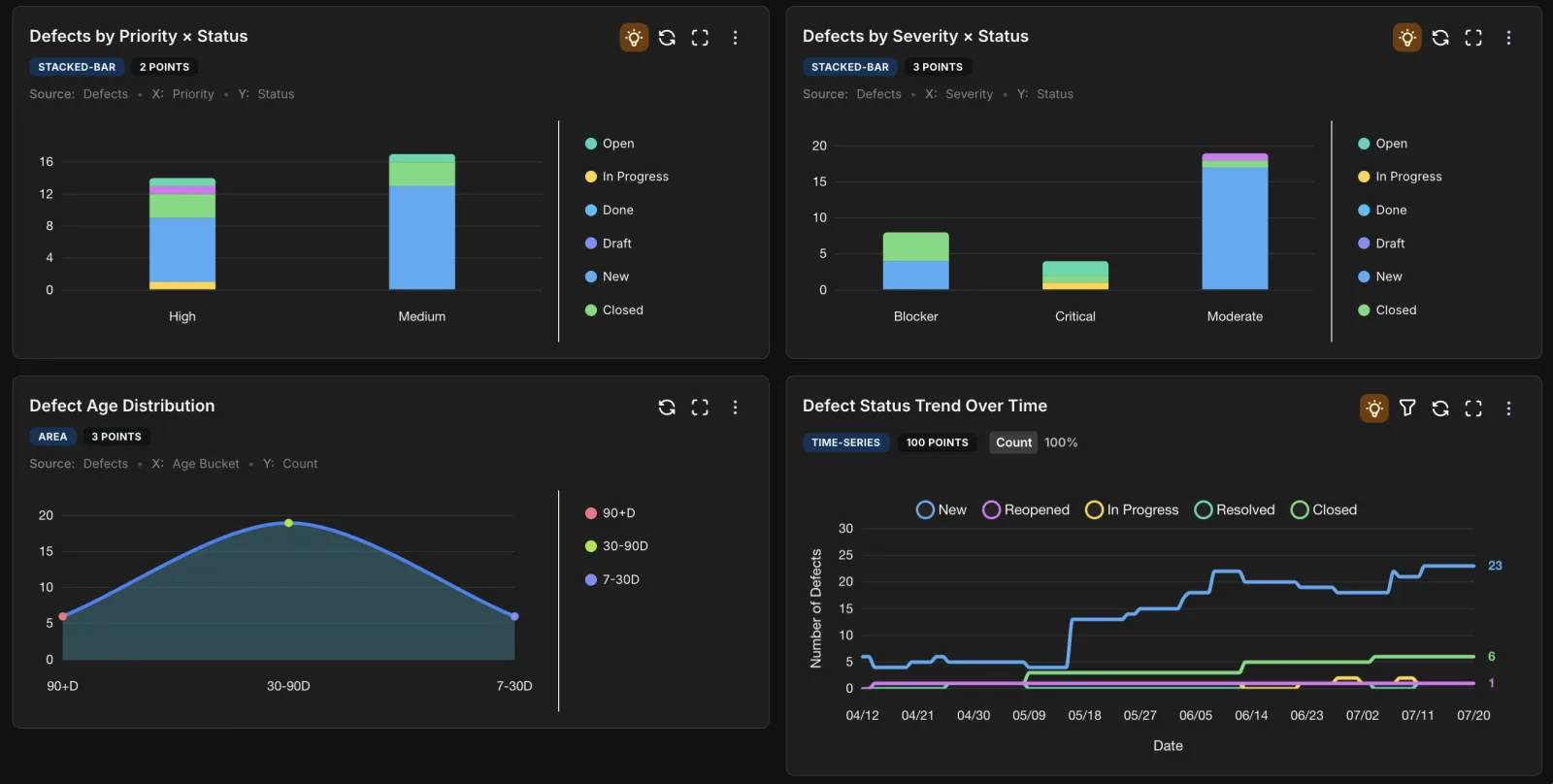
A real defect tracker — native to your tests
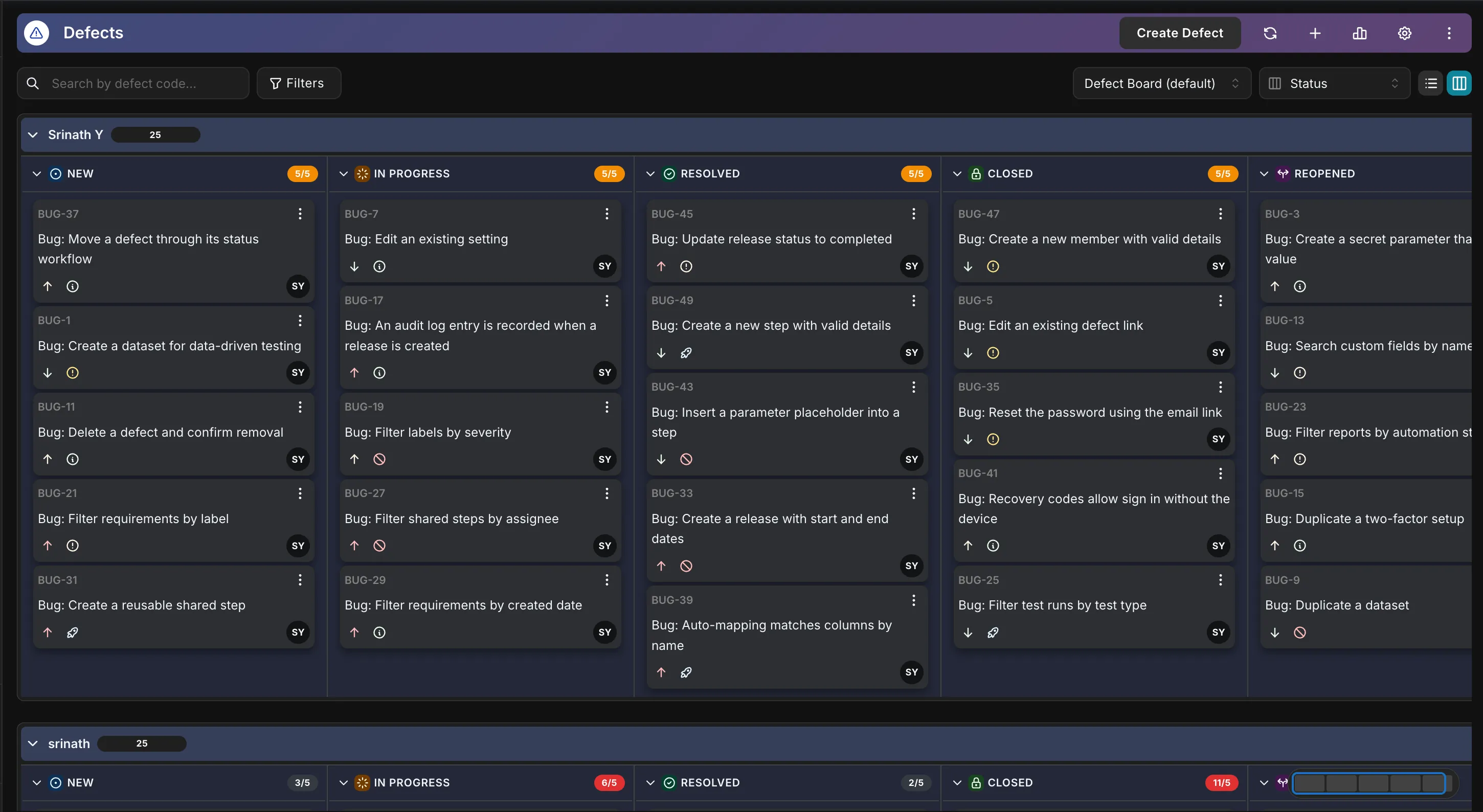
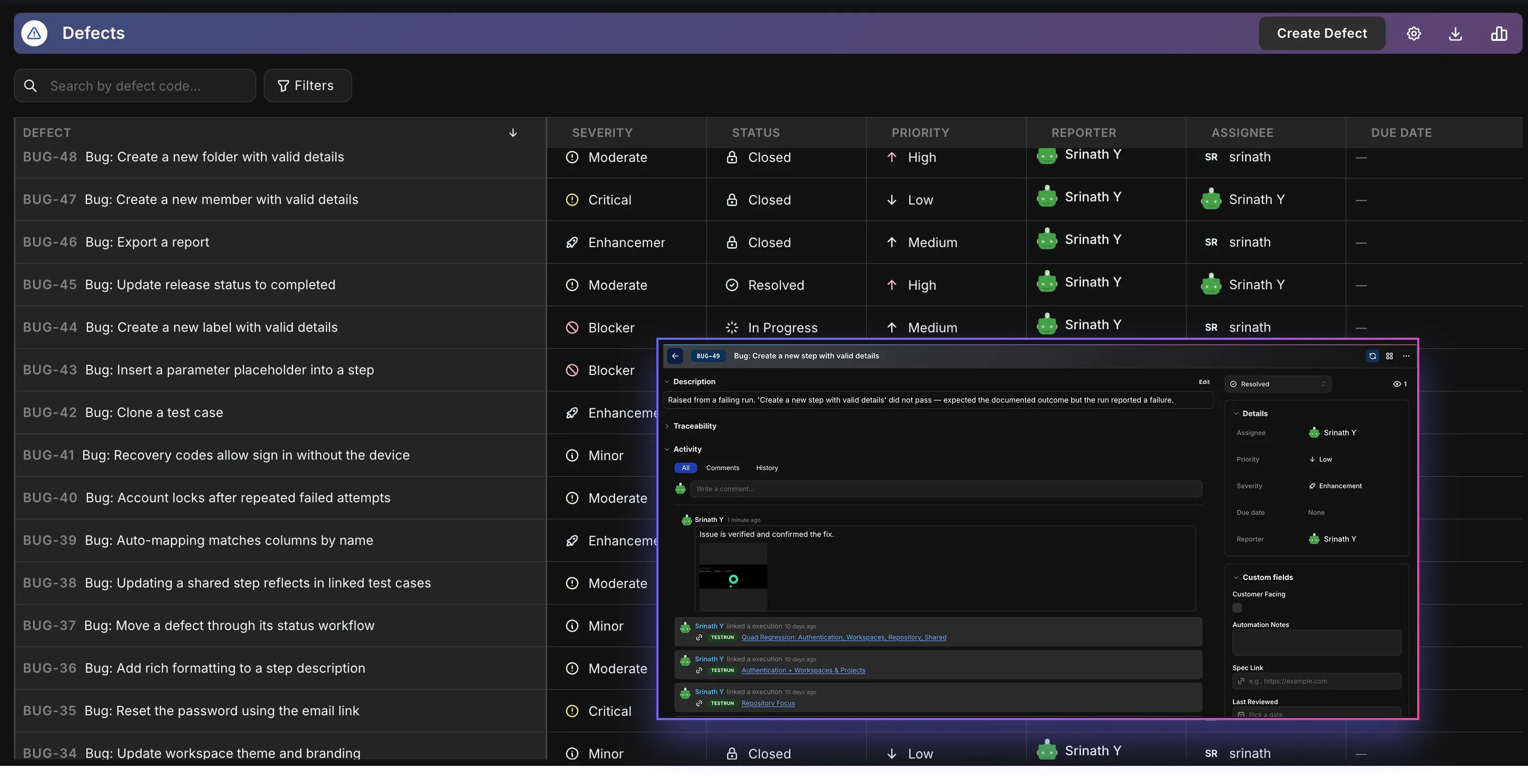
Not an issues tab bolted on. A full lifecycle — New → In Progress → Resolved → Closed, and Reopened when it comes back — with severity, priority, resolution codes, assignees, labels, custom fields, rich descriptions, and a complete history and audit trail on every field.
Catch the duplicate before you file it
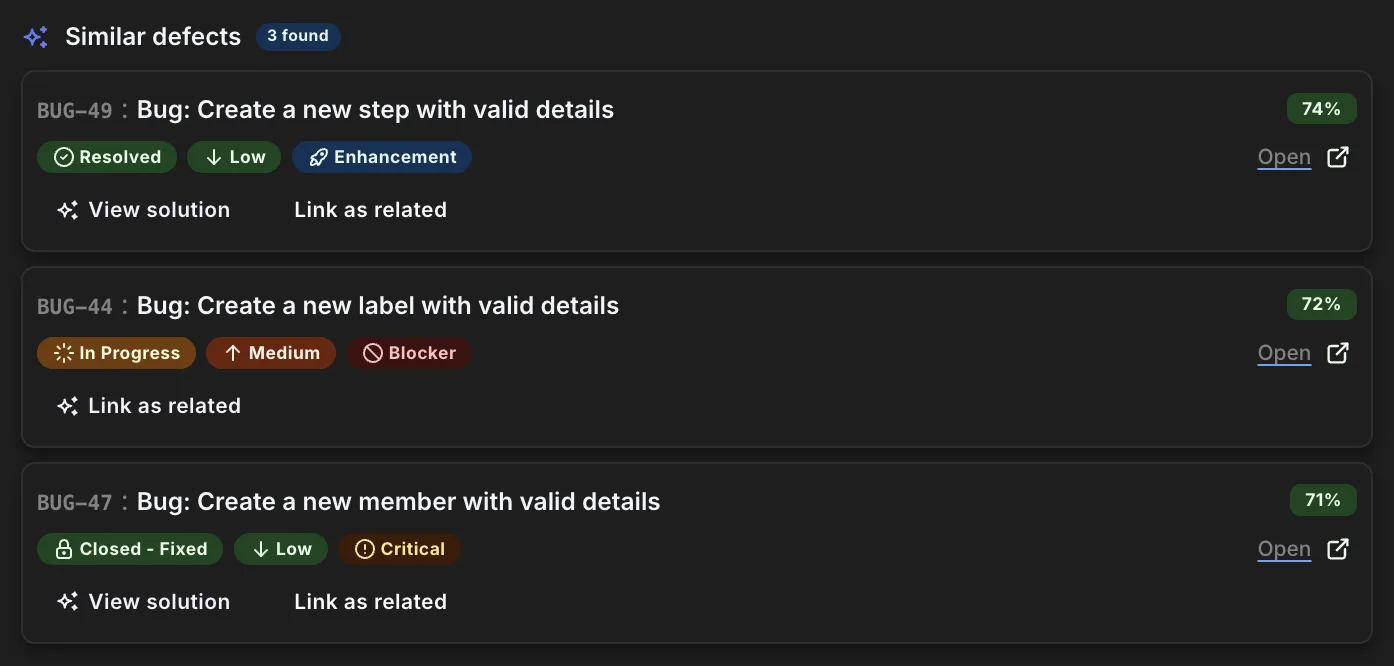
As you type a new defect, Hawzu compares it against your project's existing defects and shows the closest matches with a match score — so you can close it as a duplicate, link it as related, or jump straight to the fix someone already shipped.
Every defect traces to the failing step
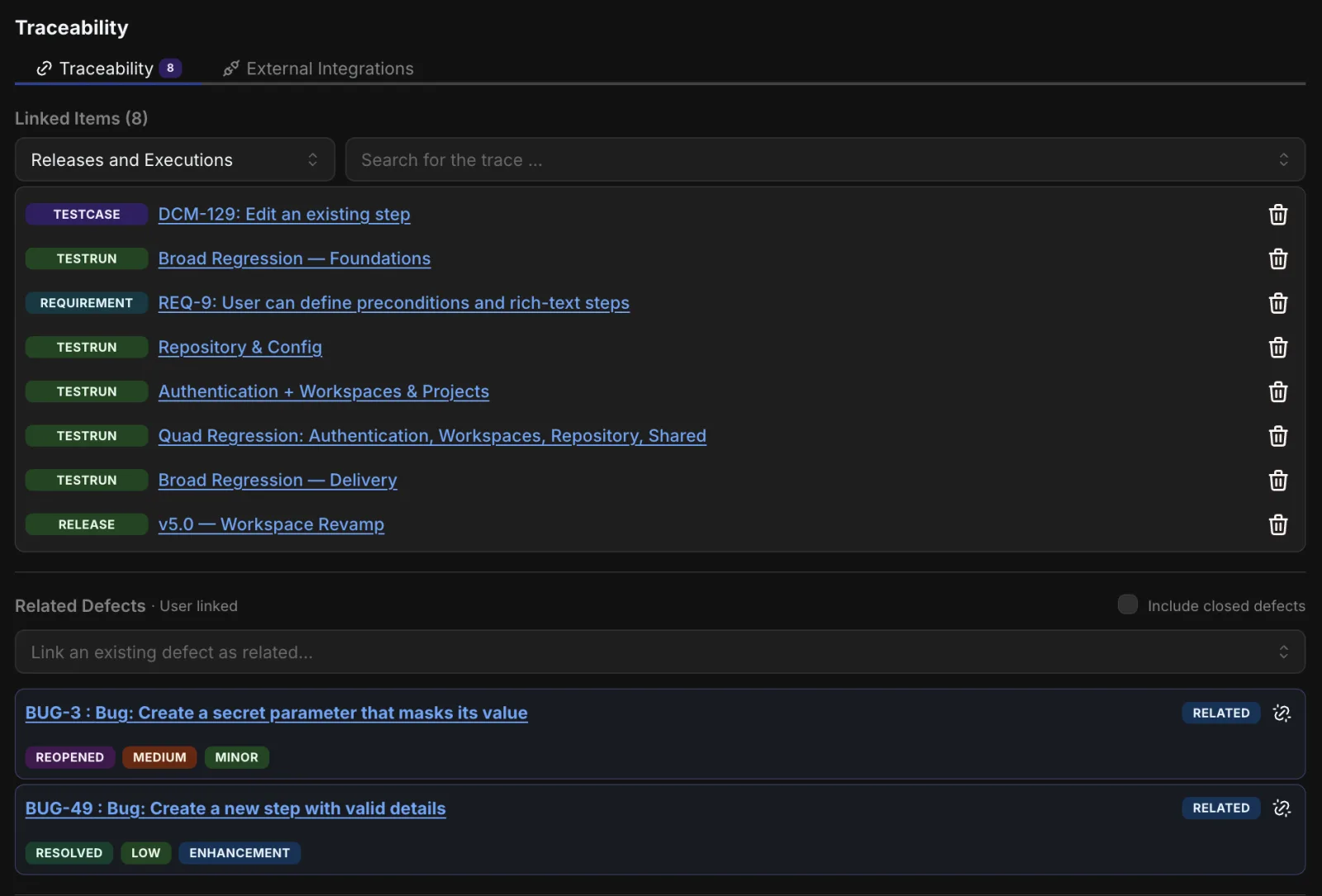
Link a defect to the exact test case — down to the step that failed — and to its execution, release, and requirement. See it from every side, and surface the failed tests that don't have a defect yet — or the defects that never got a regression test, with the missing case created and linked in one step.
Work the board, or work the list
A drag-and-drop Kanban board over your defects — group it by status, assignee, severity, priority, release, or your own dropdown field, split it into swimlanes, and cap a column with a WIP limit. Or stay in the table with fifteen quick filters and insight groups: stale, regression risk, release blockers, needs triage.
Defect-aware release sign-off
Release and execution Defect Insights map every defect to its executions and tests, summarize reopens, and add up to a Defect Health score. Complete or freeze a release and the defect picture is saved as it stood — so your sign-off never drifts.
Native-first — connected when you want
Prefer the bug to live in Jira, GitHub, GitLab, Azure DevOps, or Linear? File it there as you raise the defect — or link an issue that already exists — and Hawzu shows its status, priority, and assignee back on the defect. GitHub connects through a GitHub App and GitLab by authorizing, so there's no token to create or paste. Slack notifications and signed webhooks keep everyone else in the loop.