A hierarchy, not a flat list
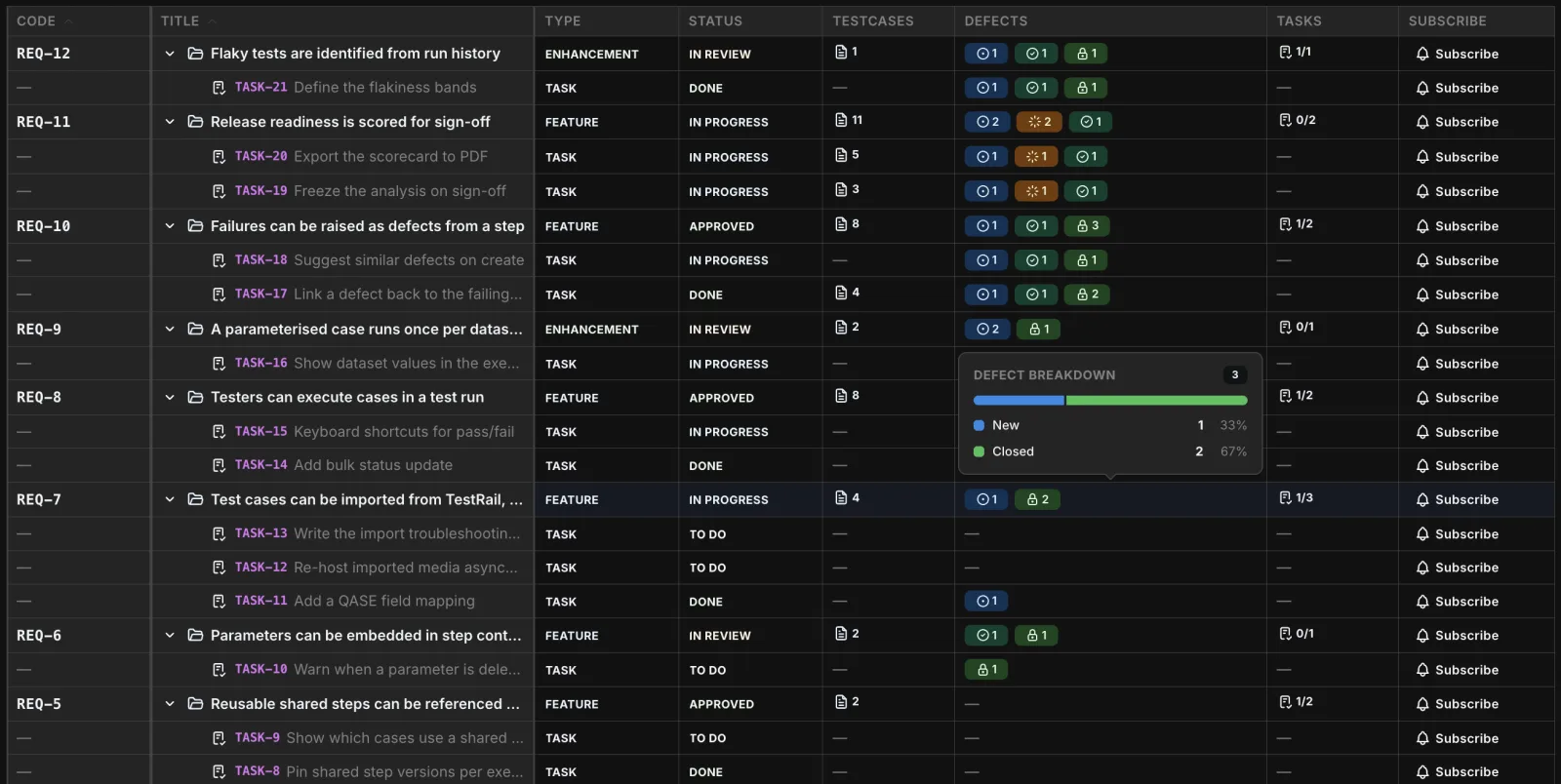
Nest sub-requirements as deep as the work goes, with tasks as the leaves. One tree you expand, collapse, reorder, and move under a new parent — with types (Feature, Bug Fix, Performance, Enhancement) and a real status workflow: Draft → In Progress → In Review → Approved → Rejected → Archived.
Tasks — divide the work, keep the requirement whole
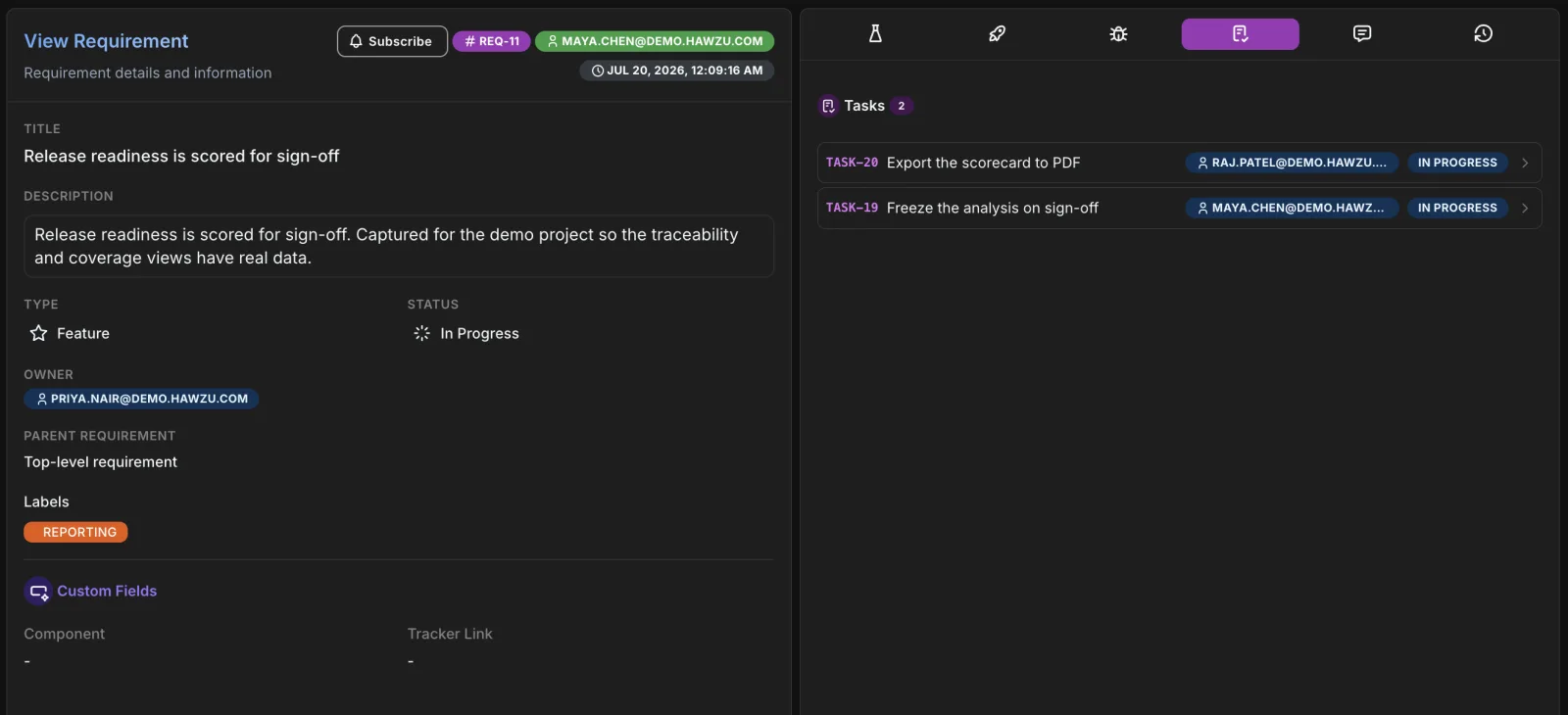
Break a requirement into lightweight tasks — To do, In progress, Done — and hand each to a person or a whole team. “The API” to backend, “the screen” to frontend, “load testing” to QA, all under one requirement, each with its own owner, links, and view.
Link at any level — it adds up automatically
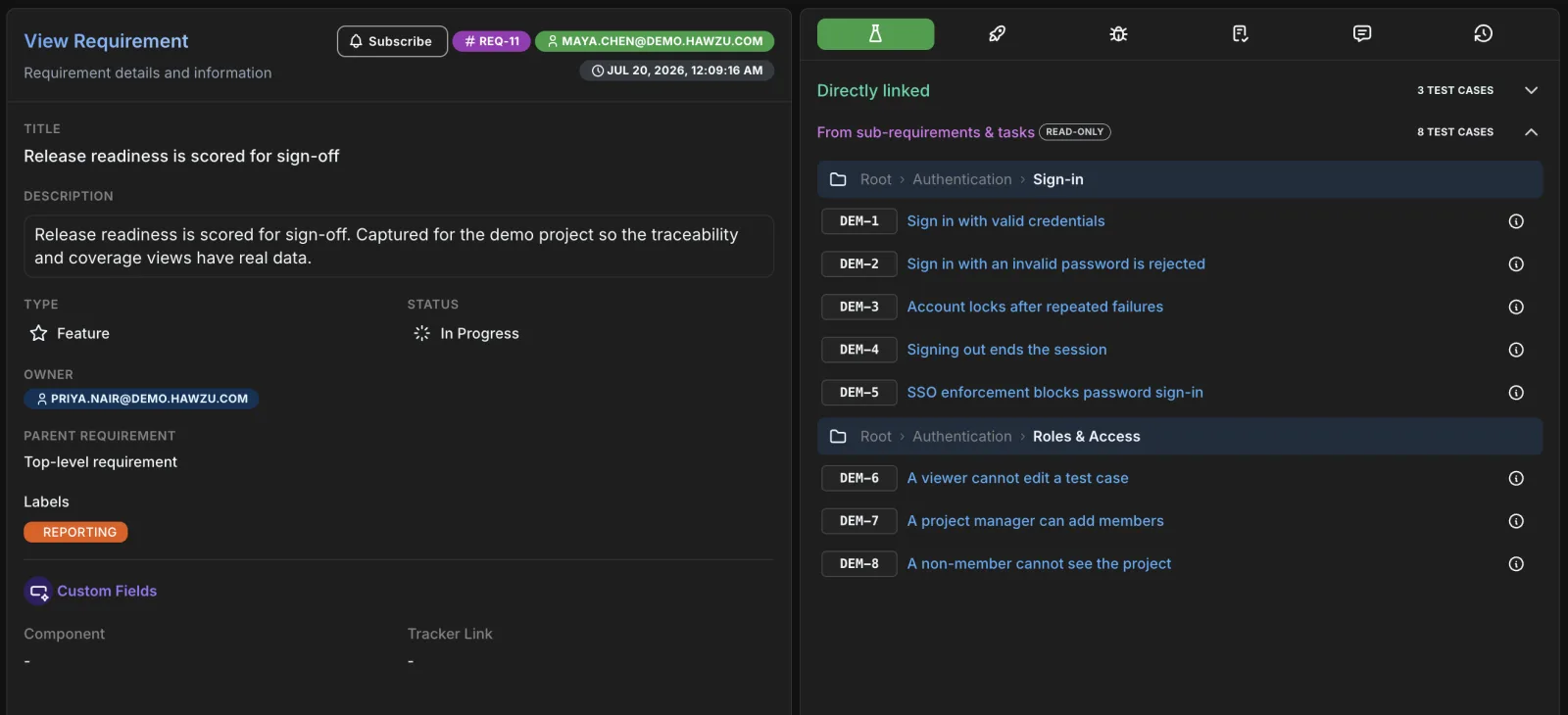
Attach test cases, defects, executions, and releases to a requirement, a sub-requirement, or a task — wherever the evidence lives. Hawzu adds everything linked below a requirement up to it, counts each item once, and keeps the total current. Directly-linked stays yours to edit; inherited is read-only, so nothing's double-counted.
A detail view that answers “is this done?”
One rich view per requirement: a formatted description with attachments, custom fields, an owner (a person or a team), and tabs for its test cases (direct and inherited), releases and runs, defects, sub-items, comments, and a change history with diffs. Watch it, and get pinged when it moves.
The traceability matrix — with explainable risk
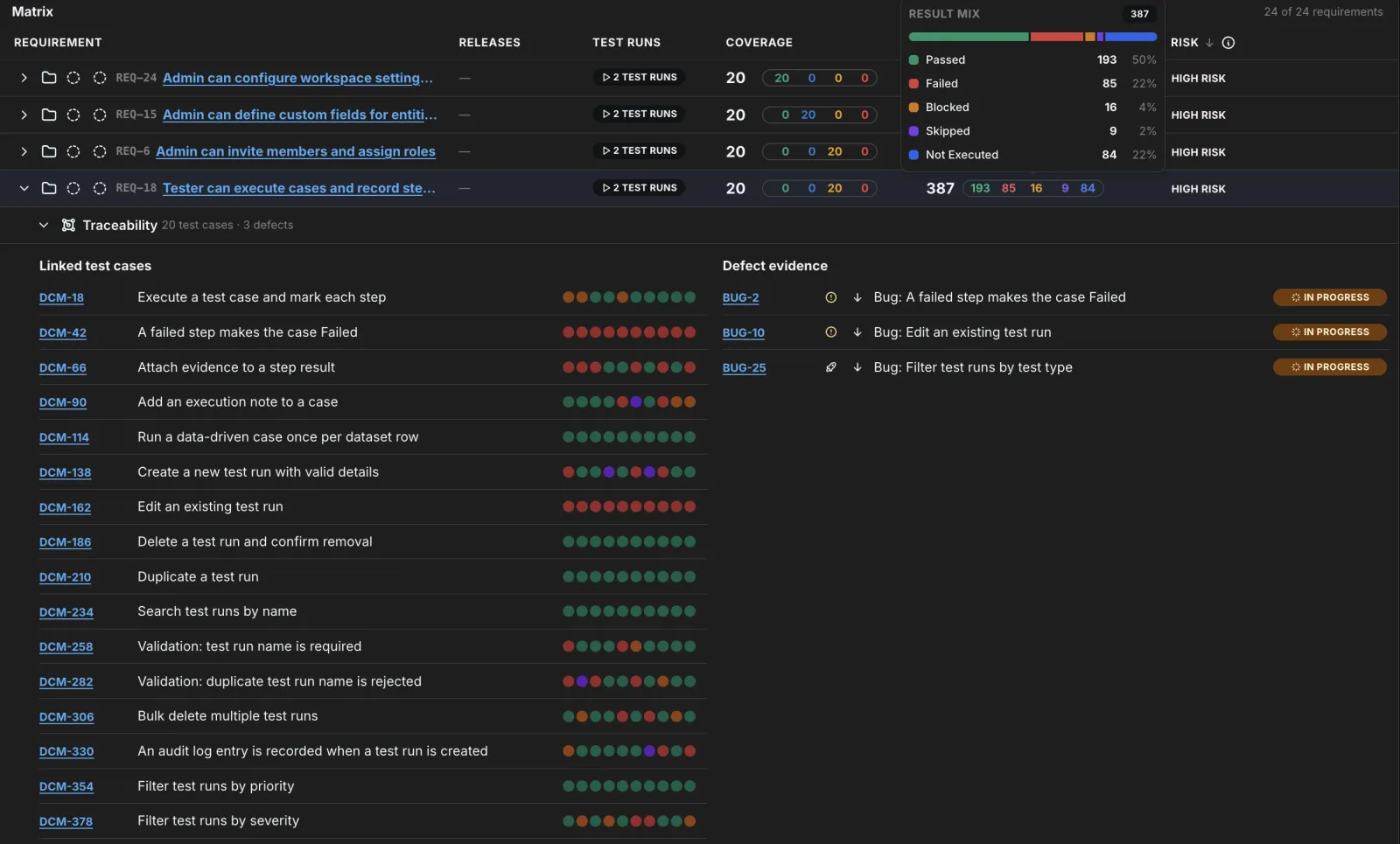
Every requirement mapped to the tests that cover it and the defects they caught, with coverage and validation percentages and a High / Watch / Healthy risk read on every row — rules-based, with the reason spelled out: uncovered, a failing test, a severe open defect, stale evidence. Scope it to a release, and export it.
Rewrite a vague requirement with AI
Turn a loose requirement into one a tester can actually work from. AI rewrites the title or description for clarity and tone, offers a few variations, and shows you the exact before-and-after before anything changes. Your words stay yours — it works on what you wrote rather than inventing requirements, and coverage and risk are never touched.