Hawzu vs TestFLO the standalone TestFLO alternative — no Jira required
TestFLO is a Jira app: your tests are Jira issues, and you're billed on your Jira user tier. Hawzu is a standalone platform with purpose-built test cases, native defects, and dedicated releases — and it's free for five people, $20 per member after.
QA outside Jira — and outside its bill.
Tests as Jira issues: the trade
TestFLO's central design decision is that a test case is a Jira issue. Almost everything good and everything limiting about it follows from that one choice.
Start with what it buys, because it's substantial. If a test is an issue, then JQL queries it, Jira automation acts on it, project permissions govern it, boards display it and every Jira report already understands it. Deviniti didn't have to build a query language, a permission model or a workflow engine — Jira's apply for free, and they're mature. For an organisation that has spent years encoding process into Jira workflows, that inheritance is worth more than any feature list.
The limit is the same sentence read the other way. Jira's issue model was designed for tickets, so anything test-shaped has to be expressed in it. Step-level results, shared steps reused across dozens of cases, parameterised data sets, suite hierarchy — each is modelled on top of a structure that has no native notion of them. It works, and it's more effort than it would be in a purpose-built schema.
Then the commercial layer, which is Atlassian's rather than Deviniti's. Marketplace apps are priced against your Jira user tier. A 500-user Jira instance with 15 testers pays at the 500-user tier. Nothing about the app can change that, and it worsens as engineering grows for reasons unrelated to QA.
Hawzu is the opposite decision: test cases are first-class objects with their own fields, versioning and suite structure, in a system with its own user list. You lose JQL over test data — a real loss if you've built on it — and gain a model that fits testing, plus a release you can gate that ends in a scored go/no-go. Keep Jira for engineering and connect it; only testers need a Hawzu seat.
See Hawzu in action
Anyone can claim they beat TestFLO. Here's exactly what we built.
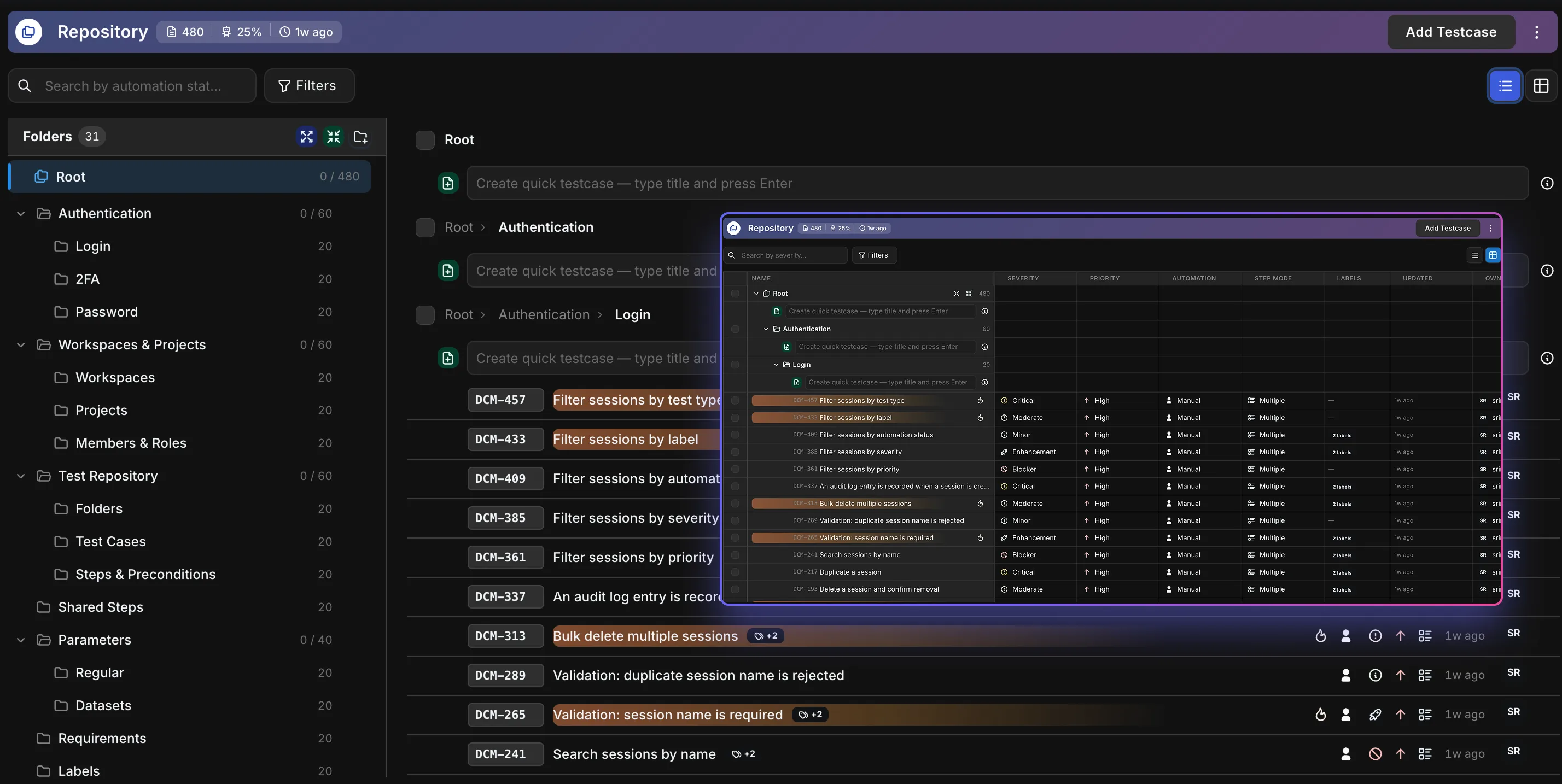
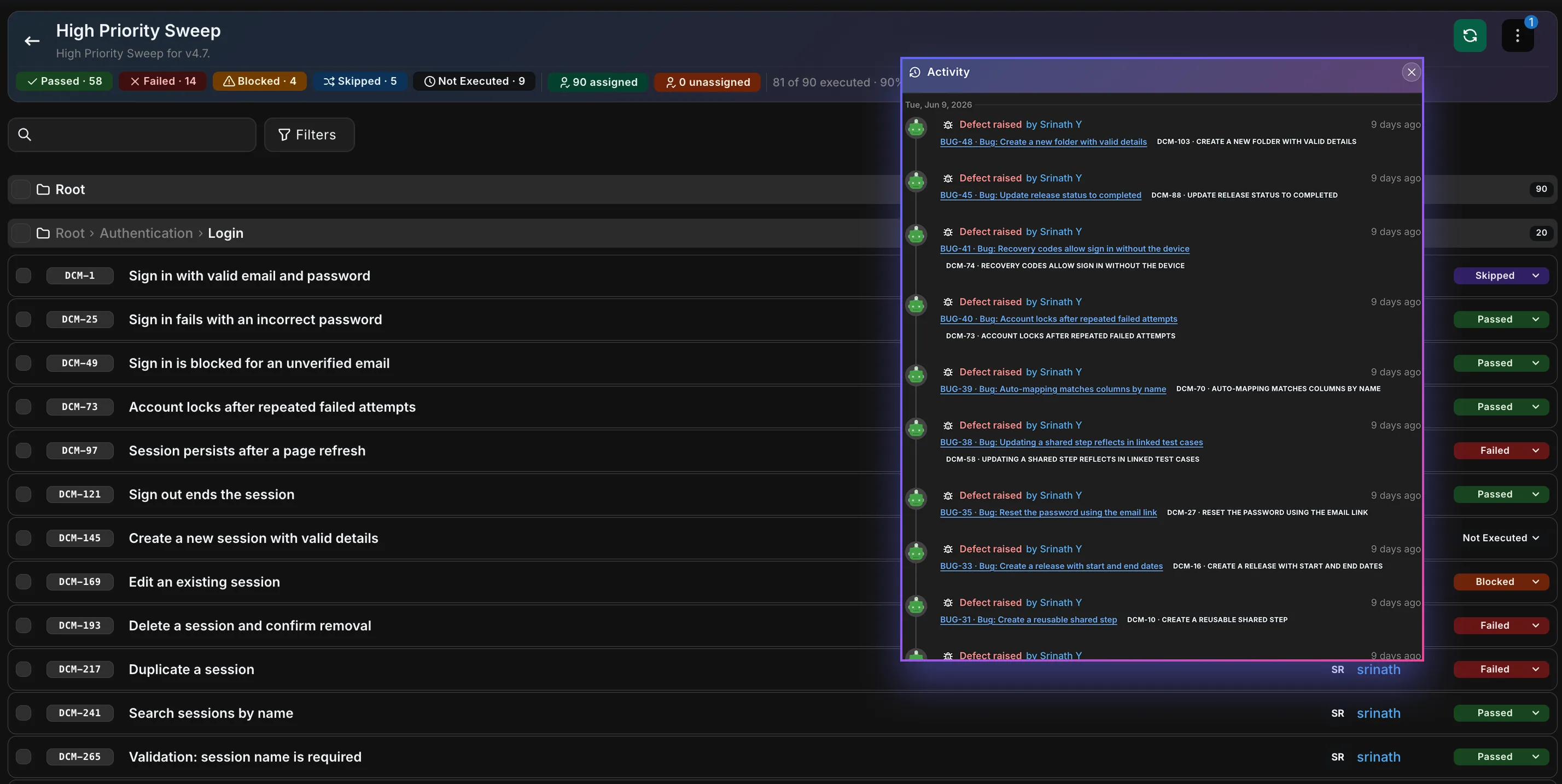
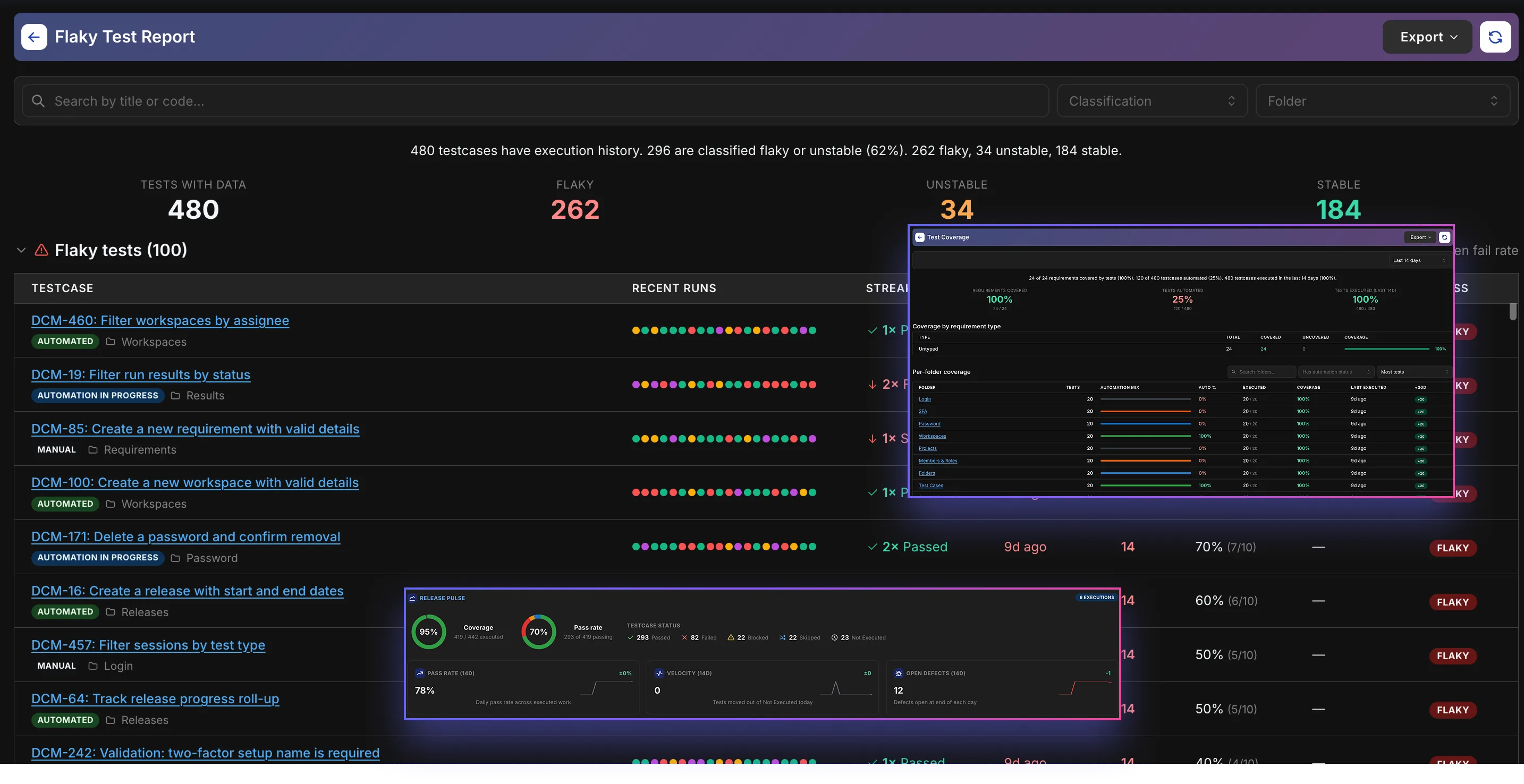
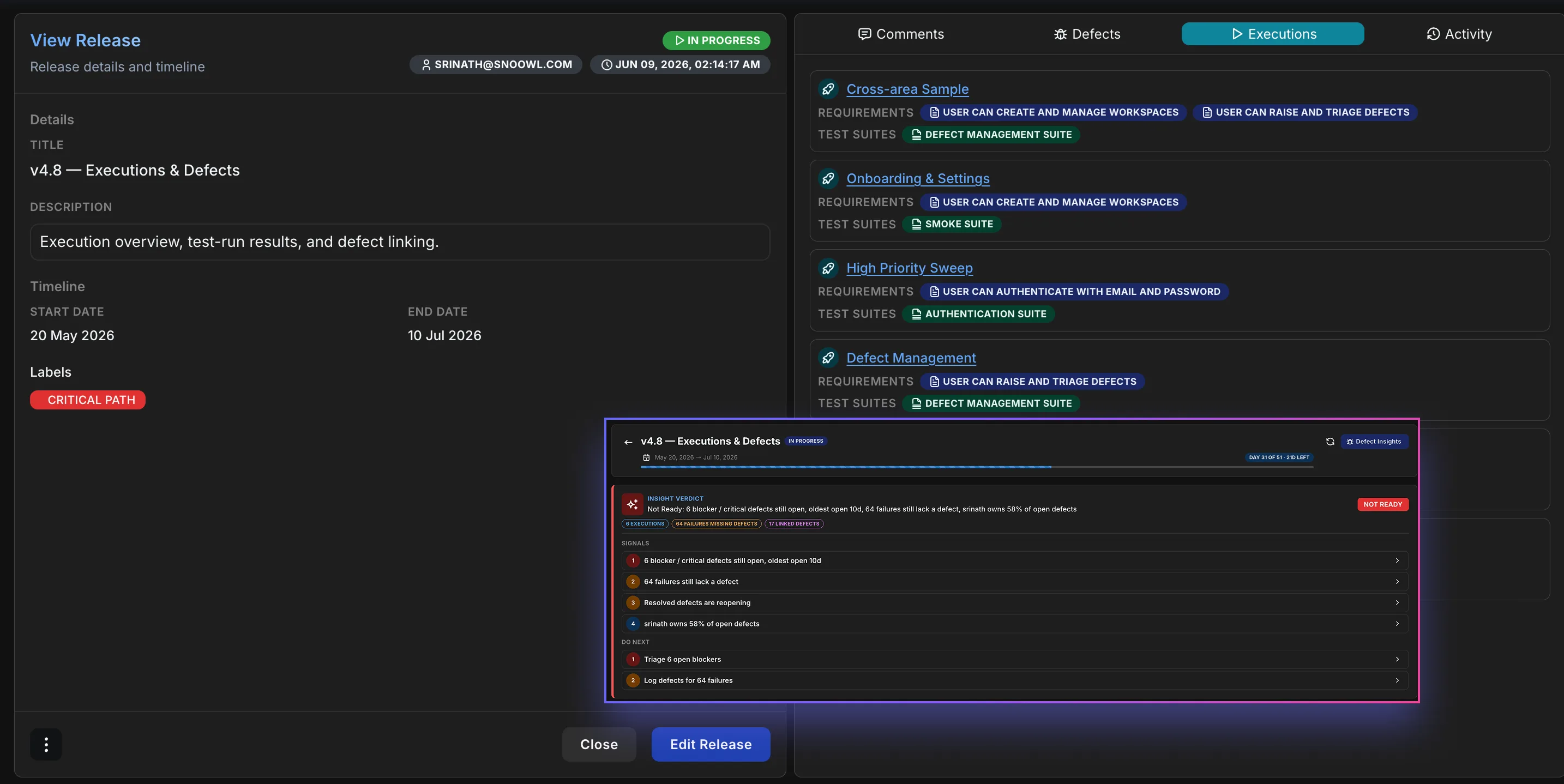
Hawzu vs TestFLO, at a glance
Comparison reflects publicly available information and is kept as fair as we can make it. Pricing checked 1 Aug 2026 against TestFLO's own published pricing. Details may change — check their site for the latest. Last updated 13 Sep 2026.
Why teams pick Hawzu
Standalone — no Jira required. Run Hawzu on its own, or connect any tracker (Jira, GitHub, GitLab, Azure DevOps, Linear) when you want.
Pay for testers, not your whole Jira instance — Marketplace apps are billed on your Jira user tier, even for people who never open a test.
Test cases are first-class objects with their own fields, versioning and suites, rather than issues shaped to fit Jira's schema.
Dedicated release management with release-gated executions and a scored go/no-go — not Jira versions plus a filter.
Built-in Observatory analytics and AI test case generation, plus semantic search over your defects.
Because a case here is its own record, a client can query it directly over MCP — cases, runs, defects and readiness returned read-only, never wider than the role behind the connection.
When TestFLO might still make sense
Your process genuinely lives in Jira. Because TestFLO stores tests as native issues, JQL, Jira automation, permissions, boards and reports all apply to your test data for free — that's a real advantage no external tool can match.
You're on Jira Data Center and need test data inside your own perimeter. Hawzu is cloud-only today.
Your team already has Jira workflow, screen and field conventions they want tests to inherit rather than learn again elsewhere.
Everyone who touches testing already holds a Jira licence, so the per-Jira-user billing costs you nothing extra.
Common questions
Is Hawzu installed into Jira like TestFLO?
No — there's nothing to install. TestFLO is a Jira app that runs inside your instance and is administered through it. Hawzu is a separate hosted product with its own login, so adopting it doesn't need a Jira admin, an app review, or a Marketplace purchase order.
What's the practical difference between test cases as Jira issues and Hawzu's test entities?
TestFLO's approach means your tests inherit everything Jira gives an issue — JQL, automation rules, permissions, reporting. The trade-off is that test-specific concerns like step-level results, shared steps, parameters and suite structure have to be modelled on top of an issue. Hawzu's test cases are purpose-built objects, so those come as standard — but you don't get JQL over them.
How does Marketplace pricing actually work out?
Atlassian bills Marketplace apps against your Jira user tier, not your app usage. So a 500-user Jira instance pays the 500-user rate for TestFLO even if 15 people run tests. Hawzu bills per Hawzu user — you'd licence the 15 — and it's $20 per member per month billed yearly, with every feature on every plan.
How do I move TestFLO test cases into Hawzu?
Because they're Jira issues, a standard Jira CSV export gets them out. Run that through Hawzu's import wizard — map TestFLO's fields onto Hawzu fields, preview a sample, and import. Images and file links in descriptions get re-hosted into Hawzu rather than left pointing at Jira attachments. Send the export to contact@snoowl.com if you'd like us to map it.
We're on Jira Data Center. Can Hawzu run in our network?
No — Hawzu is cloud-only today and on-prem is a roadmap item, not a feature. If your test data has to stay inside your perimeter, TestFLO on Data Center meets that requirement and we don't.
What happens to our Jira workflows on test cases?
They don't carry over, and that's the honest cost of tests not being issues. TestFLO lets a test case move through a Jira workflow with your transitions, conditions and post-functions. Hawzu has its own execution states and role-based permissions, which are simpler and purpose-built — better if Jira workflows were overhead, worse if they were encoding real process.
Try Hawzu free
Every feature on every plan. Free for five people, $20 per member after — no credit card.