Hawzu vs Azure Test Plans a standalone Azure Test Plans alternative
Azure Test Plans lives inside Azure DevOps and needs a Basic + Test Plans licence for everyone who touches testing. Hawzu is a standalone test management platform with native defects, dedicated releases, and built-in analytics — and it's free for five people, $20 per member after.
QA without buying another Azure licence.
The $52 access level
Azure Test Plans isn't a product you buy. It's an access level you raise for every person who needs to touch a test — and that framing is what decides whether it's cheap or expensive for you.
If your organisation already runs Azure DevOps, Test Plans has an advantage nothing external can match: it sits on the same work items as your boards, the same repos, the same pipelines. Traceability from a user story to a test to a bug requires no integration because they're all the same objects. Anyone holding Visual Studio Enterprise or Test Professional already has access included, which for a Microsoft-heavy engineering org can mean a meaningful share of the team costs nothing extra.
For everyone else the arithmetic is stark. Basic + Test Plans is $52 per user per month — not an add-on price, a replacement access level — and you raise it for each person who plans or executes tests. Manual testers, contractors, business users doing UAT: none of them typically hold a Visual Studio subscription, and each one is $624 a year before they've opened a test case.
The second constraint is architectural. Test Plans exists inside an Azure DevOps organization, so testing goes where Azure DevOps goes. Teams running GitHub for some products and Azure DevOps for others, or migrating between them, end up with test management pinned to one half of the estate.
Hawzu decouples both. It's standalone, with its own user list and native requirements and defects, so a contractor doing two weeks of testing gets an invite rather than a $52/month access level. Connect Azure DevOps and sync work items if you want the link. And it adds the layer Test Plans genuinely lacks: a release object executions are gated to, ending in a scored go/no-go rather than a dashboard widget someone interprets.
See Hawzu in action
Anyone can claim they beat Azure Test Plans. Here's exactly what we built.
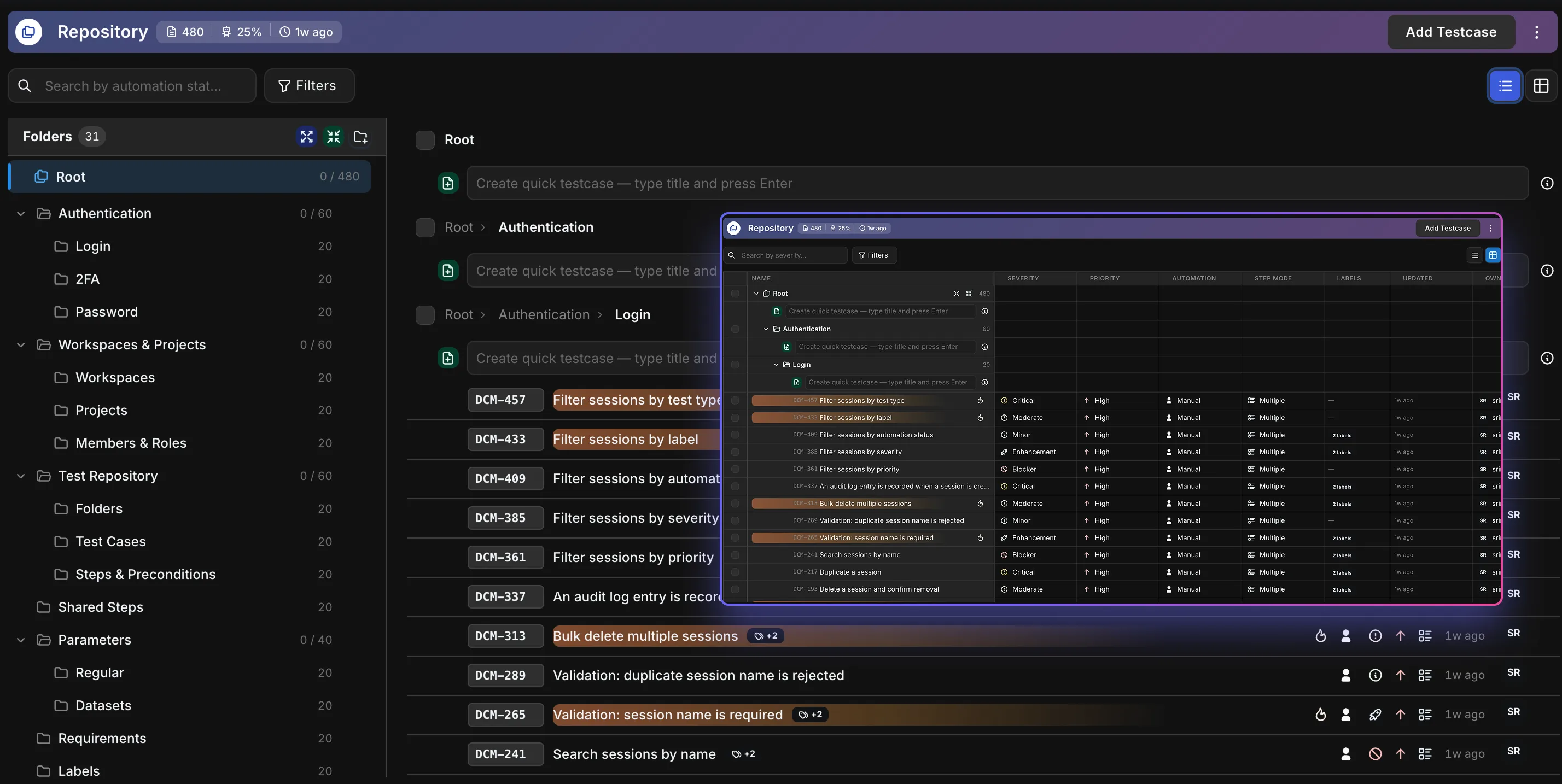
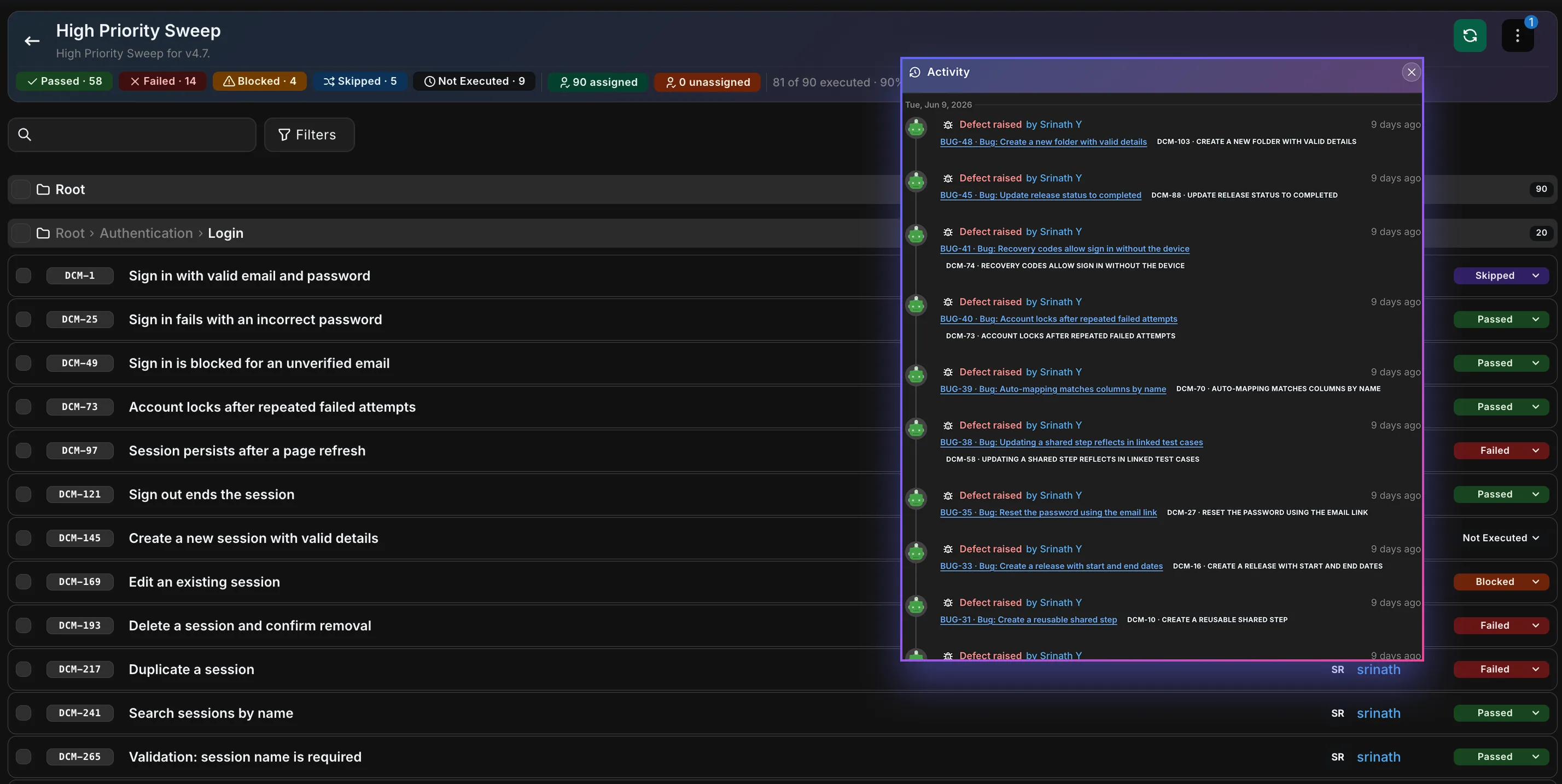
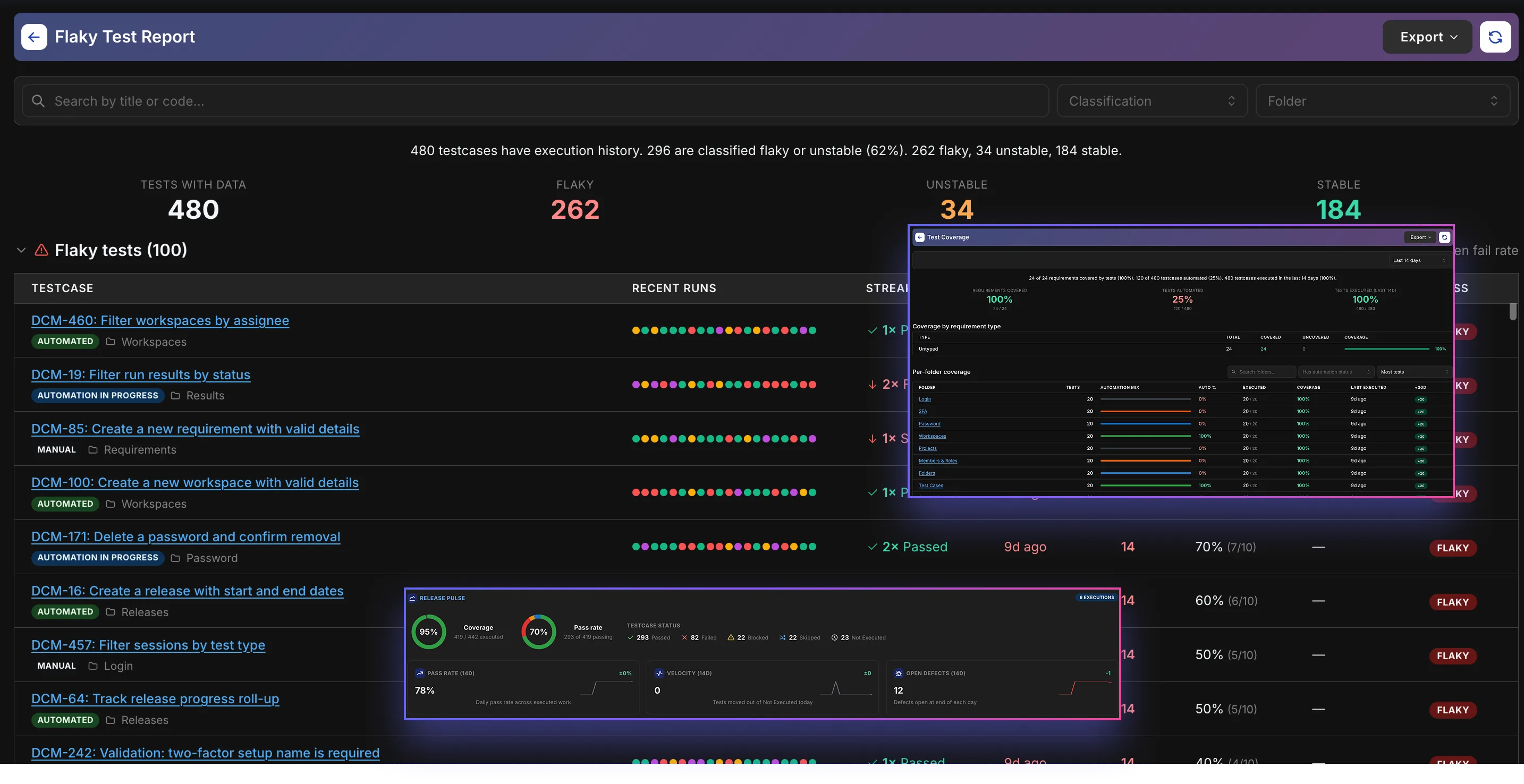
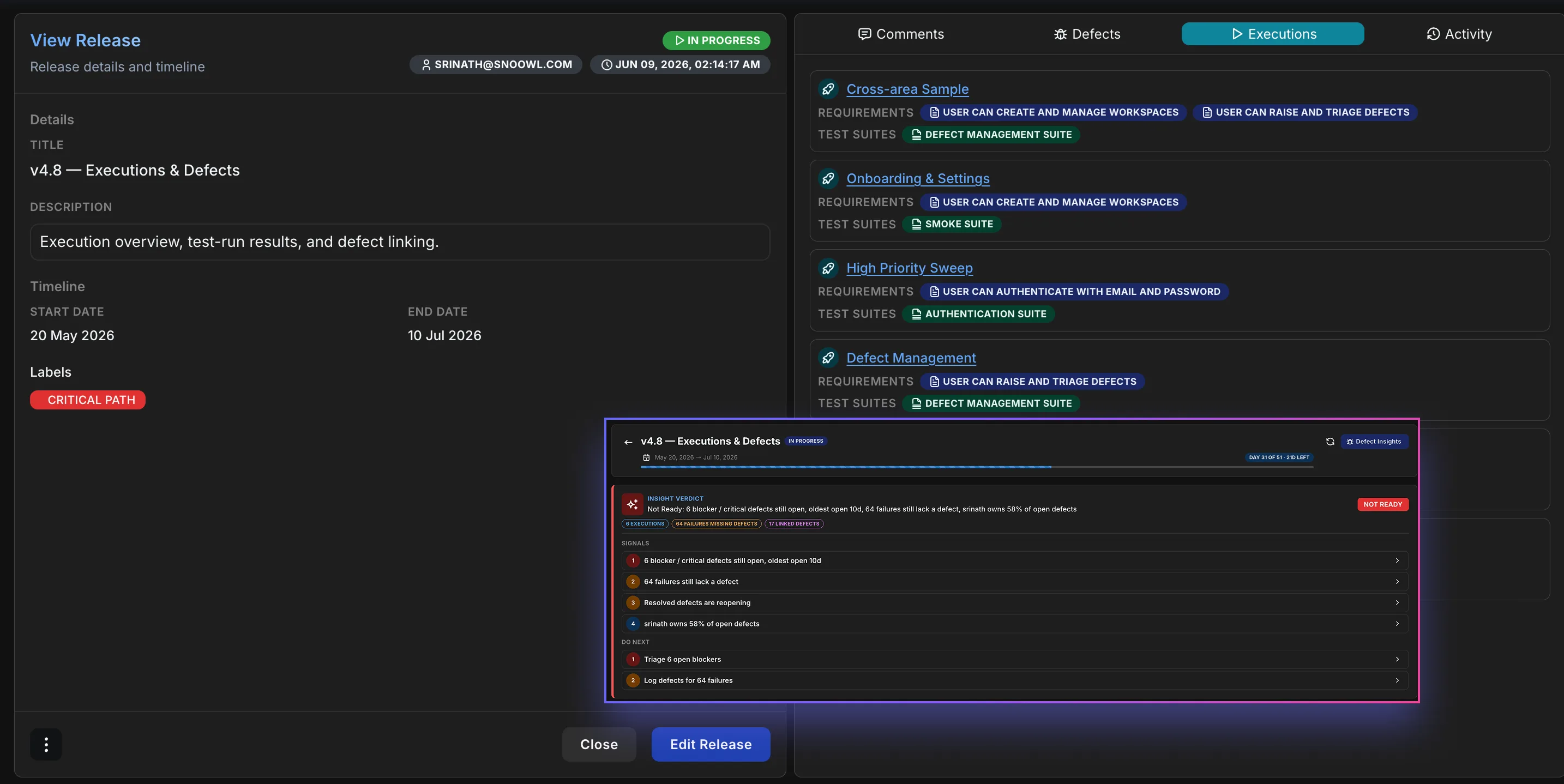
Hawzu vs Azure Test Plans, at a glance
Comparison reflects publicly available information and is kept as fair as we can make it. Pricing checked 1 Aug 2026 against Azure Test Plans's own published pricing. Details may change — check their site for the latest. Last updated 13 Sep 2026.
Why teams pick Hawzu
Standalone — no Azure DevOps organization required. Connect Azure DevOps (or Jira, GitHub, GitLab, Linear) when you want to, not because you have to.
One flat per-user cost instead of a Test Plans access level stacked on top of Basic for everyone who needs to run a test.
Dedicated release management with release-gated executions and a scored go/no-go — not pipelines plus work items you assemble yourself.
Built-in Observatory analytics: flaky-test tracking, traceability matrix, defect aging — no dashboard widgets to wire up.
AI test case generation and semantic search included, not a separate Copilot licence.
No extra access level for the AI, either: point an existing client at Hawzu's MCP endpoint and it queries test data read-only, limited to exactly what your own role can open.
When Azure Test Plans might still make sense
Your work already lives in Azure DevOps. Test Plans sits directly on the same work items, boards, repos, and pipelines, with no integration to maintain.
You hold Visual Studio Enterprise or Test Professional subscriptions — Test Plans access is already included for those people.
You need the browser-based Test & Feedback extension for stakeholder feedback and exploratory sessions with rich capture.
Your organisation has an existing Microsoft enterprise agreement and adding another vendor is the hard part, not the licence cost.
Common questions
Do I need an Azure DevOps organization to use Hawzu?
No. Hawzu is fully standalone — it has native requirements and defect tracking of its own. You can connect Azure DevOps (or Jira, GitHub, GitLab, Linear) if you want the link, but nothing requires it.
How is Hawzu's pricing different from Azure Test Plans?
Azure Test Plans is a separate, higher access level — Basic + Test Plans at $52/user/month — that you raise for every person who plans or runs tests, unless they already hold a Visual Studio Enterprise or Test Professional subscription. Hawzu is billed per Hawzu user, and every feature is on every plan, including the free one.
Our developers have Visual Studio subscriptions. Does that change things?
It does, and it's worth checking before you compare on price. Visual Studio Enterprise and Test Professional include Test Plans access; Visual Studio Professional does not. If most of your testers are covered by an Enterprise subscription you already pay for, Test Plans may effectively be free for them — the gap is usually manual testers, contractors and business users who hold no subscription.
Can I still run my Azure Pipelines automation?
Yes. Hawzu is automation-agnostic — keep your pipelines and whatever framework they run, and post a JUnit or xUnit report to a single endpoint or push results through the REST API. We don't run tests; we manage and analyse them.
How do I move test cases out of Azure Test Plans?
Test Plans exports test cases to CSV from the grid view, and work item queries can be exported to Excel. Run either through Hawzu's import wizard — map the columns onto Hawzu fields, preview a sample, and bring suite structure across as folders. Send it to contact@snoowl.com if you'd rather we mapped it.
What replaces Azure Boards for defects?
Hawzu's native defect tracking — raised from the failing step with execution context attached, and carrying aging, MTTR and reopen-rate analytics. If your engineers want bugs to stay in Azure Boards, connect it and push them across; the difference is that the integration is optional rather than the only way defects work.
Try Hawzu free
Every feature on every plan. Free for five people, $20 per member after — no credit card.