Hawzu vs Tuskr a Tuskr alternative with requirements and releases
Tuskr keeps test runs cheap and simple, and hands requirements, defects and releases to other tools. Hawzu keeps all of them in one place and ends in a scored go/no-go — free for five people, $20 per member after, with no seat minimum.
Simple test runs, plus the release around them.
When Tuskr is the right answer
Tuskr is the most focused tool on this site, and that focus is a feature. Before comparing, work out whether you actually want the things it leaves out.
Tuskr does test runs. You write cases, group them, assign them, record pass or fail, and look at a burndown. There's almost nothing to configure and nothing to learn, it's around $9/user/month, the free tier for up to five users is real, and SSO, 2FA and an audit trail are included at every tier including free — which several tools three times the price still charge extra for. If that's the job, Tuskr does it and this comparison should probably end here.
What it deliberately doesn't do is everything either side of the run. There are no native requirements — coverage is tracked against issues you link from a tracker. There's no native defect lifecycle; defects go out to Jira or GitHub. And there's no release object at all, so "which tests must pass before we ship" is a question you answer somewhere else.
For a small team shipping continuously with a tracker they already like, that's a sensible boundary rather than a gap. The tool stays fast because it isn't trying to be a system of record for four things at once, and there's real value in software that does one job.
It becomes a problem at a specific moment: when someone asks you to prove the release is safe. Coverage against requirements, defect aging, a burndown tied to a release rather than a run, an evidenced go/no-go. Those are the things Hawzu builds around, and they're the reason to look past Tuskr — not the test runs, which Tuskr handles fine.
See Hawzu in action
Anyone can claim they beat Tuskr. Here's exactly what we built.
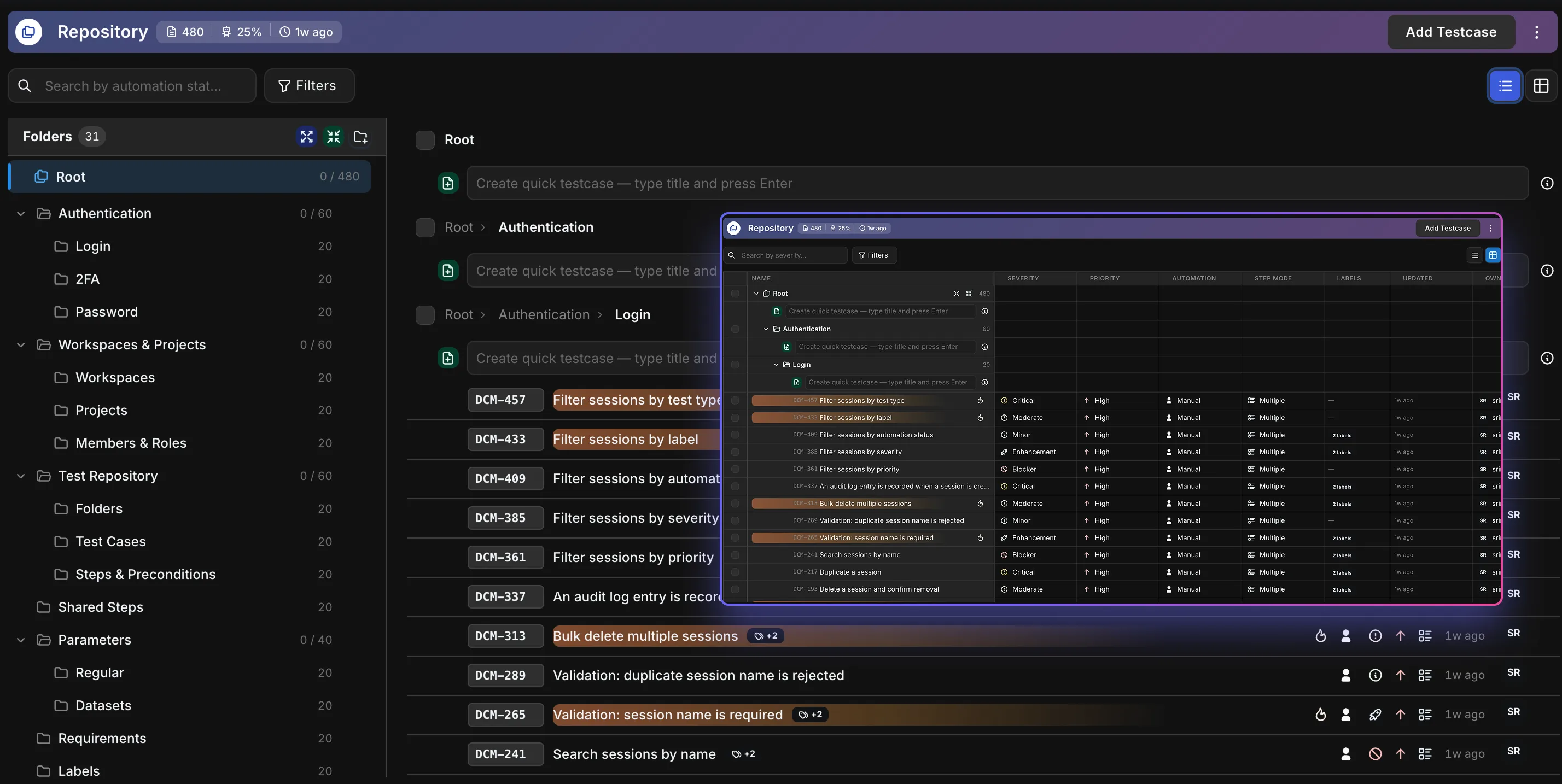
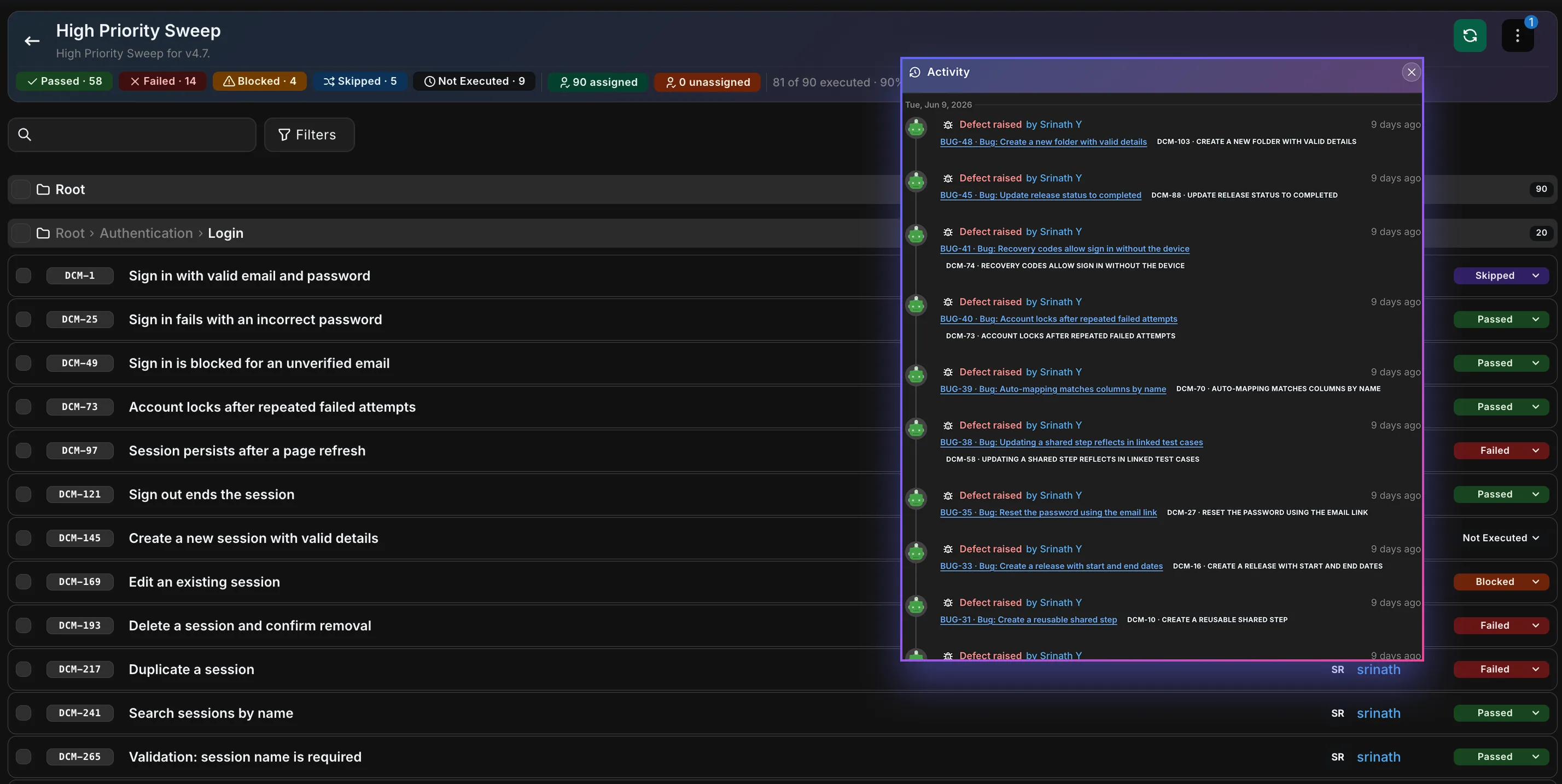
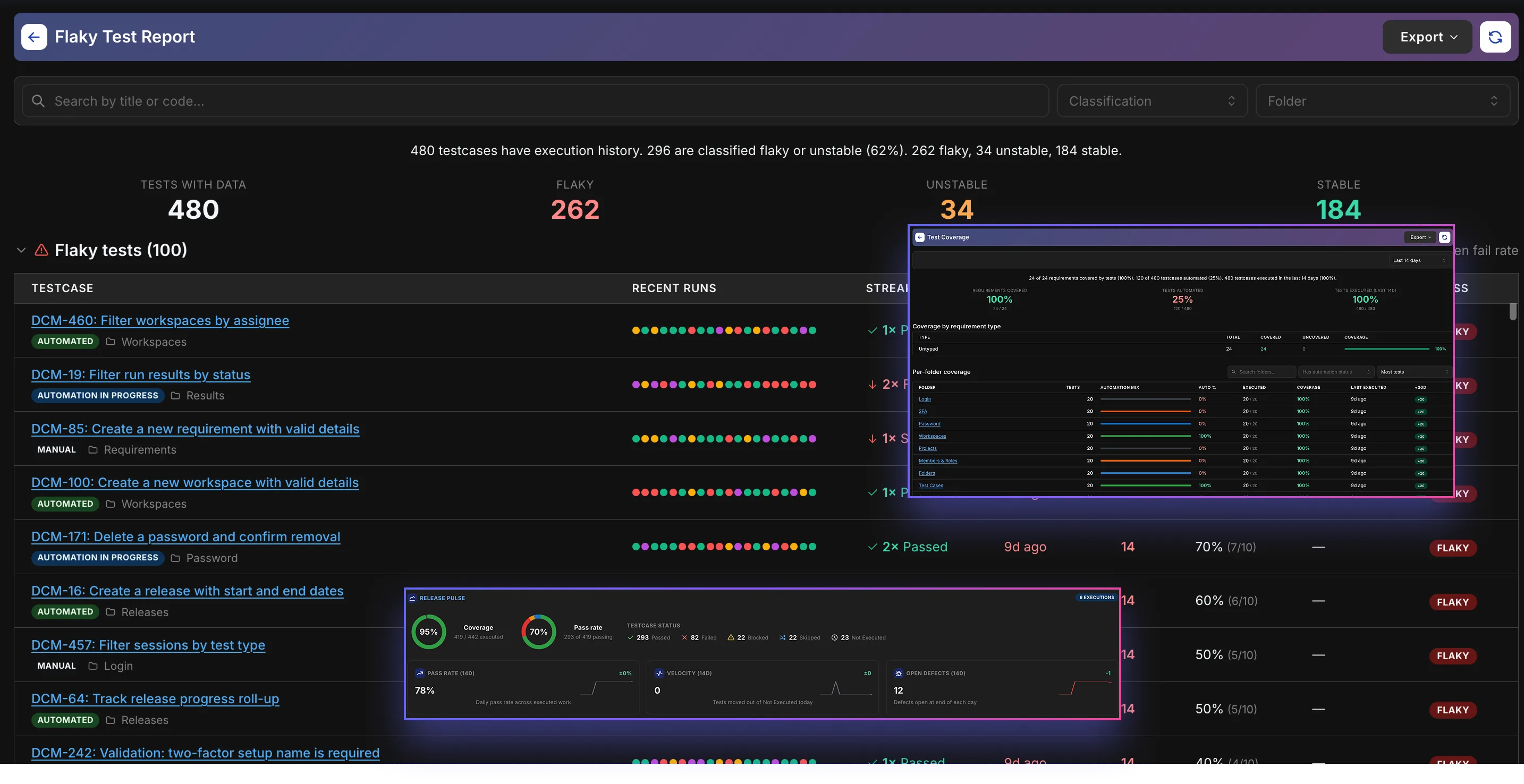
Hawzu vs Tuskr, at a glance
Comparison reflects publicly available information and is kept as fair as we can make it. Pricing checked 3 Sep 2026 against Tuskr's own published pricing. Details may change — check their site for the latest. Last updated 13 Sep 2026.
Why teams pick Hawzu
Native requirements with hierarchy, coverage roll-up and a real traceability matrix — Tuskr tracks coverage against linked issues instead.
Native defect tracking tied to the failing test step, with AI duplicate detection and aging analytics.
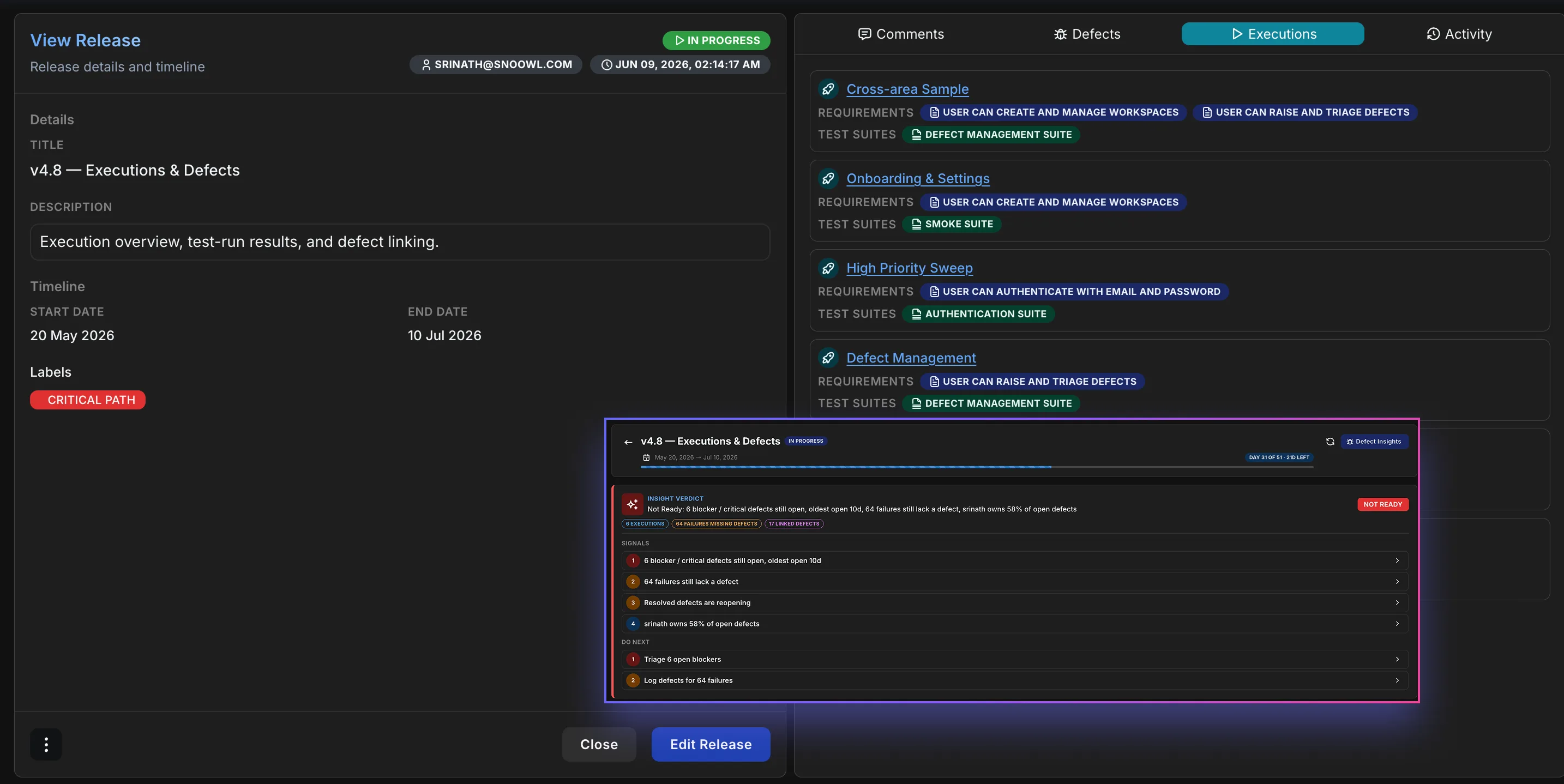
Dedicated release management with release-gated executions and a scored go/no-go readiness summary.
Observatory analytics past burndown: flaky-test tracking, defect MTTR and reopen rate, requirement coverage, project health score.
No 5-seat minimum — start with one paid user, where Tuskr's paid plans begin at five.
Among the things not left out: an MCP endpoint. Aim the client you already use at Hawzu and it reads cases, runs and defects — no writes, no extra charge, no setup.
When Tuskr might still make sense
Cheaper above five people — Business is $12.50 per user per month billed yearly against our $20 per member.
Tuskr is the cheapest capable option here, and its free tier for up to 5 users is real rather than a trial.
Simplicity is the product. If you want test runs and nothing else, there's almost no learning curve and nothing to configure.
SSO, audit trail and 2FA are included at every tier including the free one — Hawzu has 2FA and audit logs but SSO is still only planned.
Workload and burndown charts are well judged for small teams who want a quick read without building dashboards.
Common questions
Tuskr is simple and cheap — isn't Hawzu more than a small team needs?
Possibly, and that's a fair question. If all you want is test runs and pass/fail, Tuskr does that well for less setup. Hawzu is worth it when you also own requirements, defects and the ship decision — those are the pieces Tuskr deliberately hands to other tools.
Does Tuskr have requirements management?
Not natively — Tuskr tracks coverage against issues linked from your tracker. Hawzu has native requirements with hierarchy, sub-requirements and tasks, and rolls coverage up through them into a traceability matrix.
Tuskr includes SSO on the free tier. Does Hawzu?
No, and it's the one place Tuskr clearly beats us. Hawzu has 2FA (TOTP with backup codes) and audit logging, but SSO is planned rather than shipping. If SSO is a hard requirement today, Tuskr includes it at every tier and we don't have it at any.
How do I move Tuskr test cases into Hawzu?
Export your cases to CSV or Excel and run them through Hawzu's import wizard — map Tuskr's columns onto Hawzu fields, preview a sample, and bring folder structure across. Embedded images and file links get re-hosted into Hawzu automatically. Send the export to contact@snoowl.com if you'd like us to map it.
What does a Hawzu release give me that a Tuskr test run doesn't?
A run tells you how a batch of tests went. A release is an object executions are gated to: requirement coverage is measured against it, defects are counted against it, burndown tracks it, and it ends in a scored readiness verdict with a frozen snapshot. It's the difference between reporting on testing and evidencing a ship decision.
Does the 5-seat minimum matter in practice?
Below five people, yes. Tuskr's paid plans require at least five licensed users, so a three-person team pays for five. Hawzu has no minimum and its free plan also covers five, so at that size the two are level and both are free. Above five, Tuskr is the cheaper tool: Business is $12.50 per user per month billed yearly, or $15 monthly, against our $20 per member — about $125 a month for ten people where we are $200. What the difference buys is the release layer: native requirements with coverage roll-up, executions gated to a release, and a scored go/no-go that Tuskr does not attempt.
Try Hawzu free
Every feature on every plan. Free for five people, $20 per member after — no credit card.