Hawzu vs QA Touch a QA Touch alternative without the feature ceiling
QA Touch is one of the cheapest ways into test management, with SSO, unlimited projects and unmetered AI saved for its top tier. Hawzu doesn't tier features, adds dedicated releases and a scored go/no-go, and is free for five people, $20 per member after.
Budget-friendly, without the feature ceiling.
Reading QA Touch's pricing page carefully
Five dollars a user is a genuinely low entry price. What decides the real cost is which line you need to cross to get the features you assumed were included.
QA Touch has built something affordable, and for a small team on a tight budget that matters more than any feature argument. The free plan is usable rather than decorative, the integration list is long for the money, and the Startup tier at around $5/user/month undercuts most of the category.
The structure to check is what sits above that line. Unlimited projects, SSO and MFA are on the top Unlimited plan at roughly $15/user/month. AI is credit-metered below it — a fixed number of generations per month rather than a capability you have. Storage steps from 10 GB to 150 GB by tier, which sounds abstract until a team attaching screenshots to every failed step hits the ceiling mid-cycle.
None of that is dishonest pricing; it's a normal SaaS ladder. But it means the tool you evaluate on the Startup plan and the tool you need eighteen months later are priced three times apart, and the features most likely to force the jump — SSO for a security review, unlimited projects as teams multiply — arrive on someone else's schedule, not yours.
Hawzu doesn't tier features at all. Every plan is every feature: requirements with coverage roll-up, native defects, dedicated releases with a scored go/no-go, full Observatory analytics, and AI on every plan. The free plan covers five people and the paid one is $20 per member — there is no capability ladder inside either.
See Hawzu in action
Anyone can claim they beat QA Touch. Here's exactly what we built.
Hawzu vs QA Touch, at a glance
Comparison reflects publicly available information and is kept as fair as we can make it. Pricing checked 3 Sep 2026 against QA Touch's own published pricing. Details may change — check their site for the latest. Last updated 13 Sep 2026.
Why teams pick Hawzu
No feature ceiling — SSO, unlimited projects and full AI are on every plan, not reserved for the top tier.
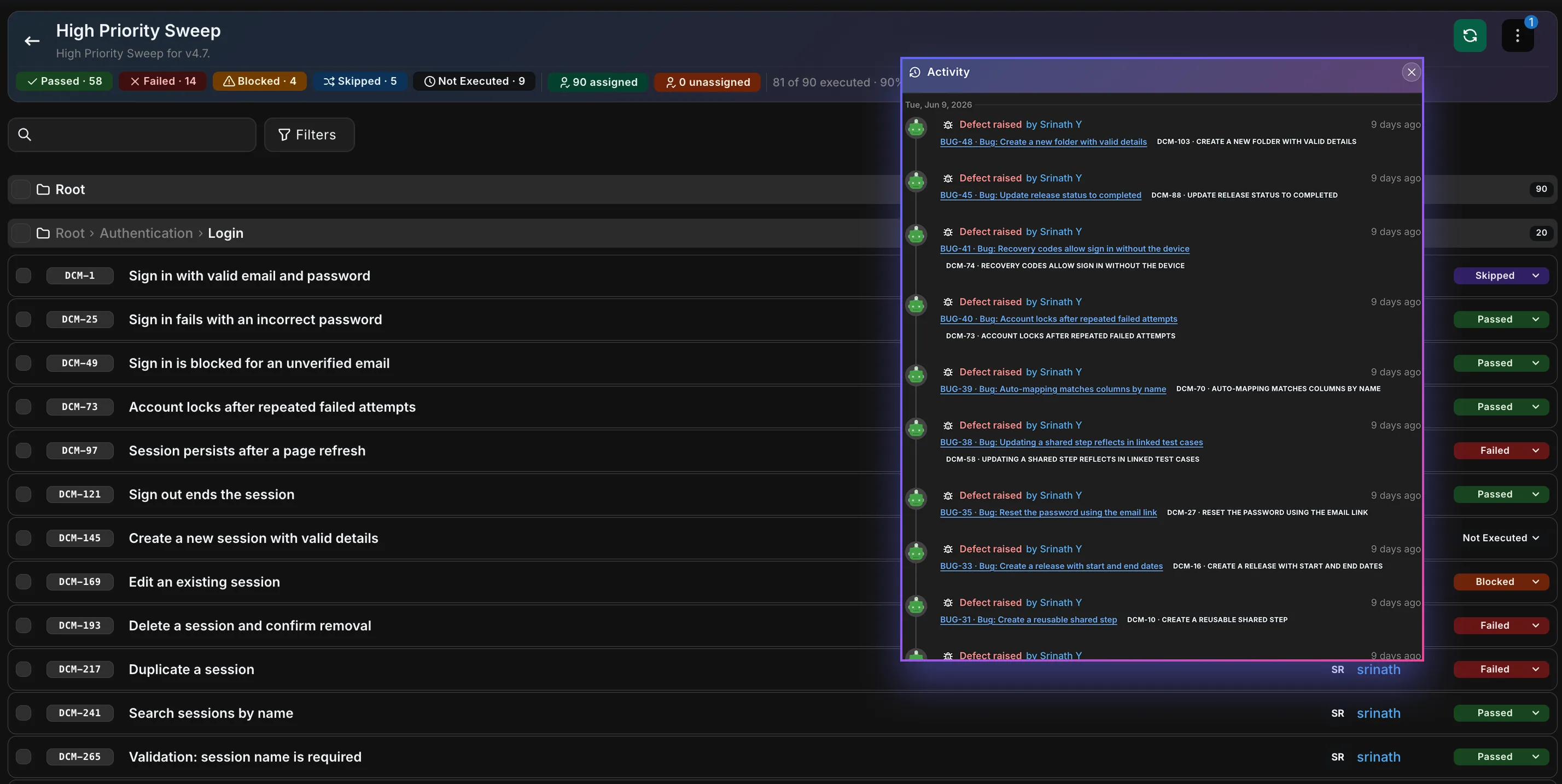
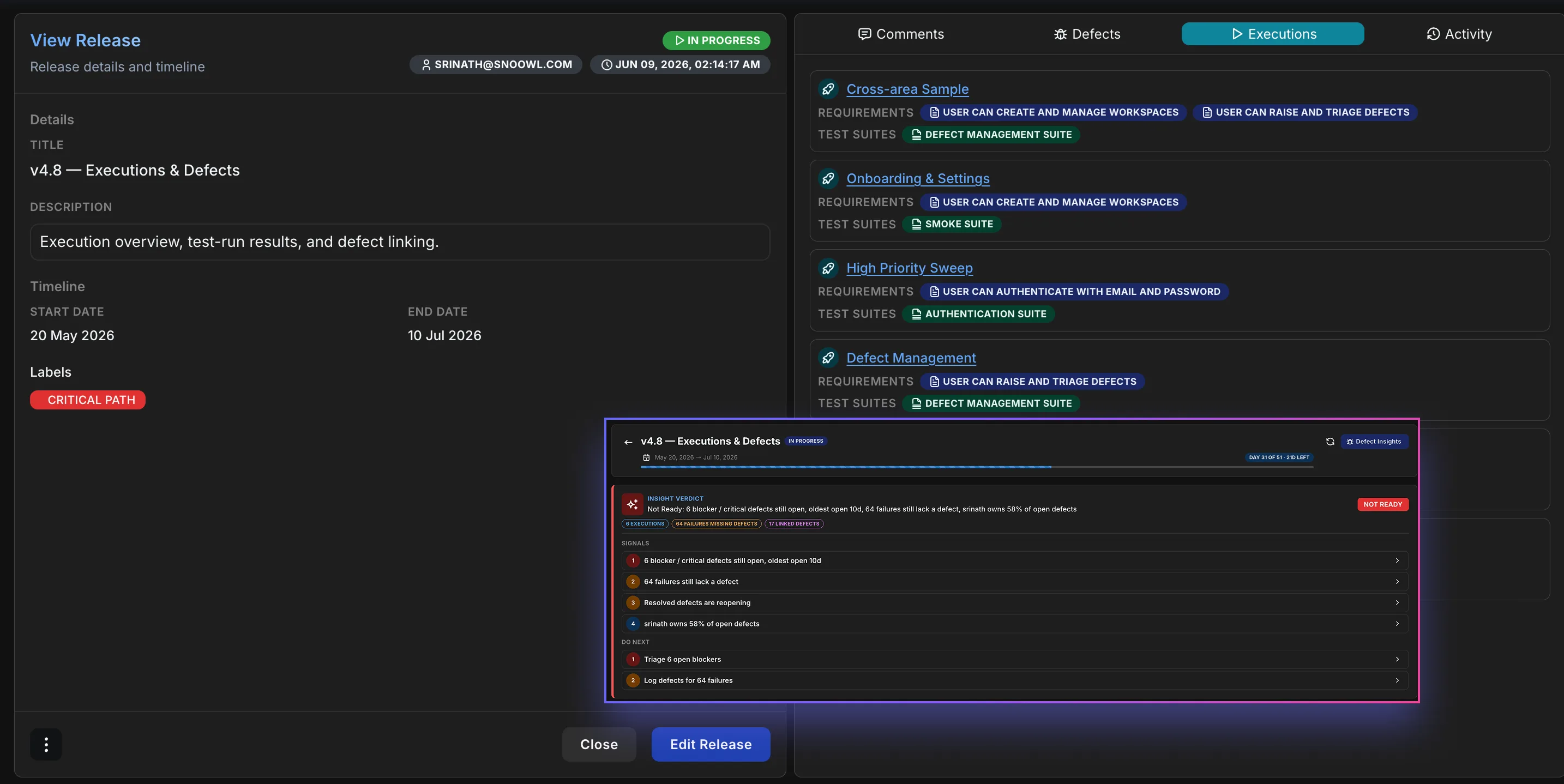
Dedicated release management with release-gated executions and a scored go/no-go readiness summary.
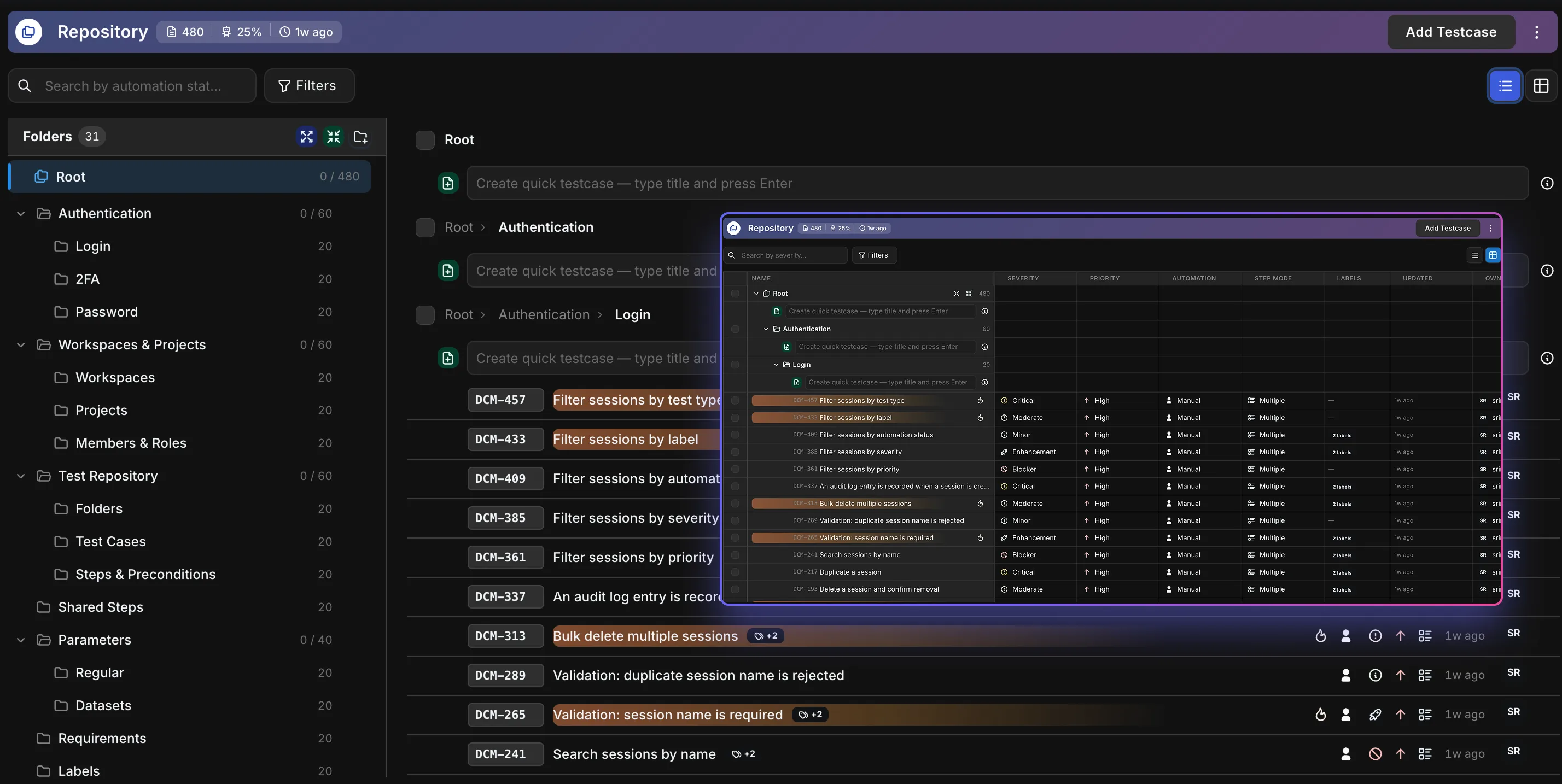
Native requirements with hierarchy and coverage roll-up, feeding a real traceability matrix.
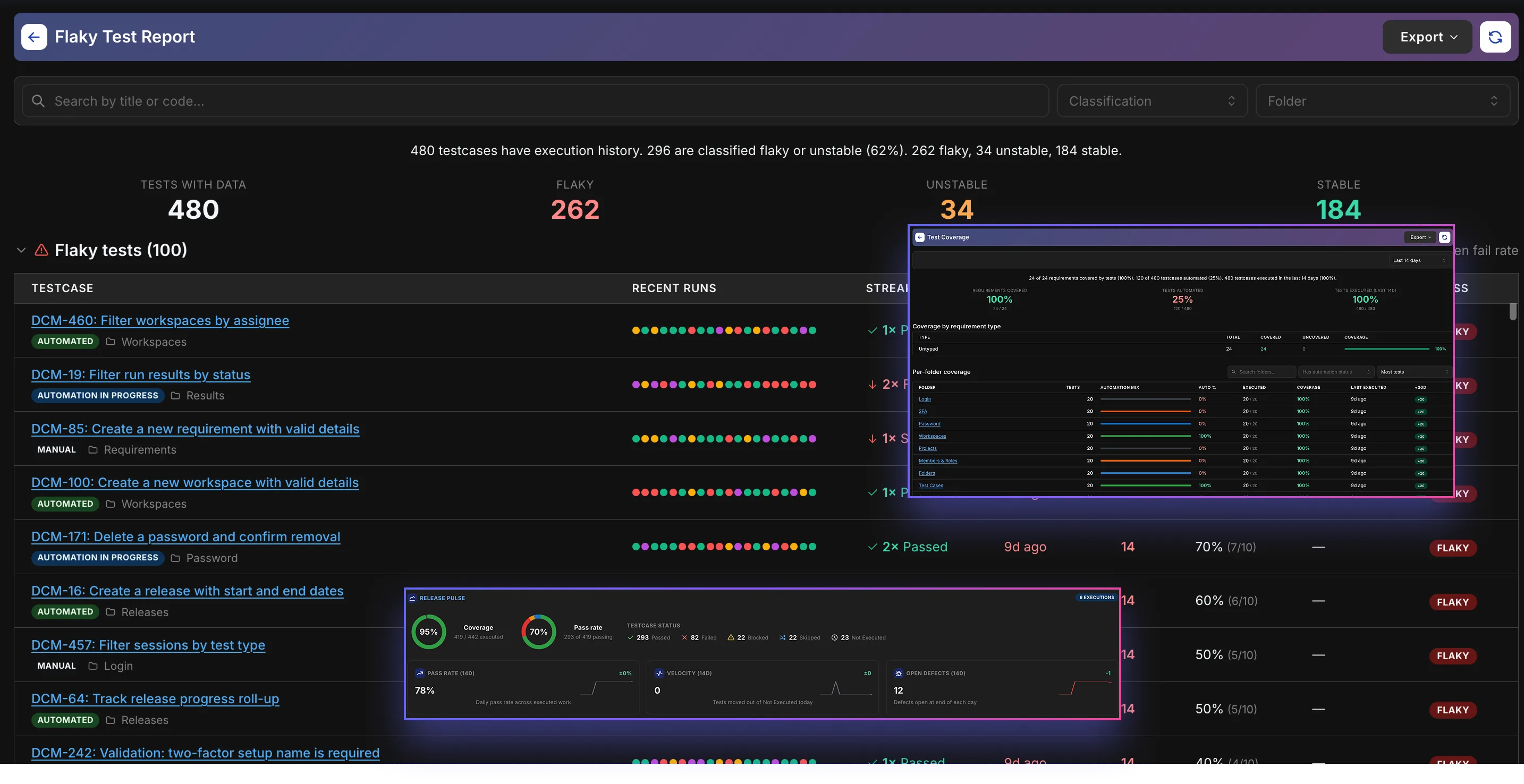
Observatory analytics: flaky-test tracking, defect aging and MTTR, requirement coverage, and a 0–100 project health score.
AI test case generation and semantic search on every plan, including the free one — 50 credits a month free, 250 per member on Growth.
There is no line to cross for it. MCP ships on the free plan and every other one, letting a client you already run read records scoped to what you personally may see.
When QA Touch might still make sense
The entry price is very low. If per-seat budget is the binding constraint, QA Touch is one of the cheapest credible options in the category.
A usable free plan for tiny teams and side projects, with no time limit.
A wide integration list for the money — issue trackers, CI, and automation reporters across the paid tiers.
Cheaper at the top tier: Unlimited is $15/user/month against our $20 per member.
More storage on that plan — a flat 150 GB, where ours is 25 GB plus 5 GB per member and only passes 150 GB at 25 people.
Unlimited plan does not meter AI at all, and includes SSO and MFA. Hawzu meters AI by credits and has no SSO on any plan.
Published, stable pricing you can budget against today.
Common questions
QA Touch starts at around $5/user/mo — how does Hawzu compare on cost?
The like-for-like tier is their Unlimited plan at $15/user/month against our Growth at $20 per member — so they are cheaper, and on that plan they also give more storage, unmetered AI and SSO, which we do not. What you are buying for the difference is that nothing is tiered: audit logs, custom fields, every integration and the AI are on our free plan too. Their free plan stops at 100 test cases and 10 MB, which is a trial in practice; ours is five people with no case cap.
Does Hawzu meter AI usage with credits?
There is an allowance — 50 credits a month on the free plan, 250 per member on Growth, pooled across the workspace — but nothing to buy and no overage bill. QA Touch caps AI at 20 uses below its top plan and removes the limit on Unlimited, so above that tier theirs is the less restricted of the two. Both ground generation in your real test data: ours works from the requirements and files you attach, and semantic search runs over your own defects.
Are there storage limits on attachments?
There's no per-plan storage ladder to climb. QA Touch scales storage from 10 GB on Startup to 150 GB on Unlimited, which becomes a live constraint for teams attaching screenshots or video to failed steps. Hawzu's file handling — including import-time re-hosting of external images — isn't tiered.
How do I move QA Touch test cases into Hawzu?
Export your cases to Excel or CSV from QA Touch and run them through Hawzu's import wizard — map the columns onto Hawzu fields, preview a sample, and bring folder structure across. Embedded images and file links are re-hosted into Hawzu so they don't break. Send the export to contact@snoowl.com and we'll map it for you.
QA Touch generates test cases with AI. Does Hawzu?
Yes — point it at a requirement, a pasted spec, or a PDF and it writes full test cases with steps and expected results. The difference is what comes first: Hawzu maps the scenarios worth covering before it writes anything, names the requirements nothing was proposed for, and lets you pick which ones become cases — so you see the gaps while they're still cheap to fix. QA Touch also takes Figma and BRD input, which Hawzu doesn't, and meters generation by credits; Hawzu meters it too, at 50 credits a month free and 250 per member on Growth. Nothing is saved until you accept it.
Does Hawzu do requirements the way QA Touch does?
More completely. QA Touch tracks coverage against linked items; Hawzu's requirements are native objects with hierarchy, sub-requirements and tasks, and coverage rolls up the tree into a real traceability matrix — which is what feeds the release readiness score.
Try Hawzu free
Every feature on every plan. Free for five people, $20 per member after — no credit card.