Hawzu vs Kualitee a Kualitee alternative with releases and readiness
Kualitee bundles defect tracking into a cheap test manager, and stops there. Hawzu adds native hierarchical requirements, dedicated release management and a scored go/no-go — and AI included on every plan rather than sold as an add-on.
Test, defect and release — one price, no tiers.
Kualitee already bundles defects. What's left?
Most budget test tools make you bring your own bug tracker. Kualitee doesn't, which removes the usual argument and leaves a narrower, more interesting one.
Credit where it's due: at around $12/user/month with defect tracking included at no extra cost, Kualitee is a real all-in-one at a price where most competitors are test-runs-only. There's a permanent free plan, a mobile app for logging defects away from a desk, and an on-premise option — none of which is typical at this tier. The usual "you'll need Jira too" objection doesn't apply.
So the comparison moves up a level, to what happens after the defect is logged. Kualitee's requirements support is partial — enough to link tests to something, not enough to build a coverage tree you can reason about. And there's no release object, so the tests, the defects and the thing you're shipping are tracked separately even though they're all in one tool.
That matters at sign-off. With tests and defects in the same system you can answer what failed and what's still open. What you can't answer from the tool is whether the specific scope of this release is covered and safe, because nothing in the model knows what "this release" contains.
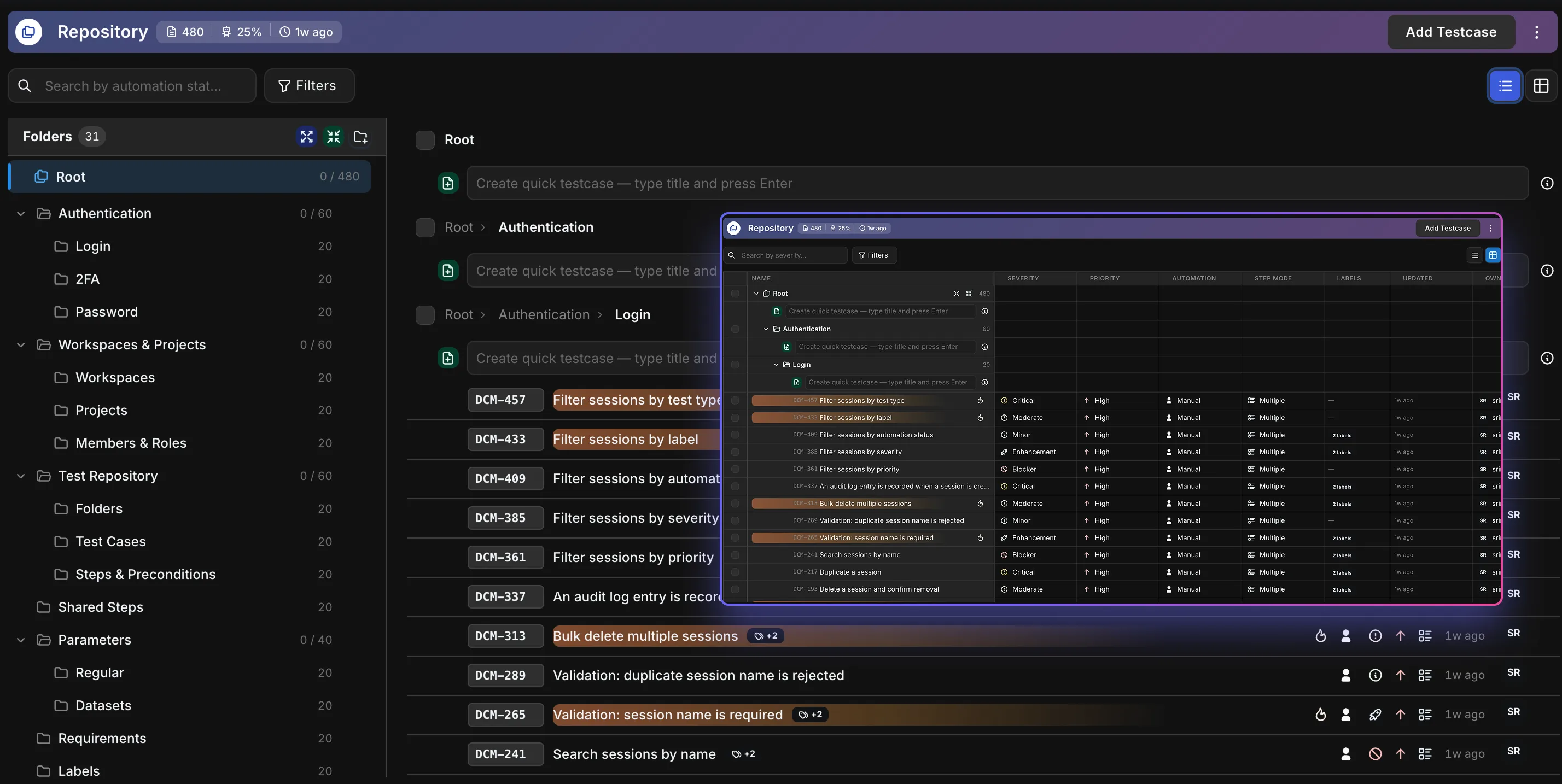
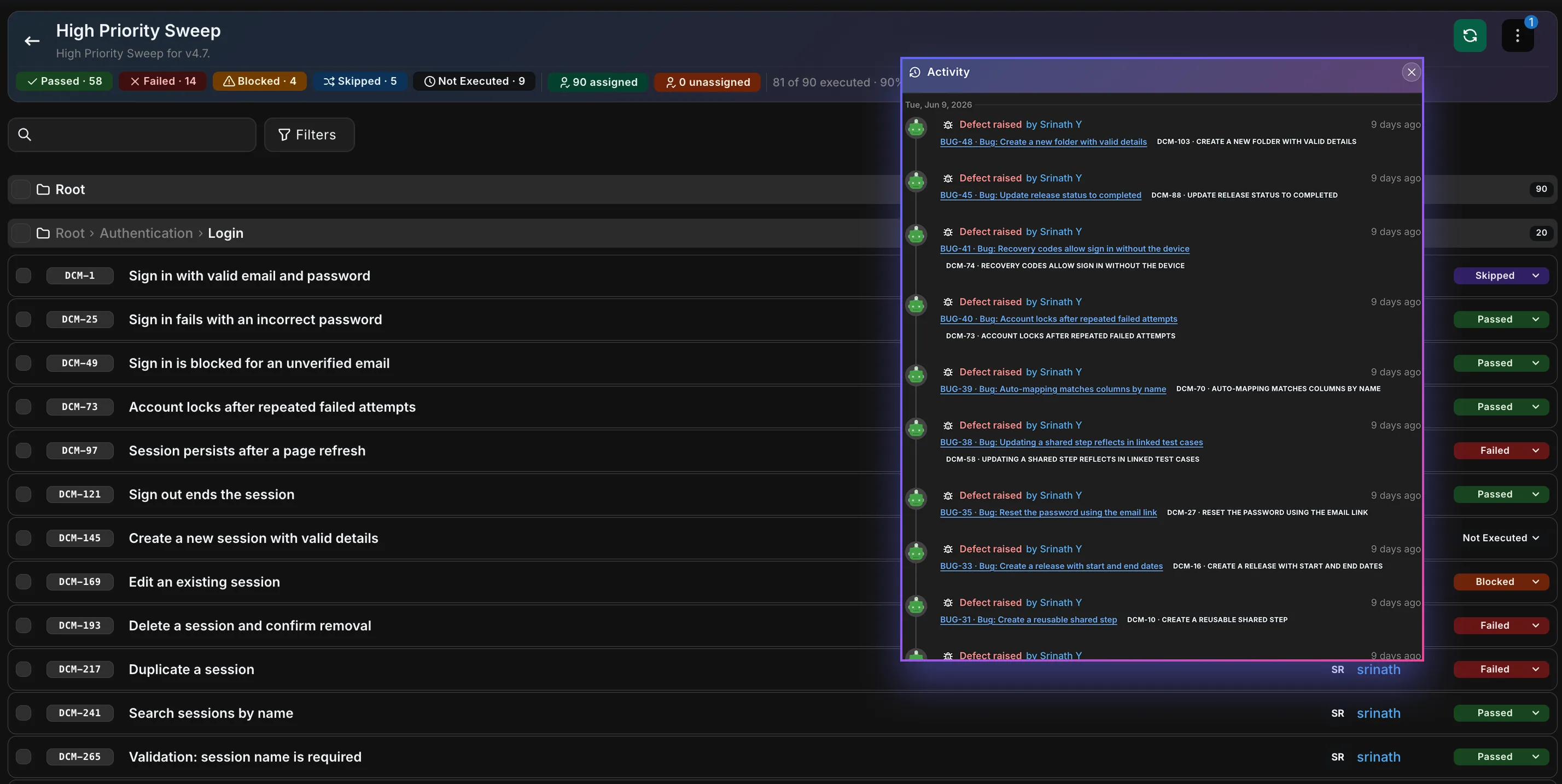
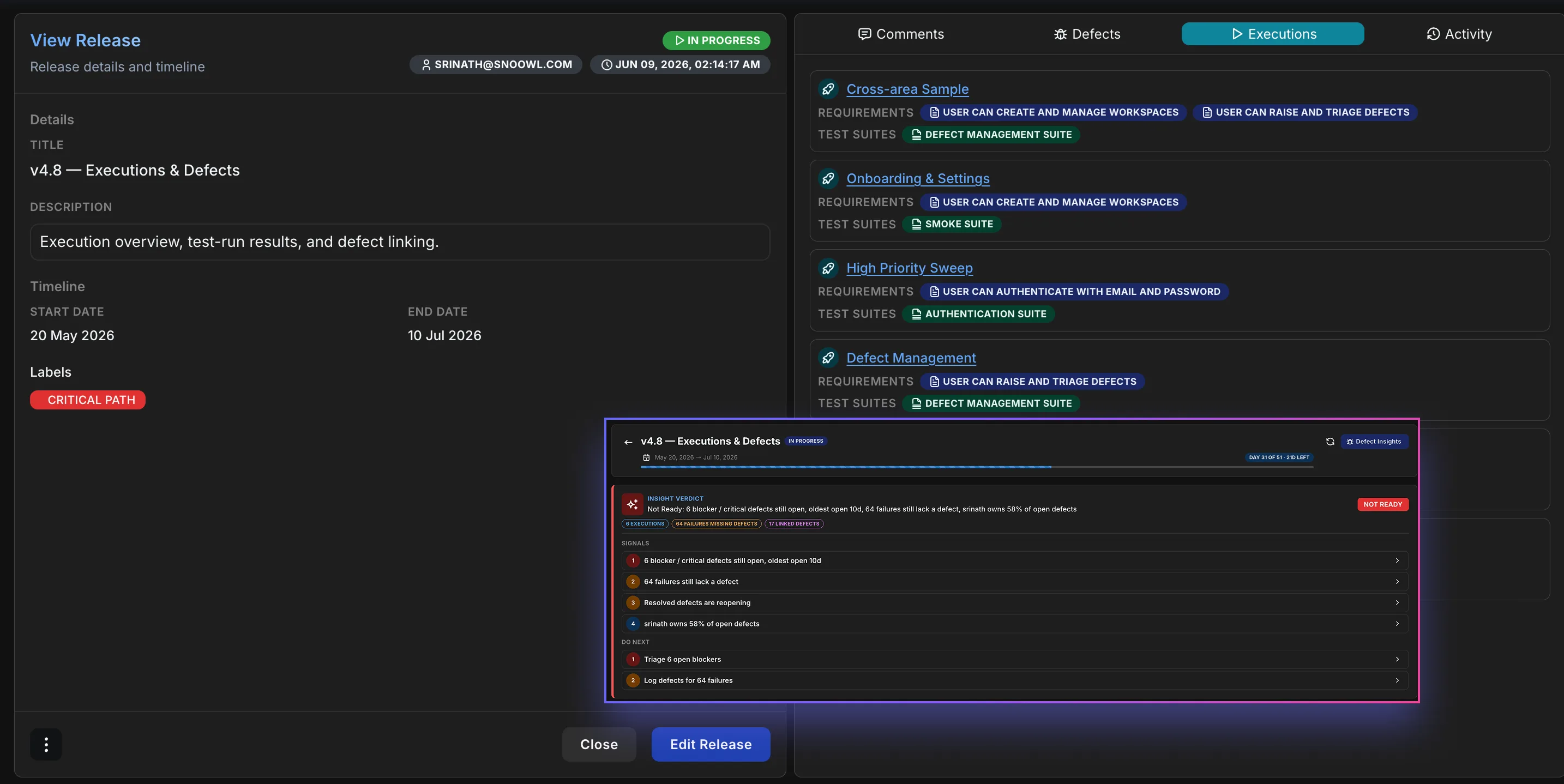
Hawzu's addition is exactly that layer: requirements as native objects with coverage rolling up a hierarchy, executions gated to a release, defect aging and MTTR feeding a scored go/no-go, and a frozen sign-off snapshot at the end. Plus an AI allowance included in the seat price rather than sold as a bundle on top. Where Kualitee stays ahead is on-premise deployment and the mobile app, and those are genuine.
See Hawzu in action
Anyone can claim they beat Kualitee. Here's exactly what we built.
Hawzu vs Kualitee, at a glance
Comparison reflects publicly available information and is kept as fair as we can make it. Pricing checked 3 Sep 2026 against Kualitee's own published pricing. Details may change — check their site for the latest. Last updated 13 Sep 2026.
Why teams pick Hawzu
Dedicated release management with release-gated executions and a scored go/no-go readiness summary — the piece Kualitee doesn't have.
Native requirements with hierarchy, sub-requirements and tasks, rolling coverage up into a real traceability matrix.
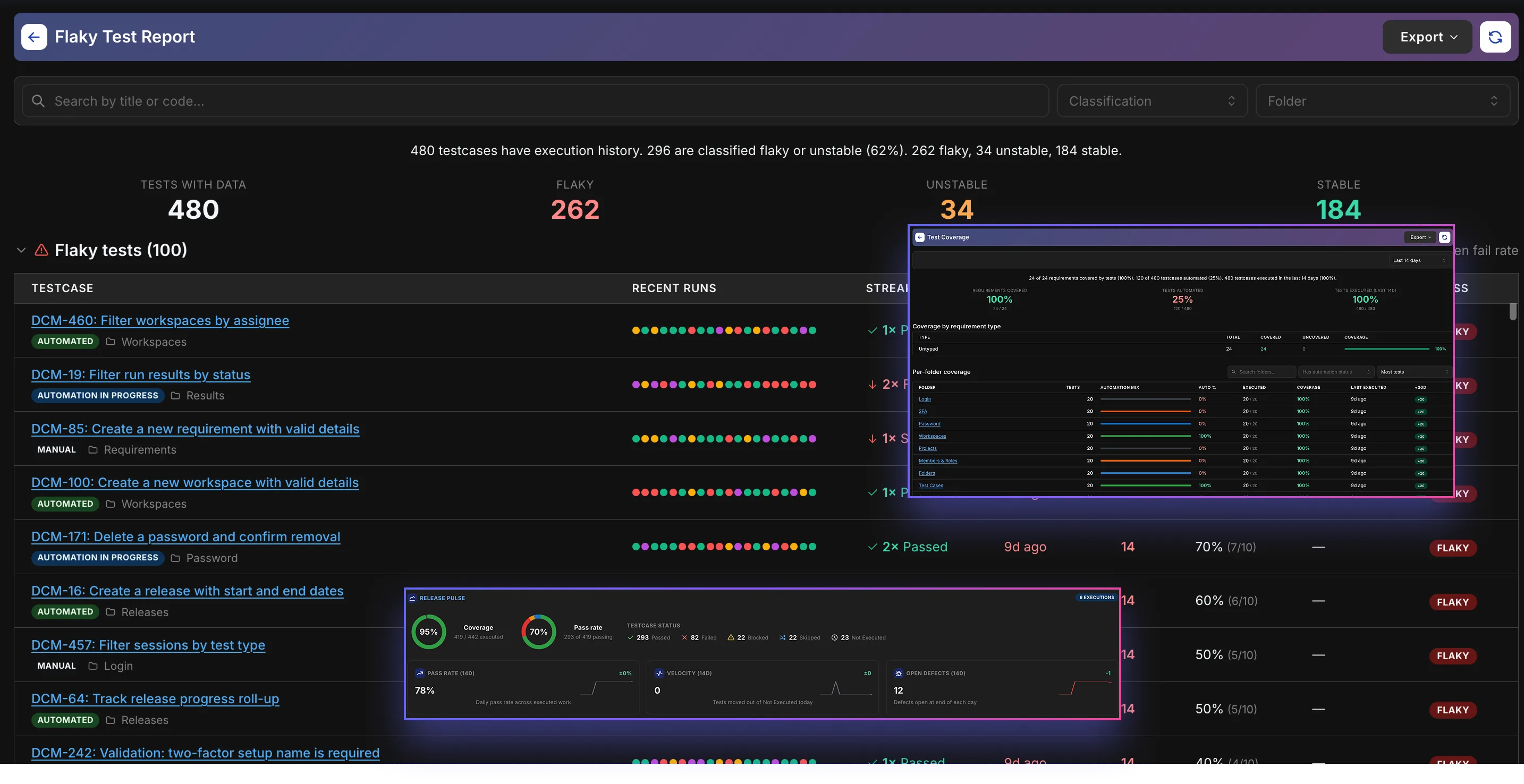
Observatory analytics go deeper than dashboards: flaky-test detection, defect aging and MTTR, reopen rate, project health score.
AI test case generation and semantic search on every plan, with a monthly allowance and nothing to buy — you are never billed for going over.
No 10-user minimum for anything, and every feature included — free for five people, $20 per member after.
AI access is bundled the same way, not sold on top: connect a client over MCP and it queries cases, runs and defects directly, with no ability to change any of them.
When Kualitee might still make sense
Defect tracking is native and bundled at no extra cost, which is unusual at this price point — Kualitee is a real all-in-one, not a test tool with an integration.
On-premise deployment is available if your data has to stay inside your network. Hawzu is cloud-only today.
A mobile app for running tests and logging defects away from a desk — Hawzu is responsive web only.
The free plan is permanent rather than a trial, and the paid tier is a single flat plan with no feature tiers to decode.
Common questions
Kualitee already bundles defects — what does Hawzu add?
The release layer. Kualitee covers tests and defects; Hawzu adds executions gated to a release, a scored go/no-go readiness dashboard, and a frozen sign-off snapshot — so you can answer whether this release is safe to ship, not just what failed. Native hierarchical requirements and deeper analytics come with it: flaky detection, defect MTTR, coverage roll-up.
Does Hawzu charge AI credits?
There is an allowance, but nothing to buy. Growth includes 250 credits per member per month, pooled across the workspace, and the free plan includes 50 — where Kualitee sells AI as an add-on bundle at around $30 for 250 credits on top of the seat price. If you exhaust ours, AI pauses until the month resets and you are never billed for it. Both tools ground generation in your real test data; ours cannot cite a requirement you didn't supply.
Can Hawzu run on-premise like Kualitee?
Hawzu is cloud-only today; on-prem is on the roadmap, not shipping yet. Kualitee's Light Speed on-premise plan does exist, though note it carries a 10-user minimum.
Is there a Hawzu mobile app?
No — Hawzu is responsive web, so it works on a phone browser but there's no native app. If your testers routinely log defects from a shop floor or a device lab without a laptop, Kualitee's app is a real advantage.
How do I move Kualitee data into Hawzu?
Export your test cases to Excel or CSV and run them through Hawzu's import wizard — map Kualitee's columns onto Hawzu fields, preview a sample, and bring folder structure across. Images and file links in your cases are re-hosted into Hawzu automatically. Send the export to contact@snoowl.com and we'll map it for you.
How does the free plan compare?
Both are permanent, and the useful difference is what is switched on. Kualitee's free plan is capped at 1 project, 500 test cases and 3 users. Hawzu's covers 5 people and 3 projects with no cap on test cases and every feature enabled, including the AI. Above that we are $20 per member per month, and the paid plans add size rather than capability.
Try Hawzu free
Every feature on every plan. Free for five people, $20 per member after — no credit card.