Hawzu vs TestMonitor a release-first TestMonitor alternative
TestMonitor is a capable all-in-one built around requirements-led testing and UAT. Hawzu is built around the release itself — gated executions, a scored go/no-go, and a frozen sign-off snapshot — with no seat minimum and a free plan for five where TestMonitor has none.
Built for testers and the release they gate.
Two all-in-ones, built for different people
TestMonitor and Hawzu cover almost the same feature list. They part company on who is expected to be holding the mouse.
TestMonitor is built for business testers. The tester-facing screens assume no QA vocabulary, the requirements-to-test structure maps cleanly onto how an ERP or packaged-software rollout is actually run, and a finance manager can be handed a test set on Monday and be productive without training. That is harder to design than it looks.
Because of that audience, the product's centre is the test project: a scoped body of acceptance work with requirements at the top and results at the bottom. Milestones group runs by date. It's a coherent model for UAT, where the question is has the business signed off on this scope.
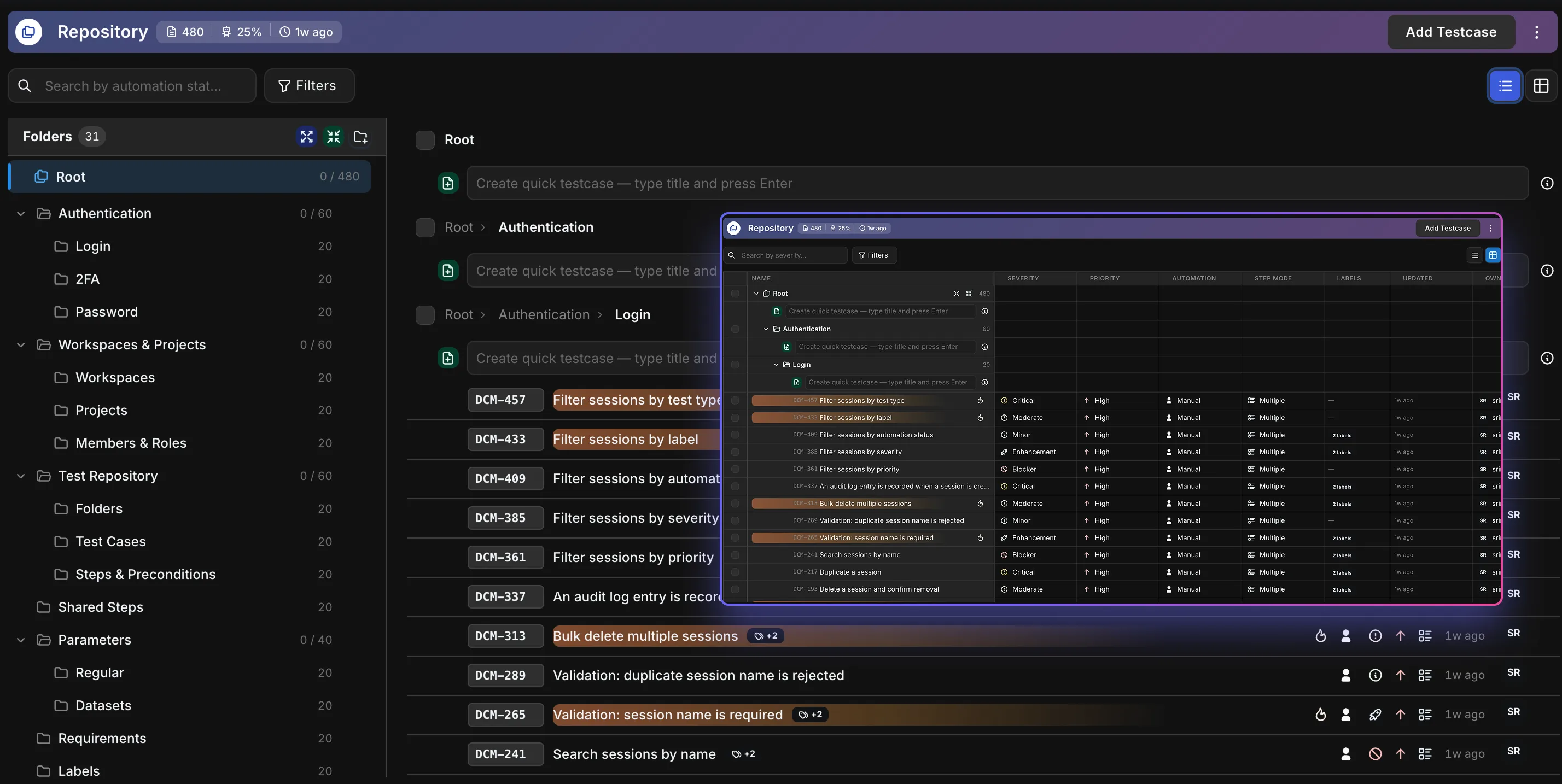
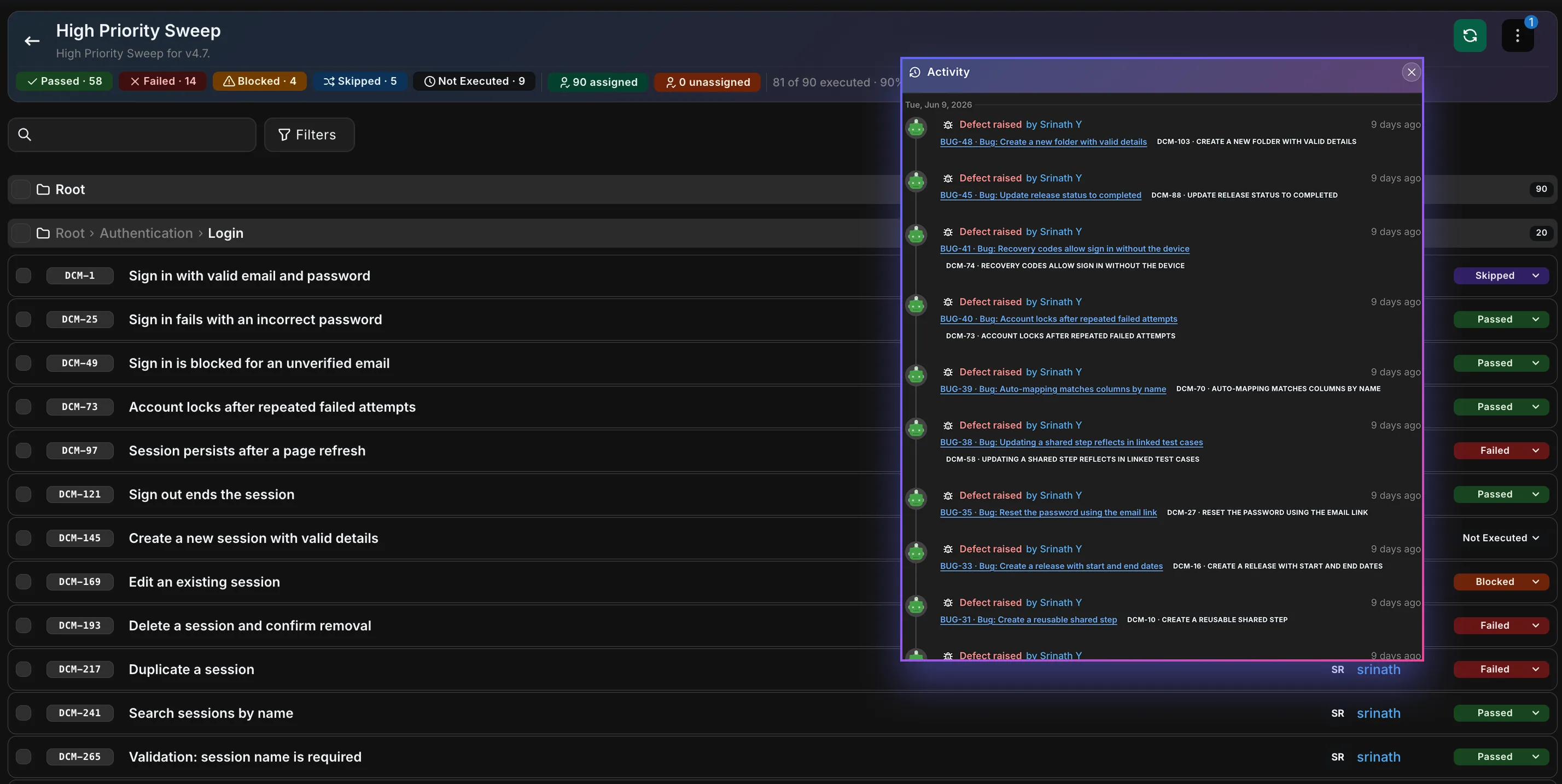
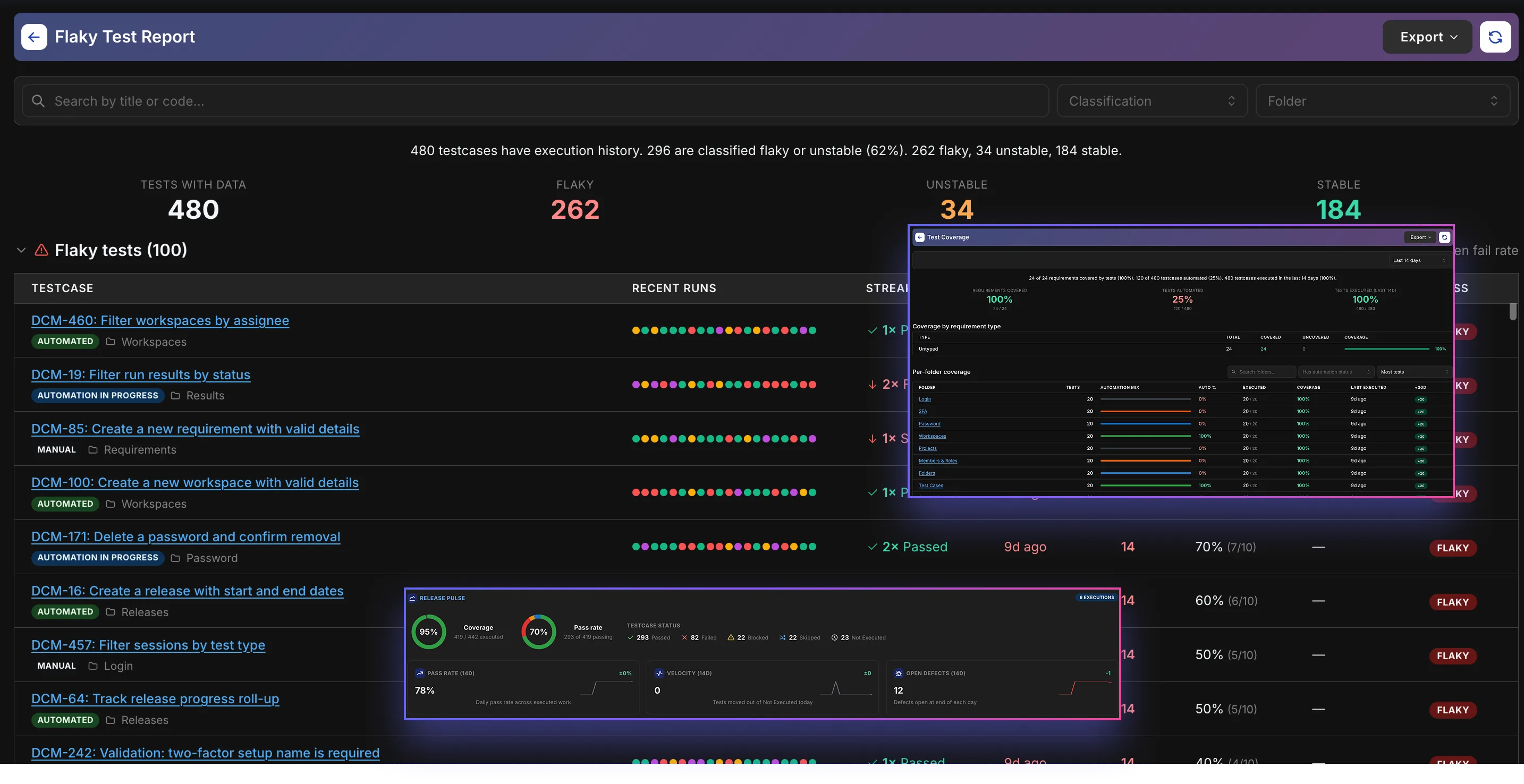
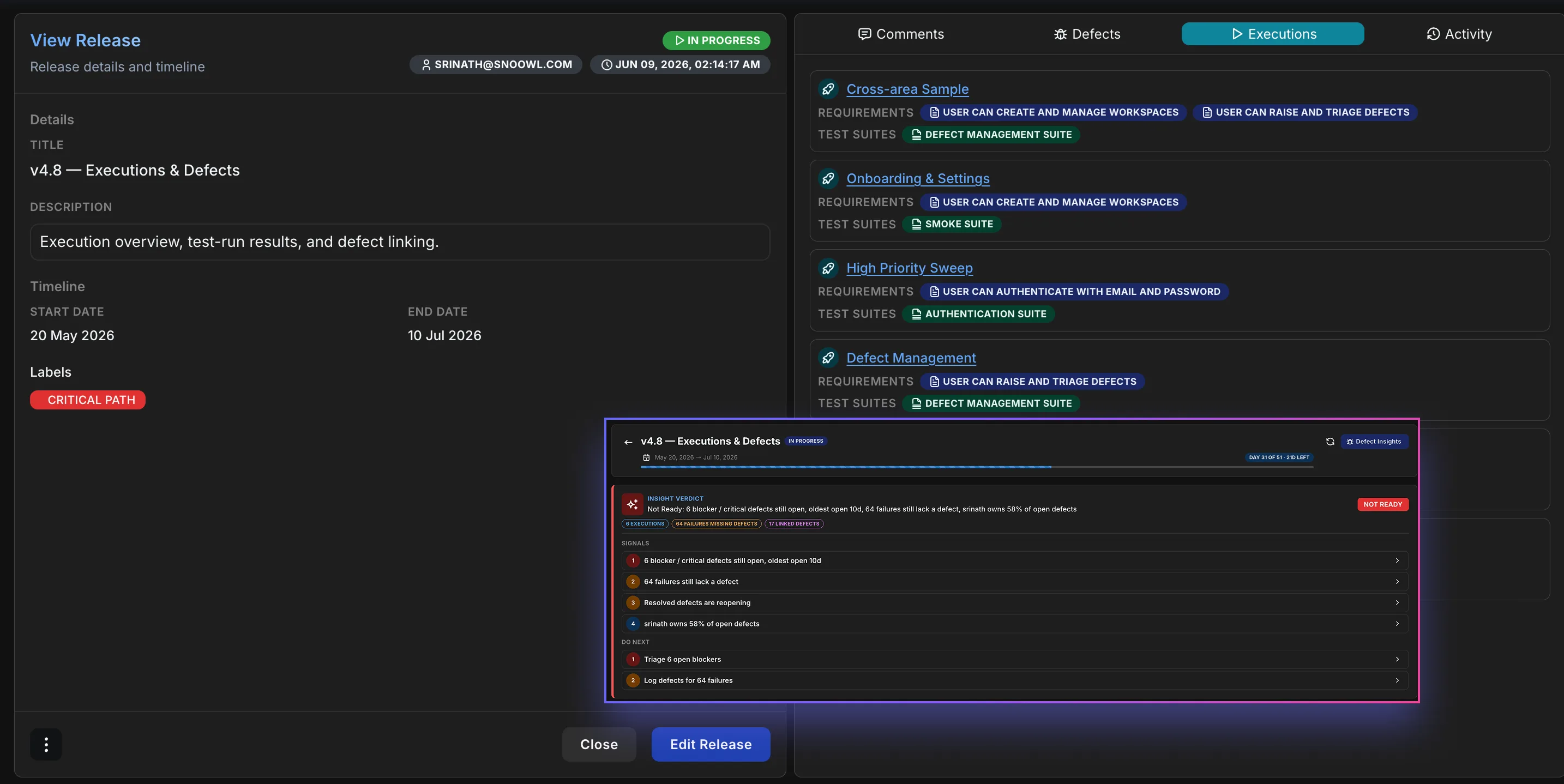
Hawzu assumes a QA or engineering team that also owns the release decision, and the model reflects it. Executions are gated to a release rather than grouped by a milestone label; coverage rolls up a requirement tree; defects carry aging, MTTR and reopen-rate; and the whole thing terminates in a scored go/no-go with a frozen sign-off snapshot. Analytics go past reporting into flaky-test detection and a 0–100 project health score.
The split is by team, not by capability. Running UAT with business users — TestMonitor, and its seat minimums are the only thing to check. Running continuous QA where you're accountable for whether the release ships — that's the case Hawzu is built for, with no minimum and nothing tiered.
See Hawzu in action
Anyone can claim they beat TestMonitor. Here's exactly what we built.
Hawzu vs TestMonitor, at a glance
Comparison reflects publicly available information and is kept as fair as we can make it. Pricing checked 3 Sep 2026 against TestMonitor's own published pricing. Details may change — check their site for the latest. Last updated 13 Sep 2026.
Why teams pick Hawzu
Dedicated release management with release-gated executions — the release is an object you can gate, not a milestone label.
A scored go/no-go readiness dashboard with an AI-written summary and a frozen sign-off snapshot, so the ship decision is evidenced.
Observatory analytics go past reporting: flaky-test tracking, defect aging and MTTR, requirement coverage, and a 0–100 project health score.
AI test case generation, plus semantic search over your defects — grounded in your real data.
No seat minimum — start with one user. Every feature is free for five people, $20 per member after.
Sometimes nobody is holding the mouse. Hawzu answers MCP, so an AI client asks about coverage, failures or a release verdict on your behalf — reading only, and only what you may read.
When TestMonitor might still make sense
TestMonitor targets non-technical UAT testers, with a simpler tester-facing flow than Hawzu.
It's a strong fit for ERP and packaged-software rollouts, where business users run scripted acceptance tests at scale.
Requirements and issues are first-class and well integrated — it's a real all-in-one, not a test tool with add-ons.
A mature, stable product with a long track record and published, predictable pricing.
Cheaper per seat once you are past five people — Professional is $16/user/month annually against our $20 per member.
Common questions
Both tools are all-in-one — so what actually differs?
Scope isn't the difference; TestMonitor genuinely covers requirements, tests and issues. The difference is what the tool is organised around. TestMonitor is built around running a requirements-led test project, especially UAT. Hawzu is built around the release: executions are gated to a release, and it ends in a scored go/no-go with a frozen sign-off snapshot.
Is Hawzu a good fit for business users running UAT?
Yes, and it's a question of who's testing. Hawzu is built for QA and engineering teams who also own requirements, defects and the release decision — that's where the release-gated executions and the scored go/no-go earn their place. For a pure UAT round run by non-technical business testers, TestMonitor's tester-facing experience is more refined than ours today.
What do the seat minimums actually cost?
TestMonitor has no free plan, and its minimums do the work: Starter includes 3 users, Professional starts at 5 and Enterprise at 10, so a four-person team on Professional pays for five. Professional is $16/user/month annually or $20 monthly — so five people is $80 a month before anyone has tested anything, where Hawzu's free plan covers the same five for nothing with every feature on. Above five we are $20 per member against their $16, so they are cheaper per seat at scale and we are cheaper until you get there.
How do I move TestMonitor data into Hawzu?
Export your test cases to Excel or CSV and run them through Hawzu's import wizard — map TestMonitor's columns onto Hawzu fields, preview a sample, and bring the folder structure across with the cases. Embedded images and file links are re-hosted into Hawzu automatically. Send the export to contact@snoowl.com if you'd like us to map it.
We run automated tests too. Does that change the recommendation?
It tilts toward Hawzu. TestMonitor's centre of gravity is manual acceptance testing; Hawzu is automation-agnostic by design — post a JUnit or xUnit report to one endpoint, or push results through the REST API, and automated results sit alongside manual ones in the same release with flaky-test detection over them.
Can we run both — TestMonitor for UAT, Hawzu for QA?
Plenty of teams split tools that way and it works, though you'd be paying twice and reconciling two sets of evidence at sign-off. If your UAT population is small enough to work in a general-purpose tool, consolidating is usually simpler. If it's a few hundred business testers, keeping TestMonitor for that is a reasonable call.
Try Hawzu free
Every feature on every plan. Free for five people, $20 per member after — no credit card.