Hawzu vs Testmo a release-first Testmo alternative
Testmo brings manual, automated and exploratory testing together, and hands requirements and defects to your issue tracker. Hawzu keeps all of it in one place and ends in a scored go/no-go — free for five people, $20 per member after.
Unified QA — plus the release it ships.
Testmo unifies the testing. Hawzu unifies the release.
Both products set out to end tool sprawl. They disagree about where the sprawl actually is.
Testmo's answer is that QA teams were running three tools for three kinds of testing — a test manager for manual cases, a dashboard for automation results, and notes in a doc for exploratory sessions — and it collapses those into one. It does this well. Automation ingestion is its strongest area: a mature CLI, broad CI integrations, and sane handling of runs with thousands of results. The exploratory session mode is a real feature we don't have an answer to.
Hawzu's answer is that the sprawl is vertical rather than horizontal. Your test cases are in one tool, the requirements they verify are in a tracker, the defects they produce are in the same tracker but a different project, and the release they're gating is a spreadsheet. Testmo accepts that split by design — requirements are linked issues, defects belong to your tracker, and a milestone stands in for a release.
Which framing is right depends on what you're accountable for. If you own test execution and someone else owns the release decision, Testmo's boundaries are drawn sensibly and the automation depth is worth a lot. If you're the person who has to say "yes, we can ship", the pieces you need for that sit outside Testmo.
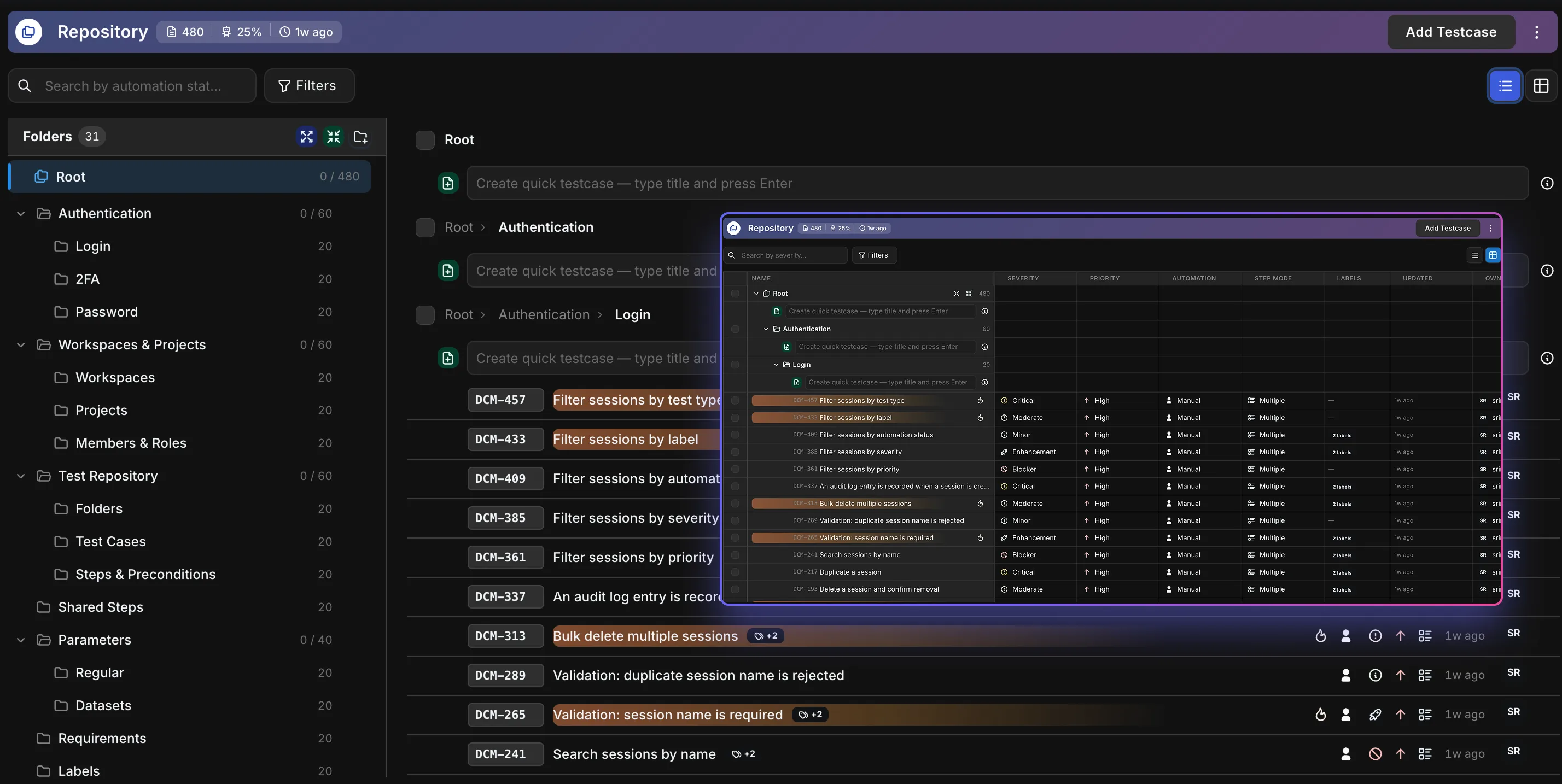
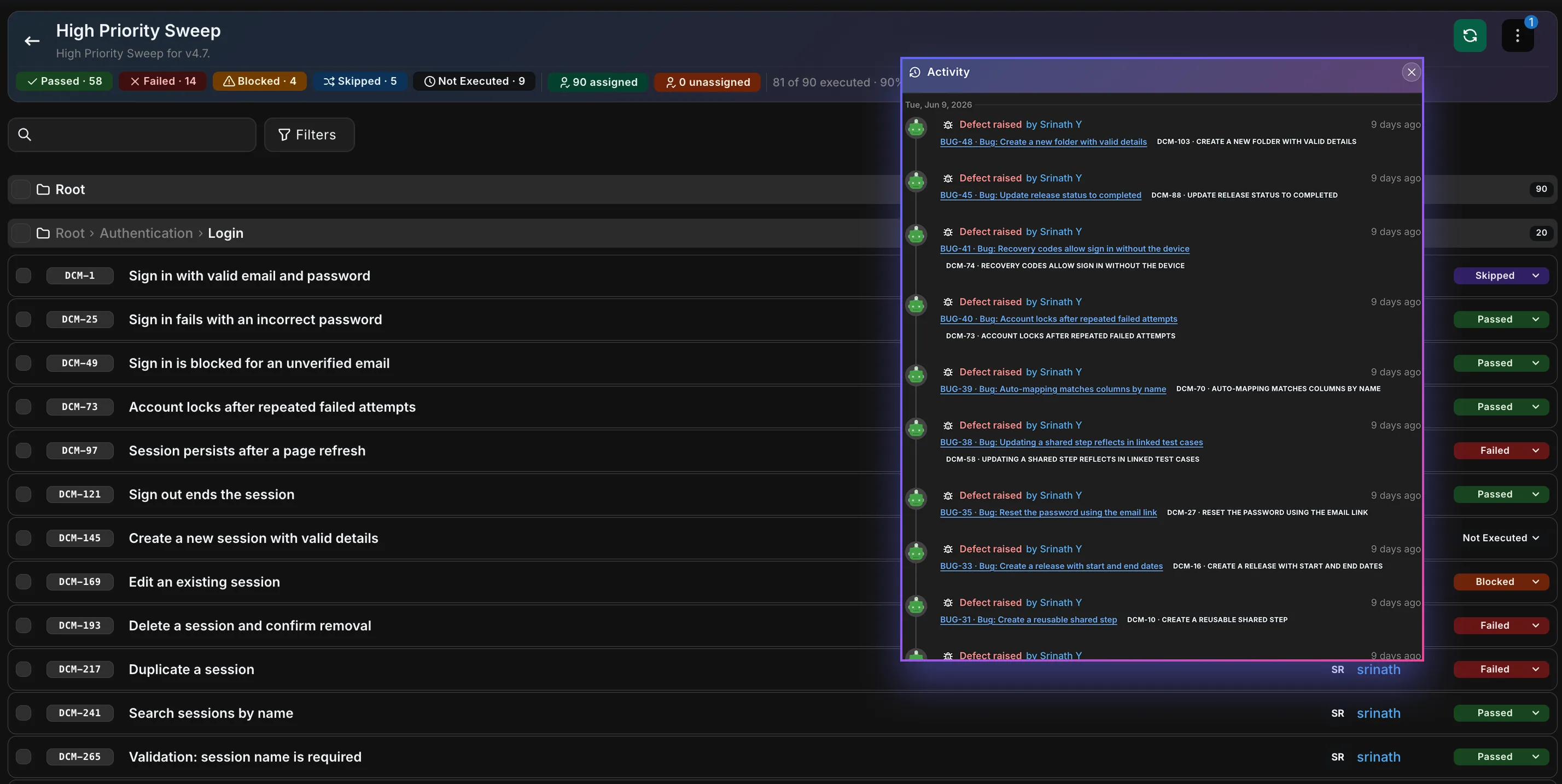
That's what Hawzu builds around: requirements as native objects with coverage rolling up a tree, a defect lifecycle tied to the failing step with aging and MTTR, and executions gated to a release that ends in a scored go/no-go with a frozen sign-off snapshot. It's a different centre of gravity, not a longer feature list.
See Hawzu in action
Anyone can claim they beat Testmo. Here's exactly what we built.
Hawzu vs Testmo, at a glance
Comparison reflects publicly available information and is kept as fair as we can make it. Pricing checked 1 Aug 2026 against Testmo's own published pricing. Details may change — check their site for the latest. Last updated 13 Sep 2026.
Why teams pick Hawzu
Native requirements with hierarchy and coverage roll-up — traceability from a requirement, not inferred from a linked issue.
Native defect tracking tied to the failing test step, with AI duplicate detection and aging analytics, rather than filing out to your tracker.
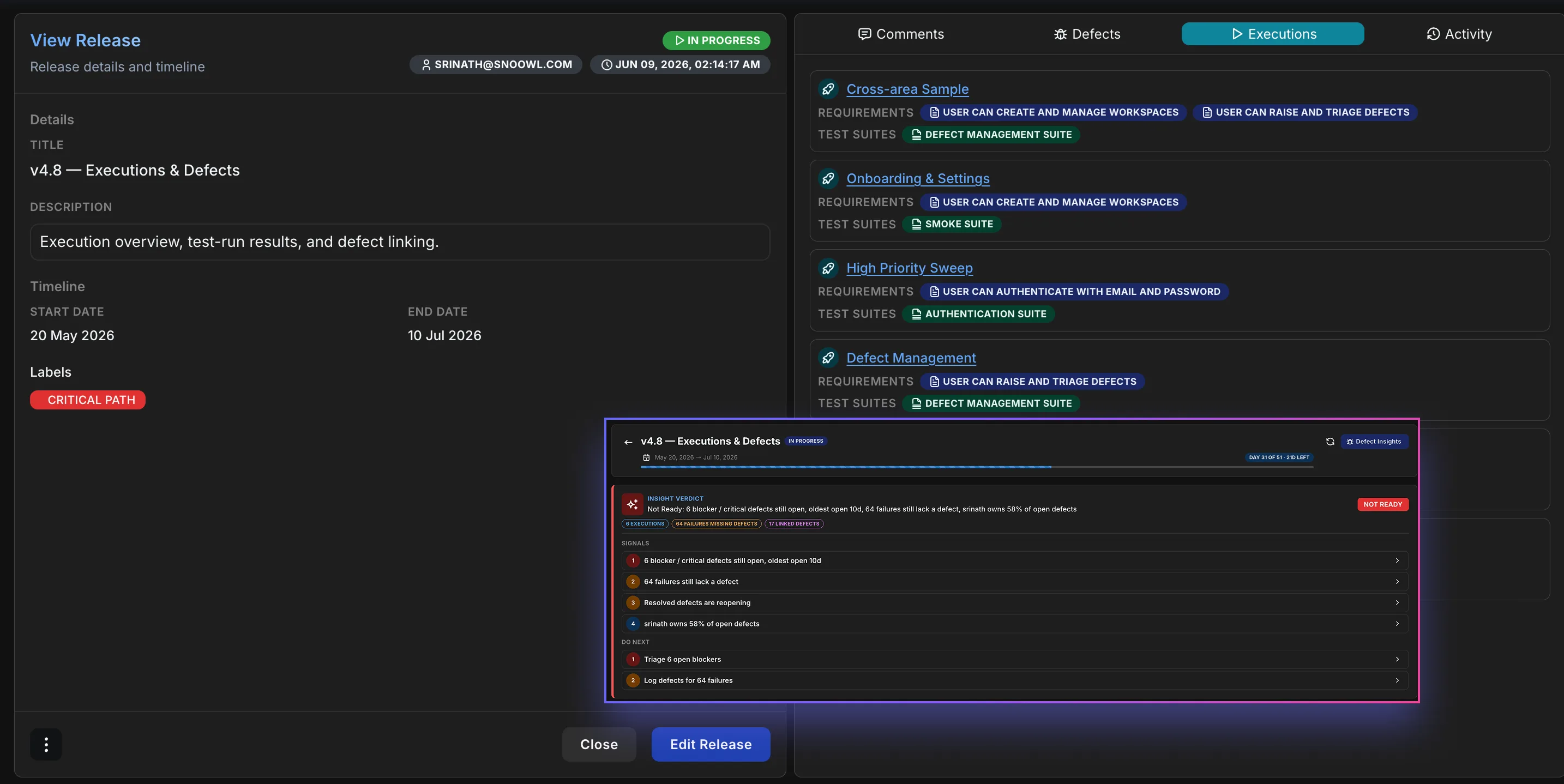
Dedicated release management with release-gated executions and a scored go/no-go readiness summary — not milestones.
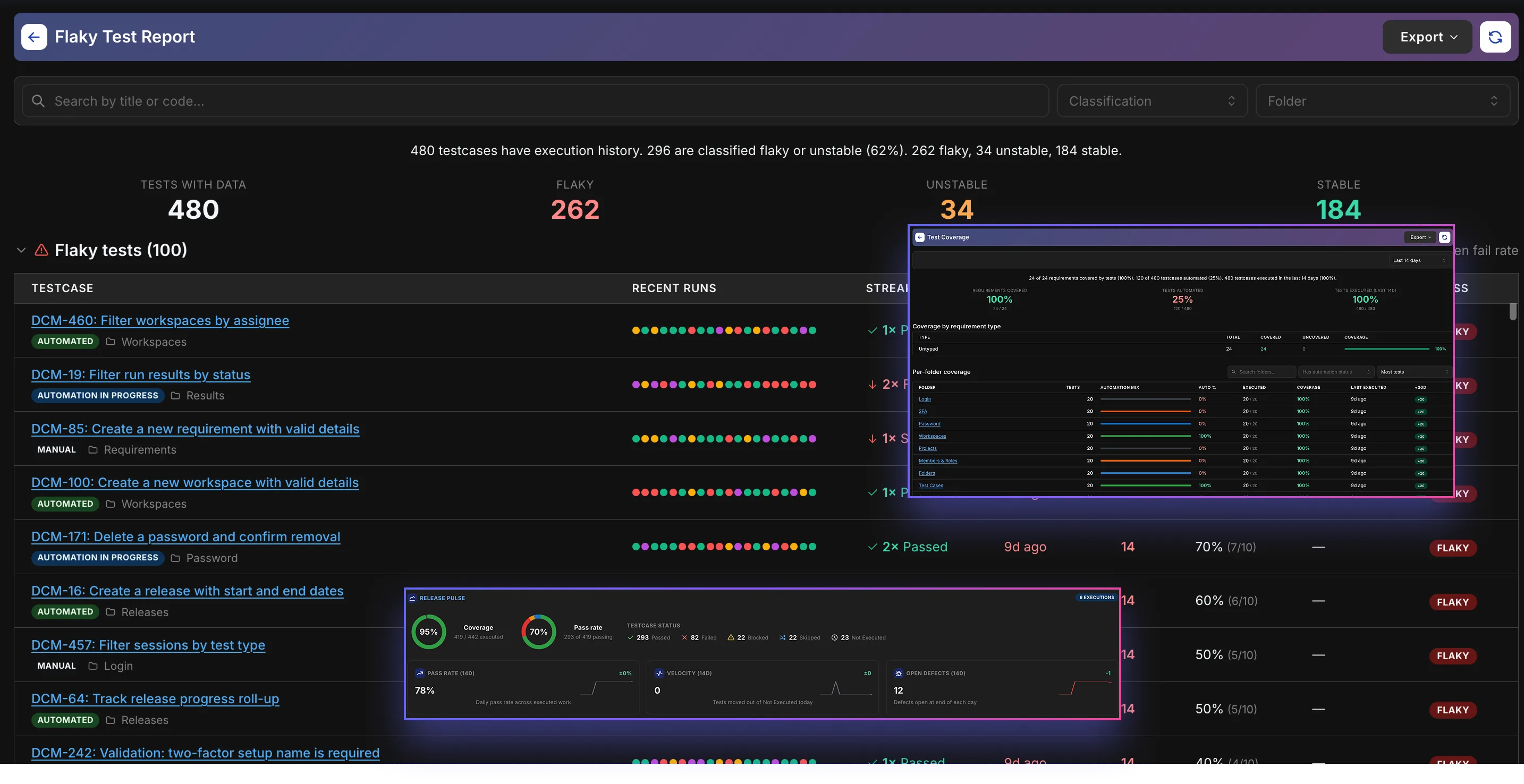
Built-in Observatory analytics: flaky-test tracking, traceability matrix, defect aging, and a 0–100 project health score.
Every feature at every team size — no 10-user block to buy into. Free for five people, $20 per member after.
It also removes a tool you would otherwise build. An agent talks to Hawzu over MCP directly, reading cases, runs and defects rather than going through a script somebody keeps alive.
When Testmo might still make sense
Automation result ingestion is Testmo's strongest suit — a mature CLI, broad CI integrations, and solid handling of large automated runs.
First-class exploratory testing sessions alongside manual and automated runs, in one tool. Hawzu has no dedicated exploratory mode.
A very polished, fast interface with a long track record and a stable, well-documented product.
If your defects and requirements already live in Jira or Linear and you want them to stay there, Testmo's integration-first model fits that cleanly.
Common questions
How is Hawzu different from Testmo?
Testmo unifies manual, automated and exploratory testing very well, and leans on your issue tracker for requirements and defects. Hawzu extends past the test run: native requirements, a native defect lifecycle, dedicated release management, and a scored release-readiness sign-off. If your question is "did these tests pass?", Testmo answers it well; if it's "can we ship?", that's what Hawzu is built around.
Does Hawzu handle exploratory testing sessions?
Not as a dedicated mode — that's a genuine gap versus Testmo. You can record exploratory work as test executions with evidence attached and raise defects from them, but there's no session timer, no session notes surface, and no session-based reporting. If exploratory is a formal part of your process, Testmo does it properly and we don't.
How does the pricing compare?
Testmo's Team plan starts at $99/month with 10 users included, so a team of three is paying for ten; Business and Enterprise scale in 25-user blocks. Hawzu bills per actual user with no block or minimum, and every feature is on every plan, including the free one.
How do I move Testmo data into Hawzu?
Export your cases to CSV or Excel from Testmo and run them through Hawzu's import wizard — map Testmo's columns onto Hawzu fields, preview a sample, and bring folder structure across. Images and file links in your case text are re-hosted into Hawzu so they don't break. Send the export to contact@snoowl.com and we'll map it for you.
We rely on Testmo's CLI for CI. What's the Hawzu equivalent?
There isn't a dedicated CLI yet — you post a JUnit or xUnit XML report to a single endpoint, or push individual results through the REST API with a scoped token. That covers most pipelines in a few lines, but if you've built tooling around Testmo's CLI expect to rewrite that step rather than swap a binary.
Can I keep defects in Jira and still use Hawzu?
Yes — connect Jira, GitHub, GitLab, Azure DevOps or Linear and push defects across. The difference from Testmo is that it's optional: Hawzu's native defect tracking works standalone, so you can also stop paying for tracker seats for people who only file test defects.
Try Hawzu free
Every feature on every plan. Free for five people, $20 per member after — no credit card.