Hawzu vs PractiTest a modern PractiTest alternative
PractiTest is an established all-in-one test manager — and it's priced like one (around $47/user/mo). Hawzu gives you native defects, requirements, releases, and analytics in a modern platform, free for five people, $20 per member after.
Modern all-in-one, no per-seat bill.
Why teams price-check PractiTest
PractiTest does almost everything you'd want an all-in-one to do. At roughly $47 per user per month, the question stops being capability and starts being arithmetic.
Give PractiTest its due: it is a real all-in-one, not a test tool with bolt-ons. Requirements, tests, runs and issues are all first-class, and the filter-and-view model underneath them is deep — teams who invest in it build reporting that is hard to reproduce elsewhere. It has been refined over many years and it shows.
The cost lands differently depending on team shape. At around $47/user/month on the Team plan billed yearly, a ten-person QA group is looking at roughly $5,600 a year for test management alone, before the tracker and CI tooling around it. Move up to Corporate for enterprise features and there's a ten-licence minimum, which means a six-person team pays for ten.
That arithmetic is what sends people looking, and it's usually not because anything is wrong. It's a renewal conversation, or a team that grew from four to fourteen and watched the line item scale with it, or a lead who wants two more testers and can't justify the marginal seats.
Hawzu covers the same ground — native defects, requirements, tests — with no seat minimum and a free plan for five, and adds the release layer PractiTest treats as a milestone: executions gated to a release, coverage rolled up a requirement tree, and a scored go/no-go at the end. PractiTest is ahead on maturity and enterprise plumbing; those are listed below.
See Hawzu in action
Anyone can claim they beat PractiTest. Here's exactly what we built.
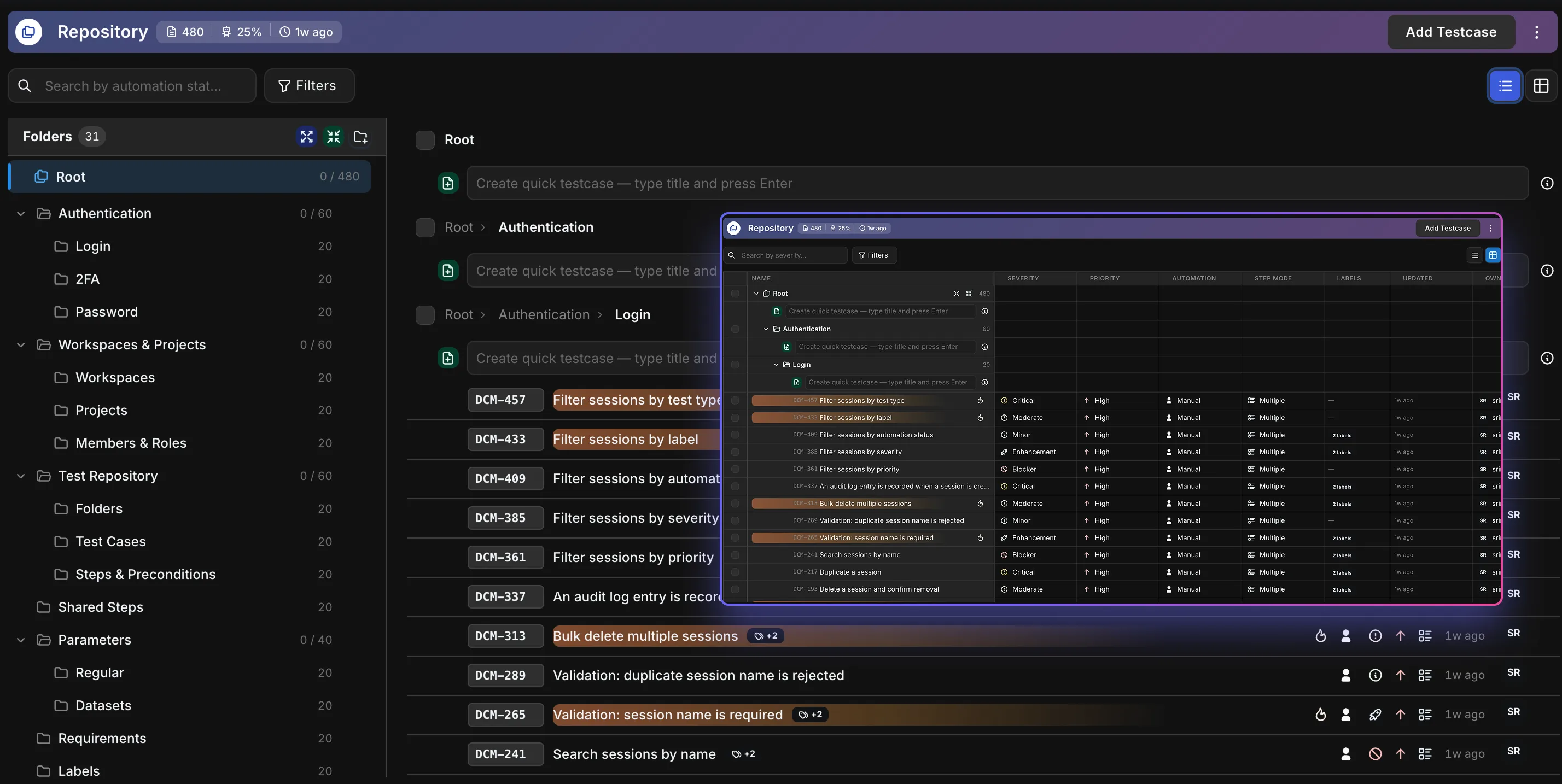
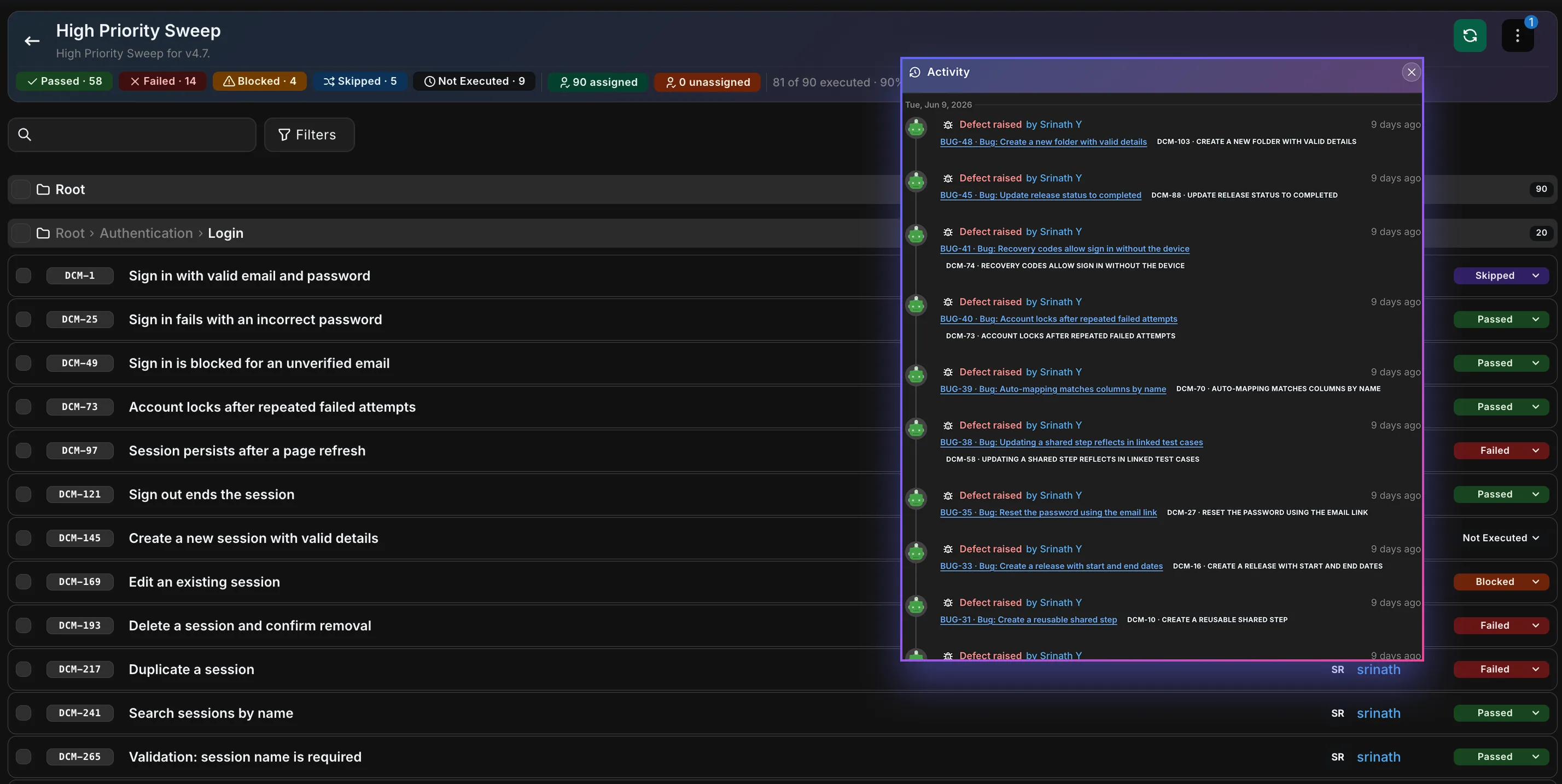
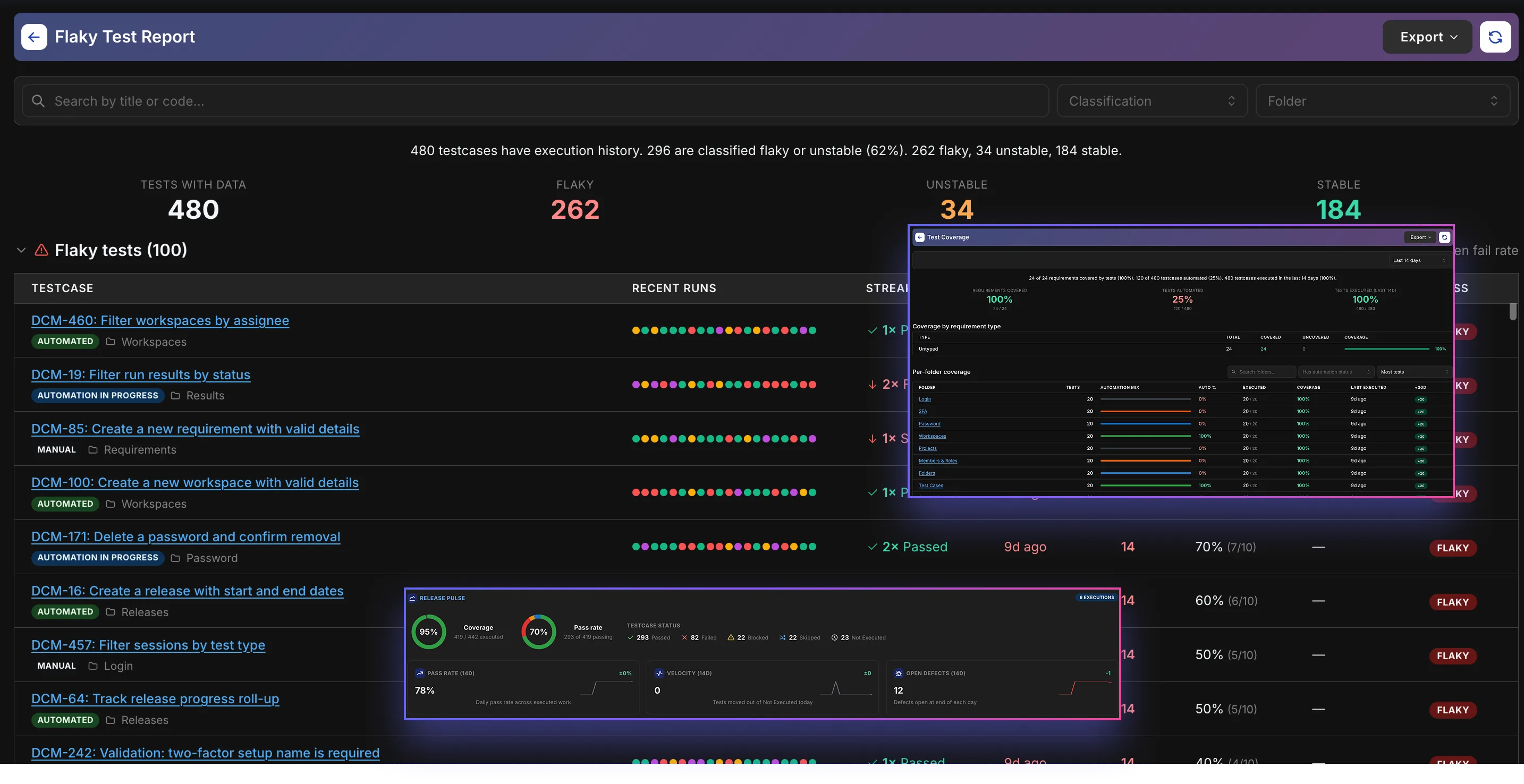
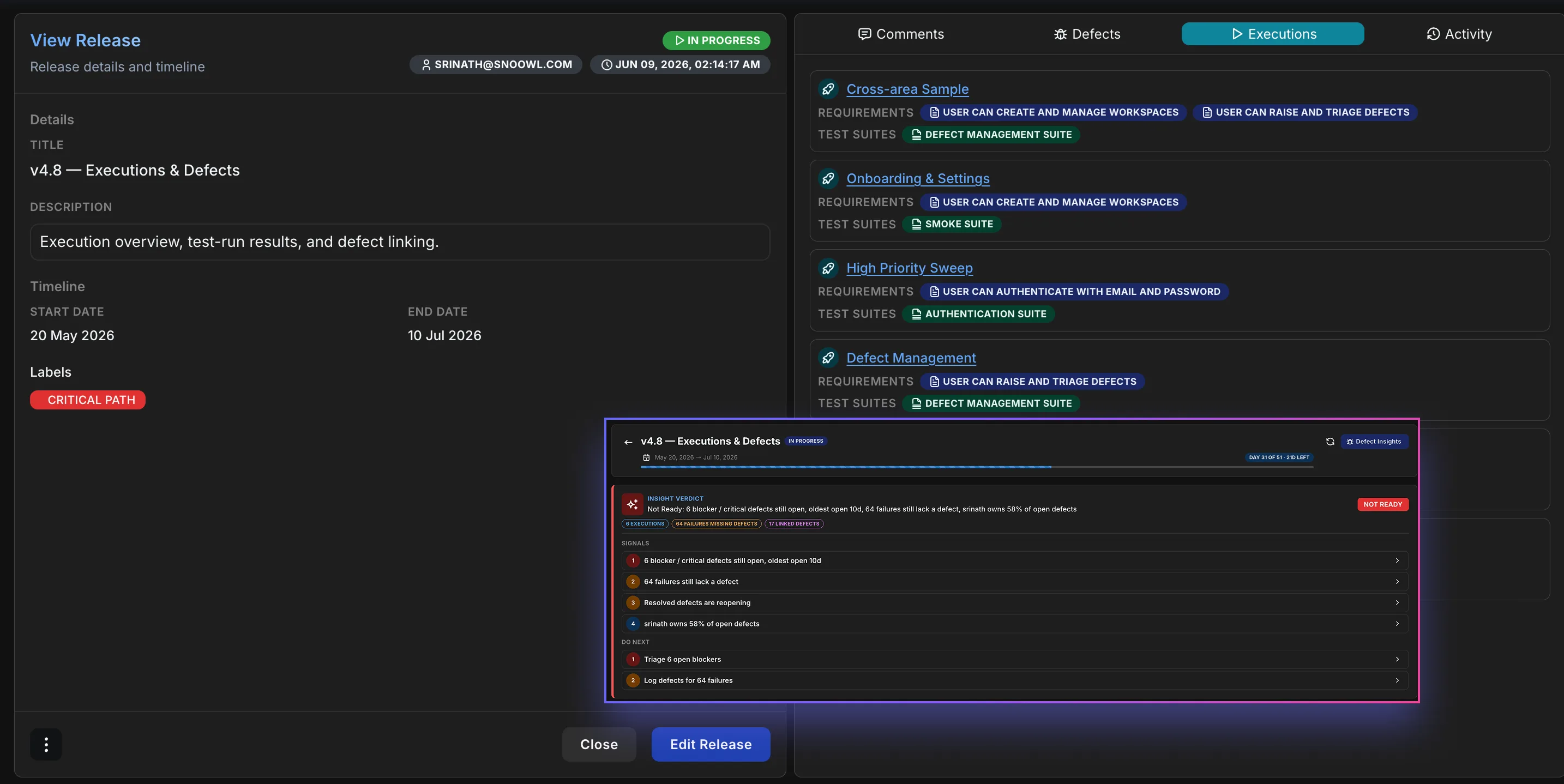
Hawzu vs PractiTest, at a glance
Comparison reflects publicly available information and is kept as fair as we can make it. Pricing checked 20 Jul 2026 against PractiTest's own published pricing. Details may change — check their site for the latest. Last updated 4 Oct 2026.
Why teams pick Hawzu
No seat minimums or enterprise packs — start with a single user.
Native defect tracking, requirements, releases, and Observatory analytics — in one modern platform.
A clean, fast, modern interface built for 2026 workflows.
AI test case generation, plus similar-bug search over your defects.
Automation-agnostic — keep Selenium, Playwright, or Cypress and report results in via API.
No seat minimums, full feature access — free for five people, $20 per member after.
MCP access adds nothing to the bill in either direction: no uplift to switch it on, and no Hawzu credits when an agent runs, because the model doing the reasoning is one you already pay for.
When PractiTest might still make sense
PractiTest is a genuine all-in-one with a long track record — requirements, tests, issues and dashboards refined over many years.
Its filter-and-view model is deep; teams who invest in it build reporting that is hard to reproduce elsewhere.
Formal support, an established compliance posture and years more maturity. Single sign-on now ships on both.
A published, stable price list, so you know what year two costs.
Common questions
How much does Hawzu cost compared to PractiTest?
PractiTest's Team plan is around $47/user/mo billed yearly, and its enterprise Corporate plan is quote-only with a 10-licence minimum. Hawzu's Growth plan is $20 per member per month billed yearly, with no seat minimum and a free plan for teams of five. For a ten-person team that is roughly $5,640 a year against $2,400 — and every feature is on both plans.
Is there a minimum number of seats?
No — you can start with a single user and add people one at a time. PractiTest's Team plan is billed per user; only its enterprise Corporate plan carries the 10-licence minimum, which is what catches out teams of six or seven who need a Corporate feature.
Is there a free PractiTest alternative?
Yes — Hawzu's free plan is for up to five people and three projects, with requirements, test runs, defects, dashboards, and AI test case generation within a monthly allowance. It isn't a trial: no card, no end date. When a sixth person joins you move to Growth at $20 per member a month, and nothing you built changes.
How do I move PractiTest data into Hawzu?
Export your tests to Excel or CSV and run them through Hawzu's import wizard — map PractiTest's columns onto Hawzu fields, preview a sample, and bring folder structure across with the cases. Images and file links embedded in your steps are re-hosted into Hawzu so they keep working. Send the export to contact@snoowl.com and we'll map it for you.
PractiTest has filters and views. What's the Hawzu equivalent?
Two things split that job. Dynamic suites are filter-based and re-populate themselves as the repository changes, which covers the "a view that is also a test set" use case. Observatory covers reporting, question-first rather than view-first. If you've built deep custom views in PractiTest, expect to rebuild rather than port them.
Both have AI. How does Hawzu's differ from SmartFox?
They're aimed at different things. Hawzu's AI authors test cases from a requirement, a pasted spec, or a PDF — mapping the scenarios worth covering first, naming the requirements nothing was proposed for, then writing full cases for the ones you pick. It also rewrites and proofreads existing text and runs a similar-bug search across your defects. SmartFox is aimed at insight over your existing test data, which is a different job; the honest difference is that ours is included rather than priced as a separate capability.
What does PractiTest have that Hawzu doesn't?
Single sign-on now ships on both, so what is left is maturity: PractiTest has years more of it, a formal support organisation, and a stable published price you can budget against Hawzu publishes pricing when it announces it. If procurement needs certainty about year two, that's a real argument for staying.
Try Hawzu free
Every feature on every plan. Free for five people, $20 per member after — no credit card.