Hawzu vs TestLink a hosted TestLink alternative
- TestLink
- Free software you host and maintain.
- Hawzu
- Free to use, nothing to maintain.
TestLink costs nothing to licence — you pay in servers, PHP upgrades and backups instead. Hawzu is a hosted, modern platform with native defects, dedicated releases, and built-in analytics, and it's free for five people, $20 per member after.
Hawzu vs TestLink, at a glance
| Feature | Hawzu | TestLink |
|---|---|---|
| Licence cost | Free ≤5 users, then $20/user/mo | Free (GPL) |
| You run the servers PHP/MySQL install, upgrades and backups are yours | no (hosted) | Yes |
| Interface | Modern web app | Long-standing PHP UI |
| Release cadence Latest stable 1.9.20, December 2025 | Continuous | Infrequent |
| Test cases, suites & manual runs | Yes | Yes |
| Native defect tracking TestLink links out to Bugzilla, Mantis, Jira and others | Yes | No |
| Requirements & traceability | Yes | Yes |
| Release management | yes (dedicated) | Builds within a test plan |
| Analytics & dashboards | Built-in analytics (Observatory) | Static reports & charts |
| Release readiness & sign-off | Readiness verdict + AI summary | No |
| AI test case generation + similar-bug search | Yes | No |
| Automation-agnostic results API | Yes | yes (XML-RPC) |
| Record a test in the browser | Steps + Playwright & pytest code | No |
| Self-hosted / on-prem Hawzu is cloud-only today | No | Yes |
| Test case import Excel/CSV wizard with column mapping | Yes | Yes |
| Test export / data portability | Yes | Yes |
| Pricing | Free ≤5 users, then $20/user/mo | Free (GPL, self-hosted) |
Comparison reflects publicly available information and is kept as fair as we can make it. Pricing checked 1 Aug 2026 against TestLink's own published pricing. Details may change — check their site for the latest. Last updated 4 Oct 2026.
What TestLink actually costs
TestLink's licence is free. The bill arrives as somebody's Tuesday afternoon — the PHP upgrade, the failed backup, the plugin that stopped working after the last patch.
There's a reason TestLink is still everywhere twenty years on. It's GPL, it runs on a stack any sysadmin can host, and for a team with no software budget it removed a genuine barrier to doing structured testing at all. Plenty of QA functions were built on it, and the people who know it know it deeply.
The honest accounting is that the licence cost moved rather than disappeared. Somebody keeps the PHP version current, restores the database when a migration goes sideways, and re-tests the Bugzilla link after an upgrade. At a large organisation that's a fraction of an ops role and easy to absorb. At a ten-person team it's the QA lead, and it's time not spent testing.
The interface is the other quiet cost. TestLink was designed against the web conventions of its era, and onboarding a new tester now means teaching a mental model rather than pointing them at a screen. It's still maintained — 1.9.20 shipped in December 2025 — but the cadence is measured in years, not sprints, so that gap widens rather than closes.
Hawzu removes the ops entirely and brings the pieces TestLink deliberately delegates: native defects tied to the failing step rather than a link out to Bugzilla, requirement coverage that rolls up a tree, and live analytics instead of static report pages. What you give up is real and worth weighing — no source access, no air-gapped install, and cloud-only hosting.
See Hawzu in action
Anyone can claim they beat TestLink. Here's exactly what we built.
Test cases, suites, and folders — your system of record.
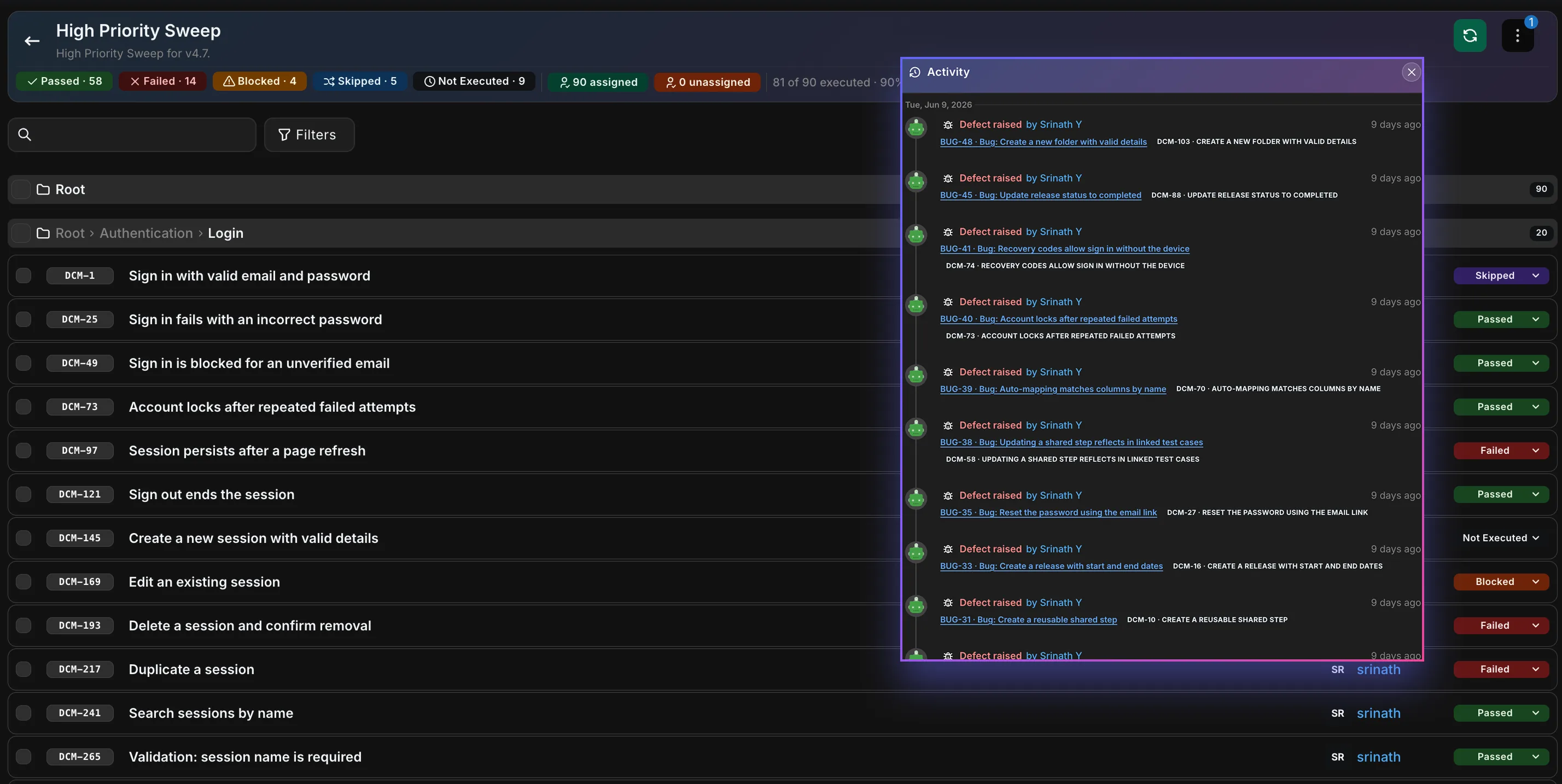
Run test cases, record pass/fail, and track executions live.
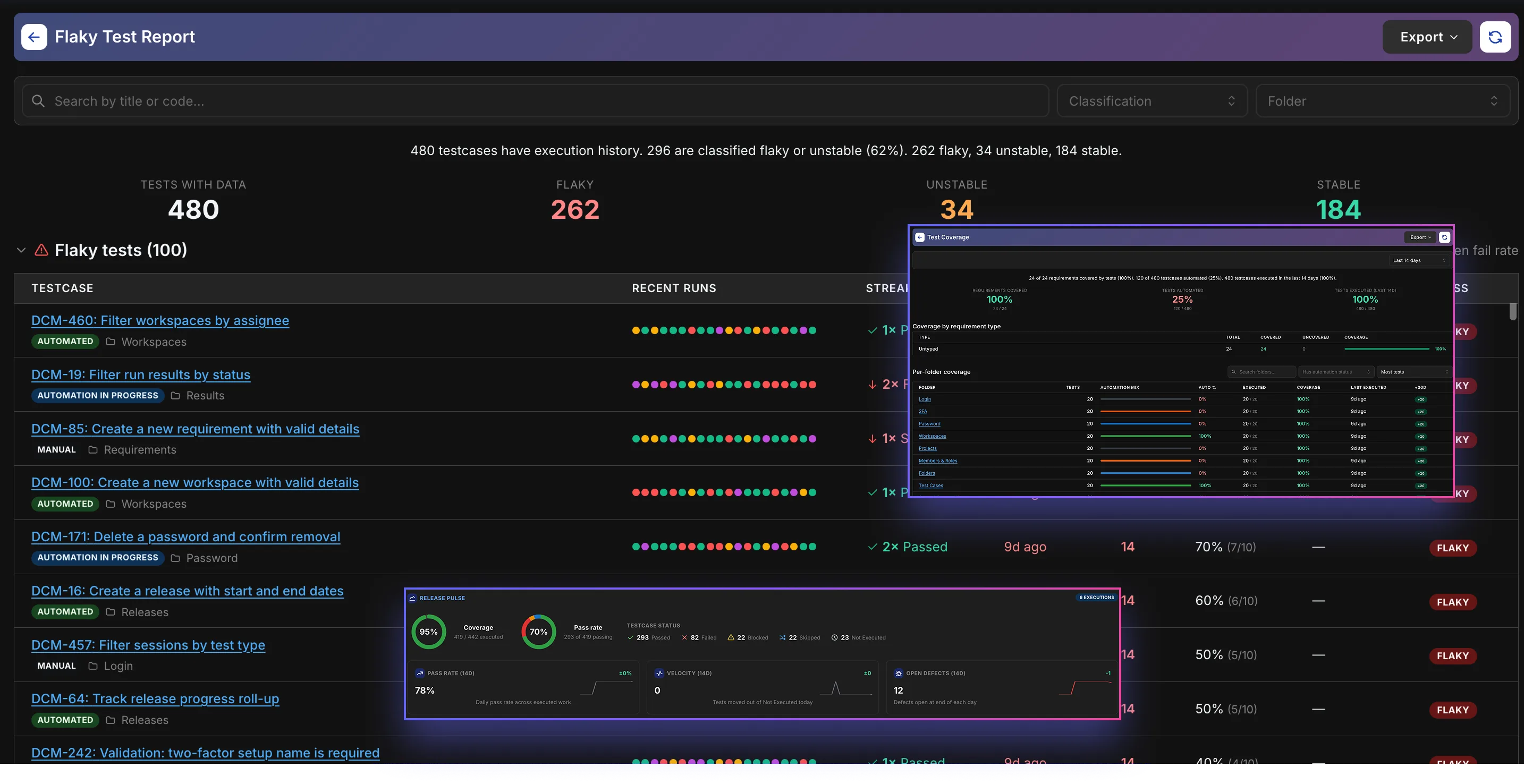
Built-in Observatory analytics — flaky tests, coverage, and release health.
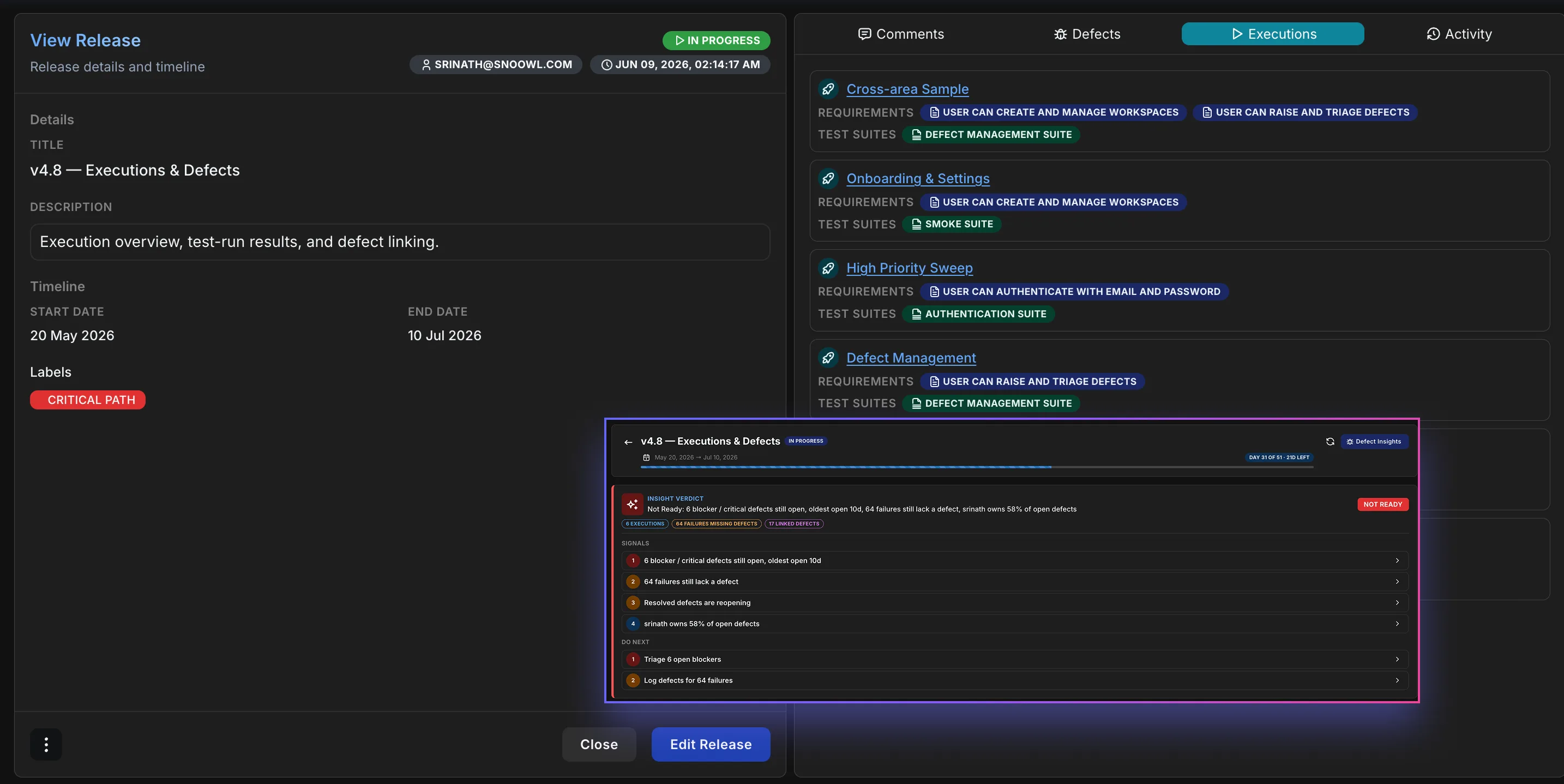
Dedicated releases with gated executions and readiness scoring.
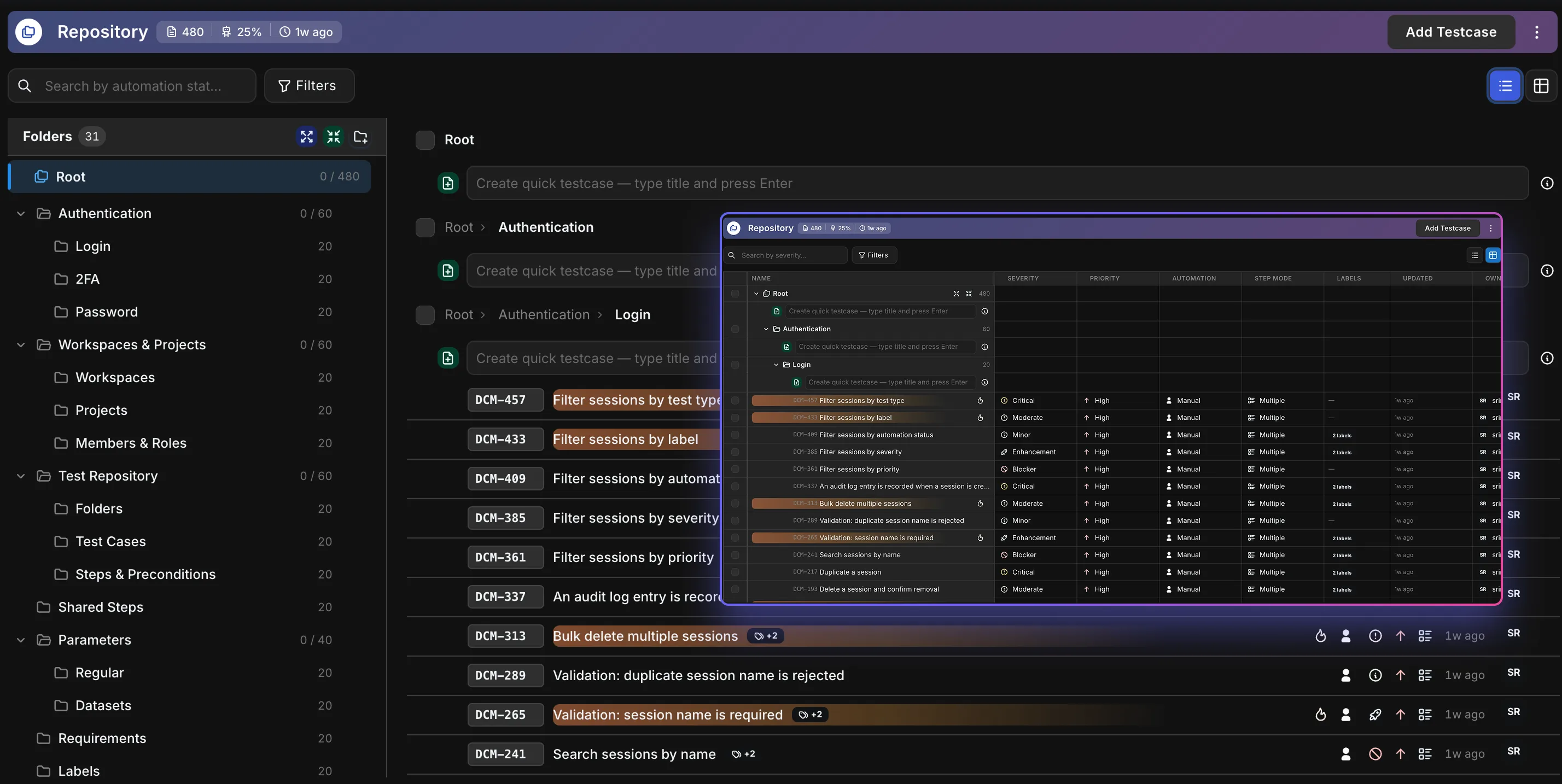
Test cases, suites, and folders — your system of record.
Run test cases, record pass/fail, and track executions live.
Built-in Observatory analytics — flaky tests, coverage, and release health.
Dedicated releases with gated executions and readiness scoring.
Why teams pick Hawzu
- Nothing to install, patch or back up — no PHP version to keep current, no database to migrate at upgrade time.
- Native defect tracking built in, tied to the failing test step, rather than linking out to Bugzilla or Mantis.
- Dedicated release management with release-gated executions and a scored readiness verdict.
- Built-in Observatory analytics: flaky-test tracking, traceability matrix, defect aging — live, not static report pages.
- AI test case generation, plus similar-bug search over your defects.
- A modern interface your team won't need a walkthrough for — free for five people, $20 per member after.
- No server to maintain for that, either. The MCP endpoint comes with the hosted product, so an agent you already run reads records through it — read-only, inside your existing permissions.
When TestLink might still make sense
- Zero licence cost, forever, with no vendor to depend on. If budget is the constraint rather than time, that's hard to beat.
- Total data control — TestLink runs entirely inside your own network, including air-gapped environments. Hawzu is cloud-only today.
- It's GPL, so you can read and modify the source. If you need a behaviour no vendor will build, you can build it yourself.
- A very large installed base and two decades of institutional familiarity — plenty of teams already know it, and plenty of documentation exists.
Common questions
Is TestLink still maintained?
Yes, though releases are infrequent — the latest stable release is 1.9.20, published in December 2025. It's a long-established GPL project rather than an abandoned one; just expect a cadence measured in years rather than sprints.
TestLink is free. Why would I pay for Hawzu later?
Because the licence is only part of the cost. Self-hosting means someone owns the PHP stack, the database, the backups and the upgrades — real hours that don't show up on an invoice. If your team has spare ops capacity and wants source-level control, TestLink answers that well.
How do I get TestLink test cases into Hawzu?
TestLink exports test suites as XML, and it can also produce spreadsheet output. Convert to Excel or CSV and run it through Hawzu's import wizard — map TestLink's columns onto Hawzu fields, preview a sample, and bring the suite hierarchy across as folders. Send the export to contact@snoowl.com if you'd rather we handled the mapping.
Can Hawzu run inside our network like TestLink?
No. Hawzu is cloud-only today and on-prem is a roadmap item, not a feature. For air-gapped environments or anywhere test data legally cannot leave your perimeter, self-hosted TestLink remains the correct choice.
We link TestLink to Bugzilla for defects. What changes?
Defects stop being a link and become part of the same system. A Hawzu defect is raised from the failing step with the execution context attached, and it carries aging, MTTR and reopen-rate analytics automatically. If you want defects to stay in Bugzilla, that's the one tracker we don't integrate with — Jira, GitHub, GitLab, Azure DevOps and Linear are supported.
Does the XML-RPC API have an equivalent?
Yes, a REST API with scoped tokens — 41 endpoints covering test cases, suites, requirements, runs and results — plus a single-call JUnit/xUnit report upload for CI. Any XML-RPC scripts you've built will need rewriting, but the coverage is broader than TestLink's.
Try Hawzu free
Every feature on every plan. Free for five people, $20 per member after — no credit card.