Hawzu vs Kiwi TCMS a hosted Kiwi TCMS alternative
Kiwi TCMS is well-maintained open source — and it's yours to host, upgrade and back up. Hawzu is hosted, with native defects, native requirements, dedicated releases, and built-in analytics, free for five people, $20 per member after.
Open source, minus the ops.
Choosing between open source and hosted
Kiwi TCMS is the open-source test manager that didn't stagnate. If you're weighing it against Hawzu, you're really weighing control against operating cost.
Start with what Kiwi TCMS gets right, because it's the reason this is a real decision rather than a formality. It ships frequently, the team is responsive, the Python/Django codebase is readable and extensible, and the CI plugin ecosystem is well established. Among open-source options it is the healthiest project in the category.
The trade is operational, not functional. Community Edition is a container you run — you own the database, the backups, the upgrade path, and the incident at 2am when storage fills. Kiwi offers paid tenants from around $25/month if you'd rather not, which is a reasonable middle path, though at that point you're comparing hosted products rather than comparing against free.
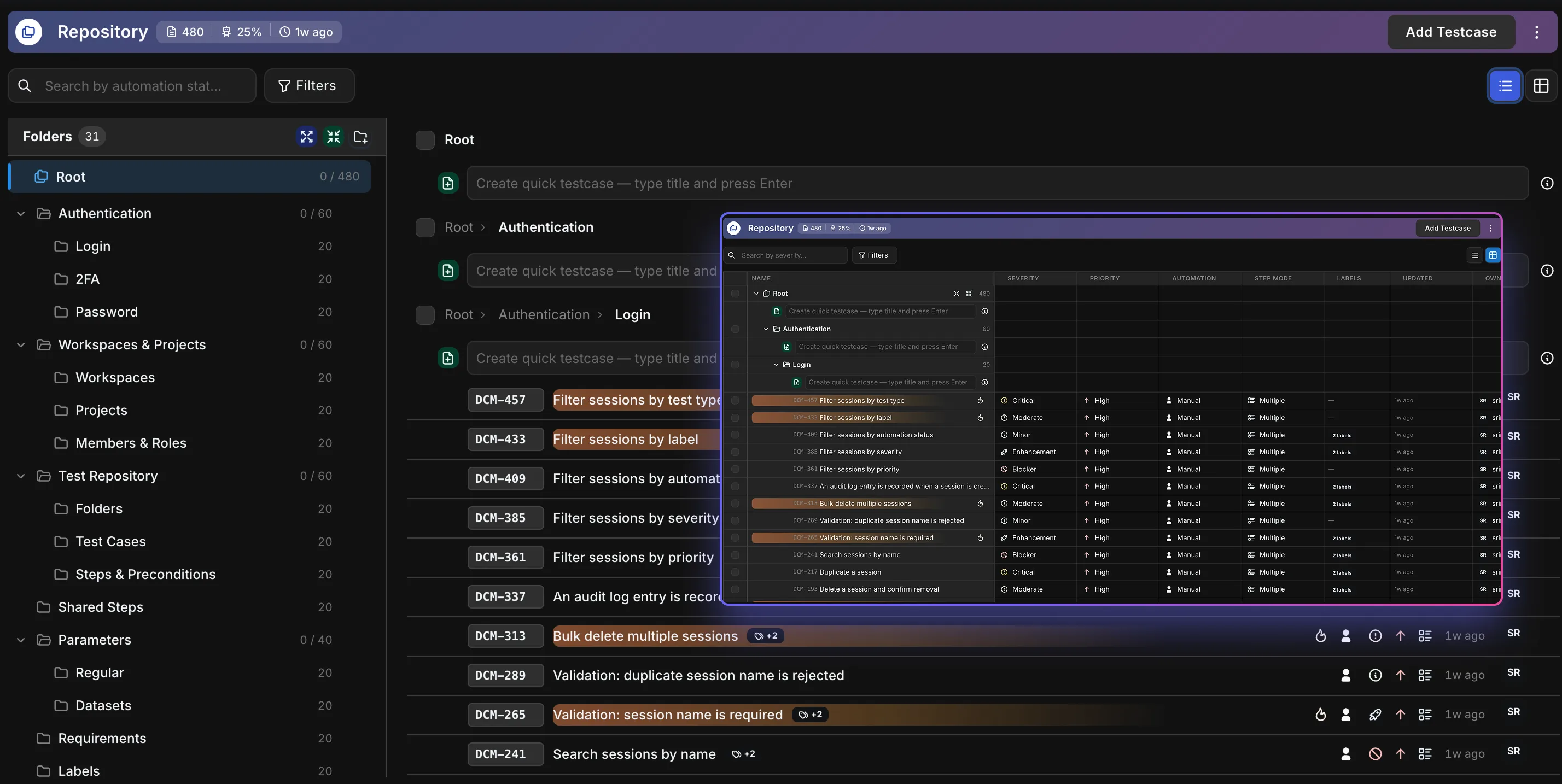
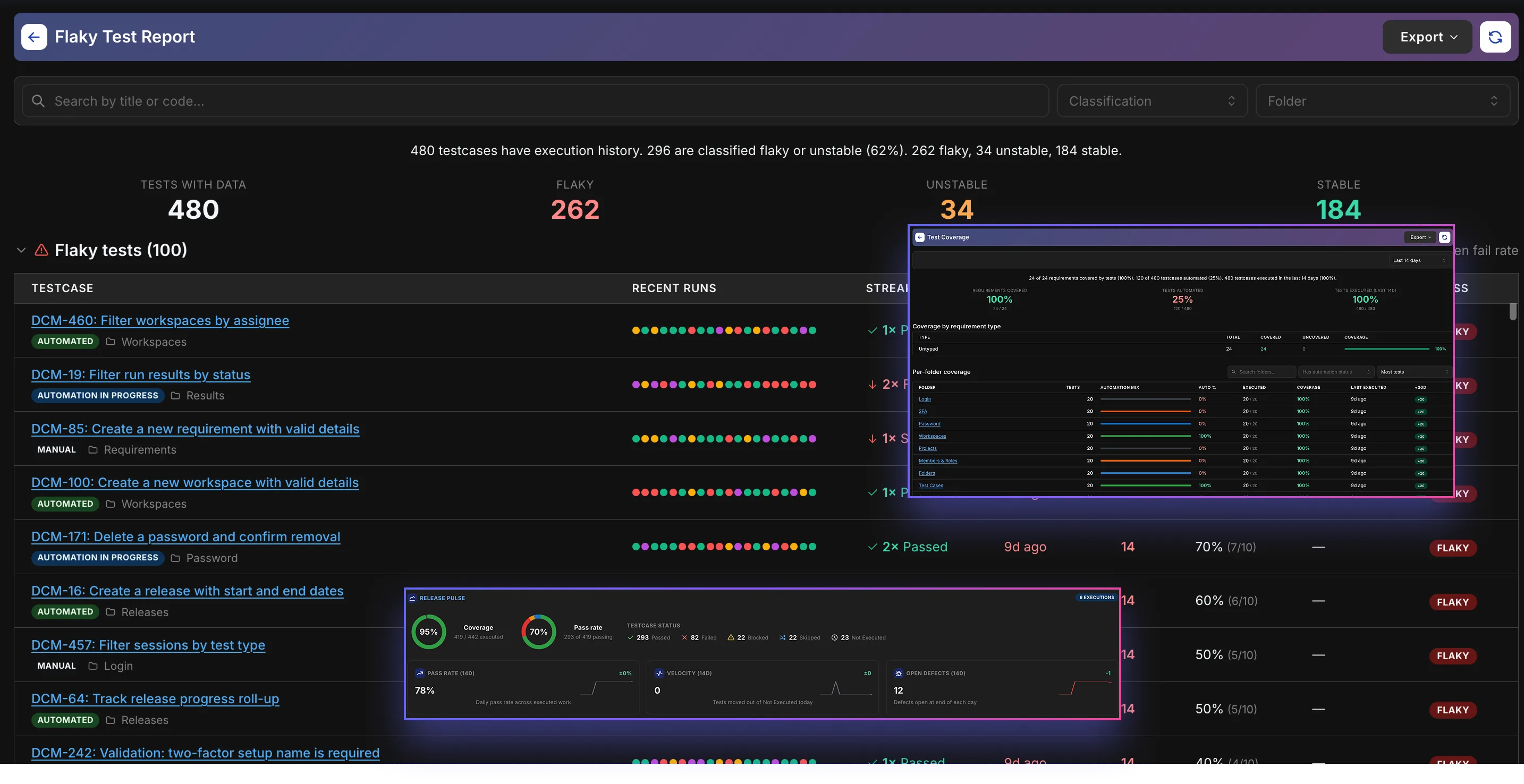
The functional gaps are narrower than with older open-source tools but they're specific. Defects live in your tracker — Kiwi integrates rather than owning them. Requirements are traceability against linked issues rather than native objects you can build a coverage tree from. And the reporting is telemetry rather than a readiness verdict.
Hawzu closes those three and removes the ops, at the cost of everything self-hosting gives you: no source access, no air-gapped install, no ability to patch a behaviour you don't like. If you value the codebase being yours, that's not a trade worth making, and we'd rather you stayed on Kiwi than found that out in month three.
See Hawzu in action
Anyone can claim they beat Kiwi TCMS. Here's exactly what we built.
Hawzu vs Kiwi TCMS, at a glance
Comparison reflects publicly available information and is kept as fair as we can make it. Pricing checked 1 Aug 2026 against Kiwi TCMS's own published pricing. Details may change — check their site for the latest. Last updated 13 Sep 2026.
Why teams pick Hawzu
Nothing to deploy or operate — no container to run, no database to back up, no upgrade window to plan.
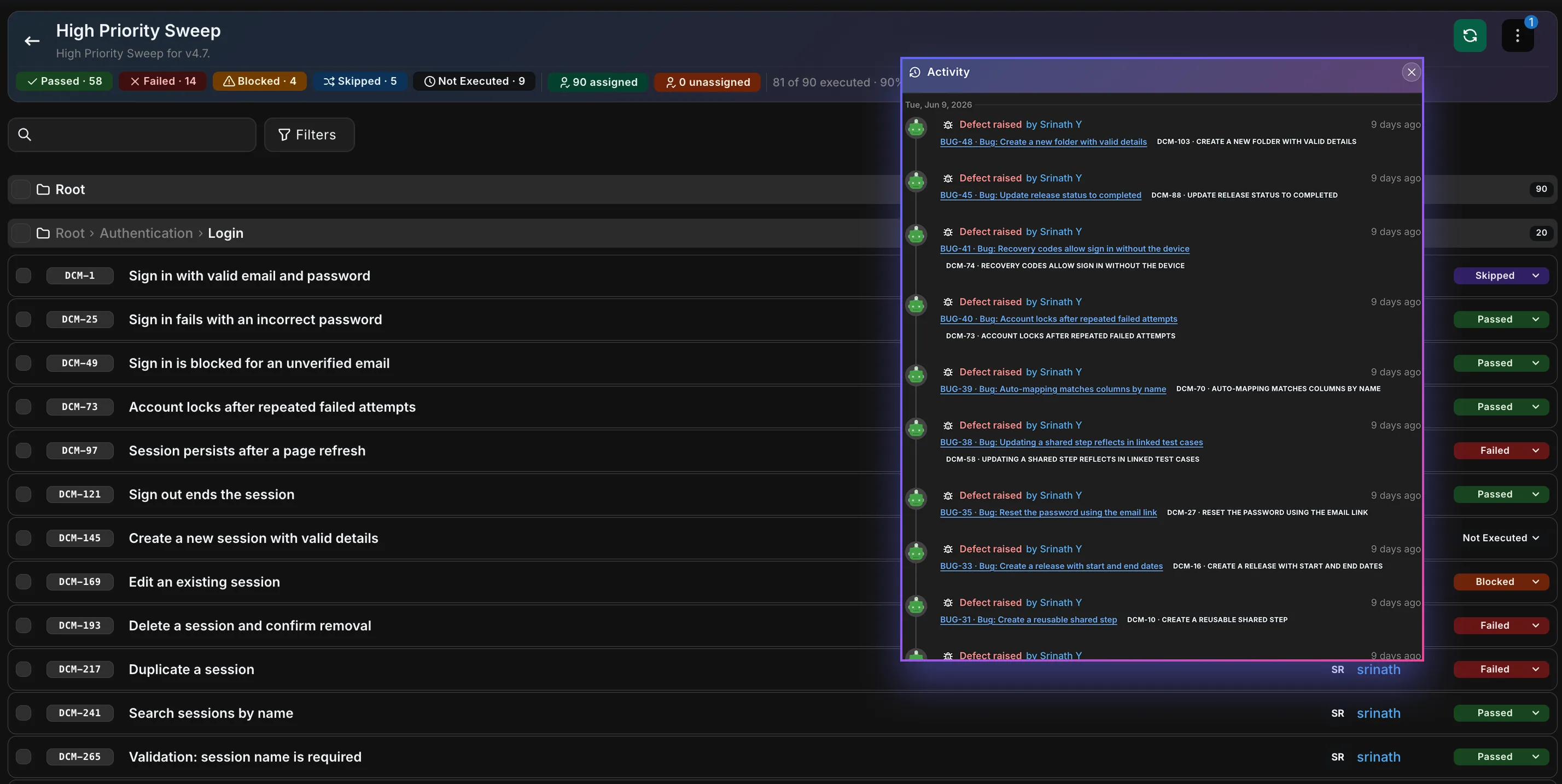
Native defect tracking built in, tied to the failing test step, rather than filing out to GitHub or Bugzilla.
Native requirements with hierarchy and coverage roll-up, not traceability inferred from linked issues.
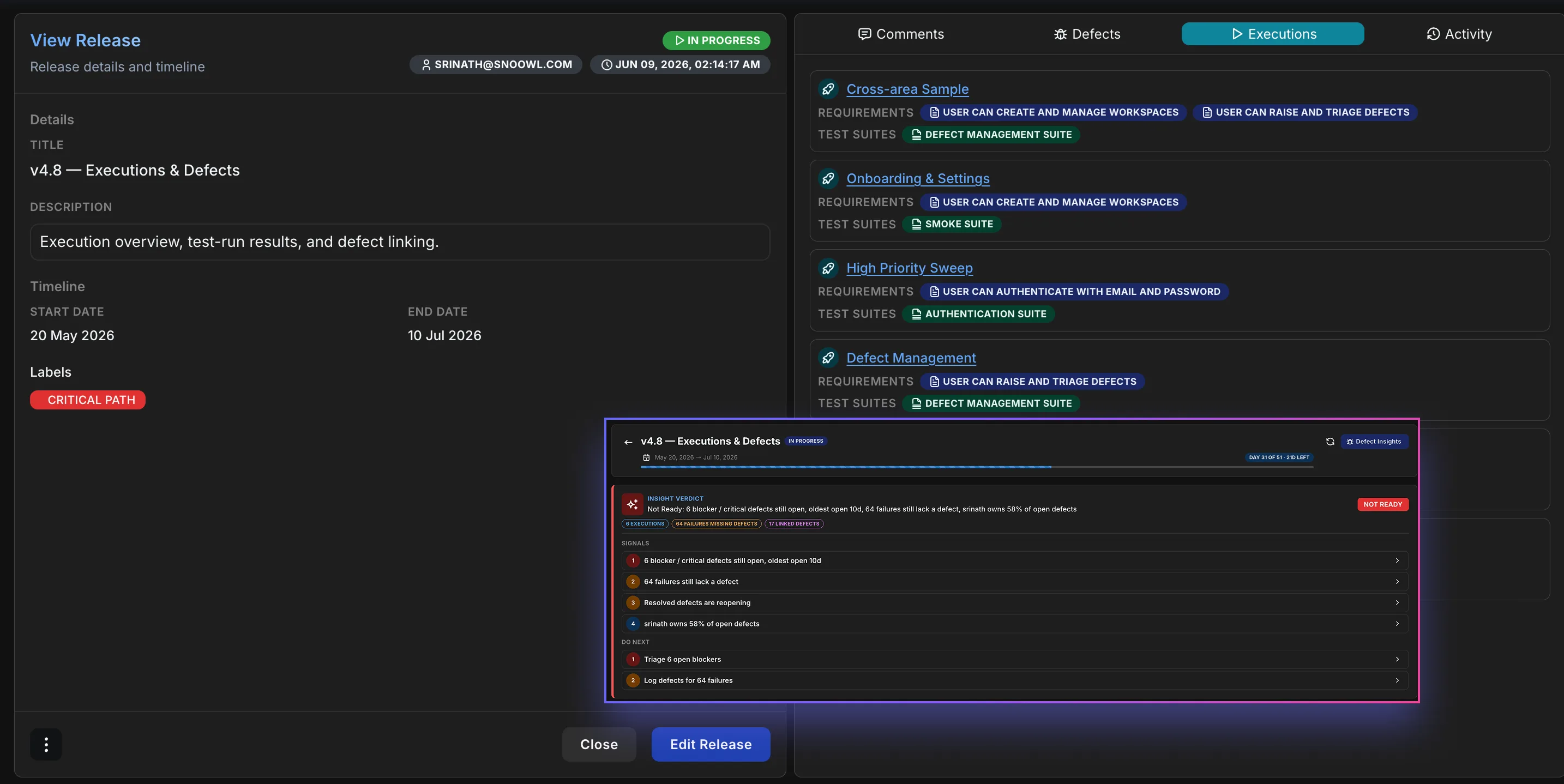
Dedicated release management with release-gated executions and a scored go/no-go readiness summary.
Built-in Observatory analytics and AI test case generation, plus semantic search over your defects.
Nothing to deploy for AI access either. The MCP endpoint is part of the hosted product — a client authenticates with a scoped token and never reads past what that token covers.
When Kiwi TCMS might still make sense
It is actively maintained open source — frequent releases and a responsive team. If you want OSS test management that isn't standing still, this is the one.
Full data control, including air-gapped and on-premises installs. Hawzu is cloud-only today.
A Python/Django codebase you can read, extend and patch yourself, with a well-established plugin ecosystem for CI result reporting.
Free forever under GPLv2 if you self-host, with paid tenants and support available only if and when you want them.
Common questions
Kiwi TCMS is free — why would I pay for Hawzu later?
Kiwi TCMS is free to licence, not free to run: you're operating a container, a database, backups and upgrades. Hawzu removes that and adds native defects, native requirements, dedicated releases and Observatory analytics. If your team has the ops capacity and wants source control over the tool, Kiwi TCMS answers that well.
Can Hawzu run on-premises like Kiwi TCMS?
Hawzu is cloud-only today; on-prem is on the roadmap, not shipping. If your test data can't leave your network, self-hosted Kiwi TCMS is the safer choice right now.
We've written Kiwi plugins. Is there an equivalent extension point?
Not an equivalent, and this is the sharpest difference. Kiwi is Django — you can add models, override views and ship a plugin. Hawzu is a hosted product with a REST API: 41 endpoints and scoped tokens let you integrate and automate around it, but you can't change how it behaves internally. If your workflow depends on custom server-side logic, that's a strong argument to stay.
How do I move Kiwi TCMS test cases into Hawzu?
Kiwi's API or admin export will give you your cases as CSV; run that through Hawzu's import wizard, map the columns onto Hawzu fields, preview a sample, and import. Images and file links in case text are re-hosted into Hawzu automatically. Send the export to contact@snoowl.com if you'd like us to map it.
What happens to our CI plugin integration?
You'd swap it for Hawzu's ingestion path: post a JUnit or xUnit XML report to a single endpoint and it matches results back to your test cases by code or title, or push individual results through the REST API. Most CI systems emit JUnit XML already, so this is usually a few lines rather than a plugin.
Kiwi tracks versions and builds. How is a Hawzu release different?
A build in Kiwi labels which version a run belongs to. A Hawzu release is an object you gate executions to — requirement coverage is measured against it, defects count against it, burndown tracks it, and it terminates in a scored go/no-go with a frozen snapshot for whoever signs off.
Try Hawzu free
Every feature on every plan. Free for five people, $20 per member after — no credit card.