Hawzu vs SpiraTest a single-product SpiraTest alternative
SpiraTest covers requirements, tests and defects — with planning and program depth waiting in SpiraTeam and SpiraPlan. Hawzu puts everything in one product, ends in a scored go/no-go, and is free for five people, $20 per member after.
An ALM suite's coverage, without the suite.
SpiraTest, SpiraTeam, SpiraPlan — and where that leaves you
Inflectra's model asks a question most tools don't: not just what you need today, but which of three products you'll have outgrown in two years.
SpiraTest covers requirements, tests and defects properly, and Inflectra's concurrent-user licensing is genuinely well-suited to organisations with lots of occasional testers — unlimited named accounts sharing a smaller pool of simultaneous seats can cost far less than per-seat pricing at that shape. Those are real strengths and they're why the product has lasted.
The complication is the ladder. Planning, risk management and program-level reporting don't live in SpiraTest; they live in SpiraTeam and SpiraPlan. That's a coherent way to package an ALM suite, but it means the evaluation isn't "is this the right tool" so much as "which rung, and what does the next one cost?" Teams routinely discover the capability they wanted is one product up.
Sizing has the same shape. Editions are sold in concurrent-user bands, so you're forecasting peak simultaneous usage before you've run a cycle. Guess low and testers get locked out during crunch — exactly when you need them; guess high and you've bought headroom you never use.
Hawzu deliberately doesn't have rungs. One product, every feature, no edition to outgrow and no seat pool to forecast. It's narrower than the Spira suite on purpose — this is QA and the release, not portfolio management — but within that scope nothing is held back, and it ends somewhere the suite doesn't: a scored go/no-go with a frozen sign-off snapshot rather than a report you assemble.
See Hawzu in action
Anyone can claim they beat SpiraTest. Here's exactly what we built.
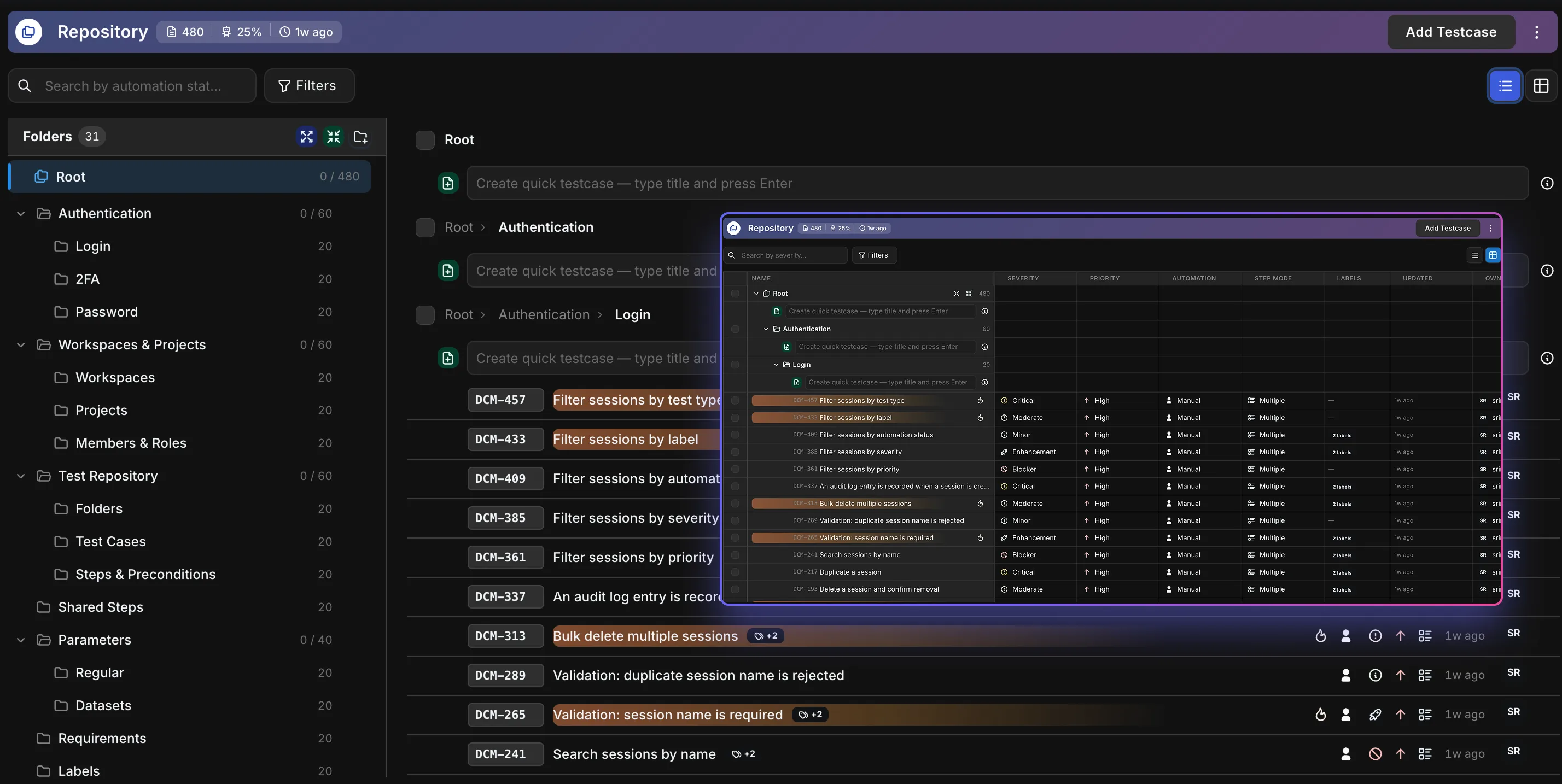
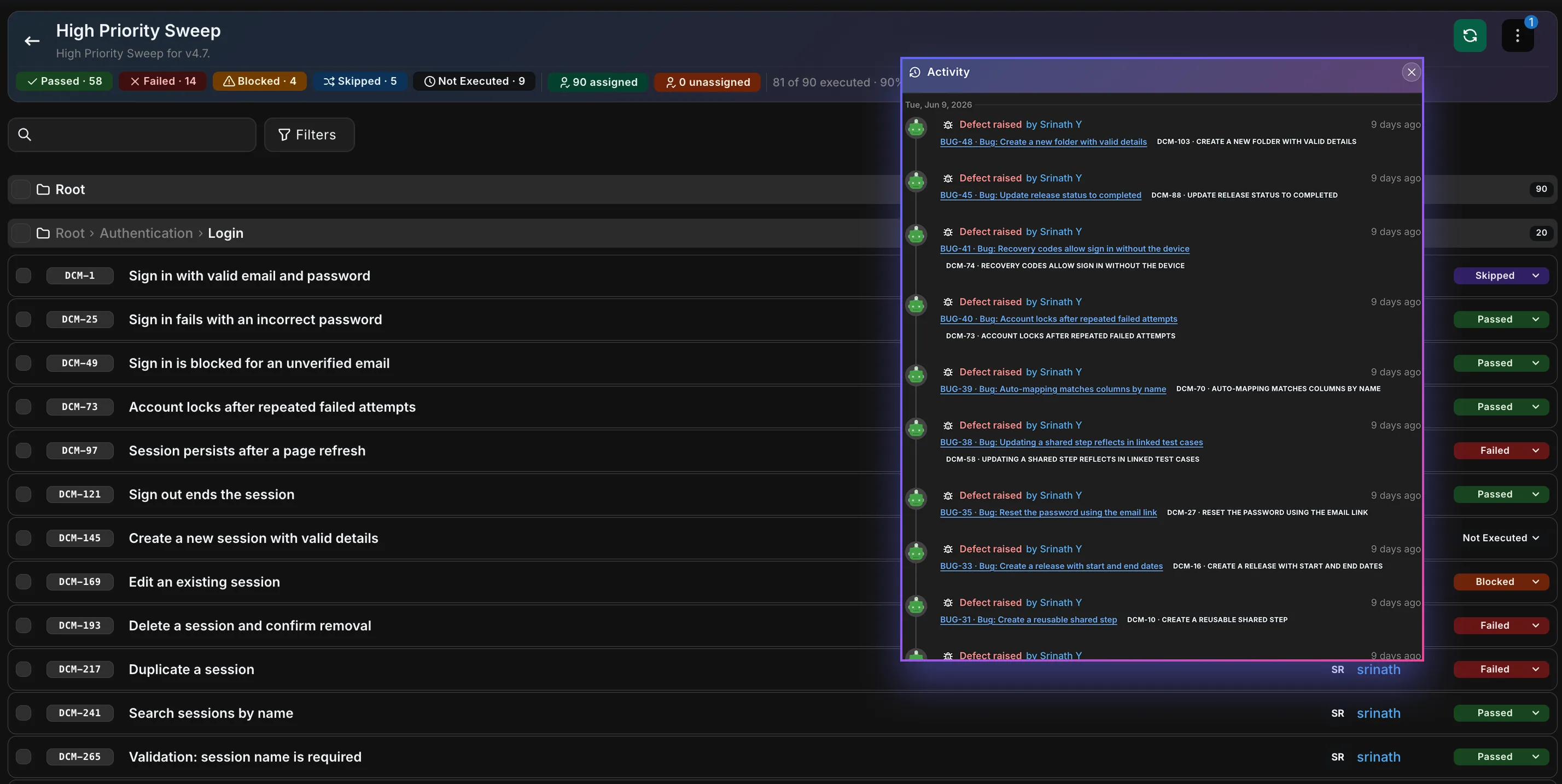
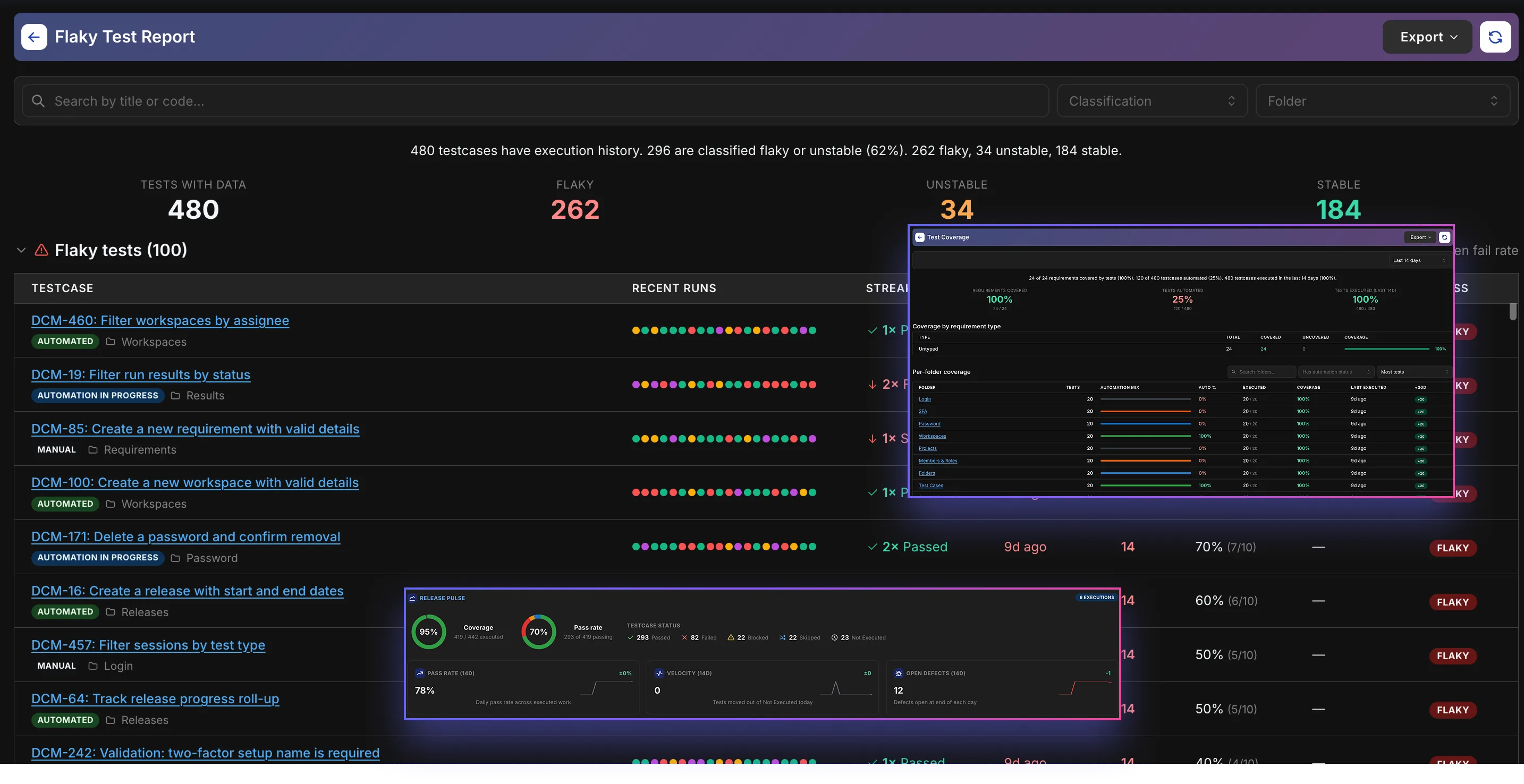
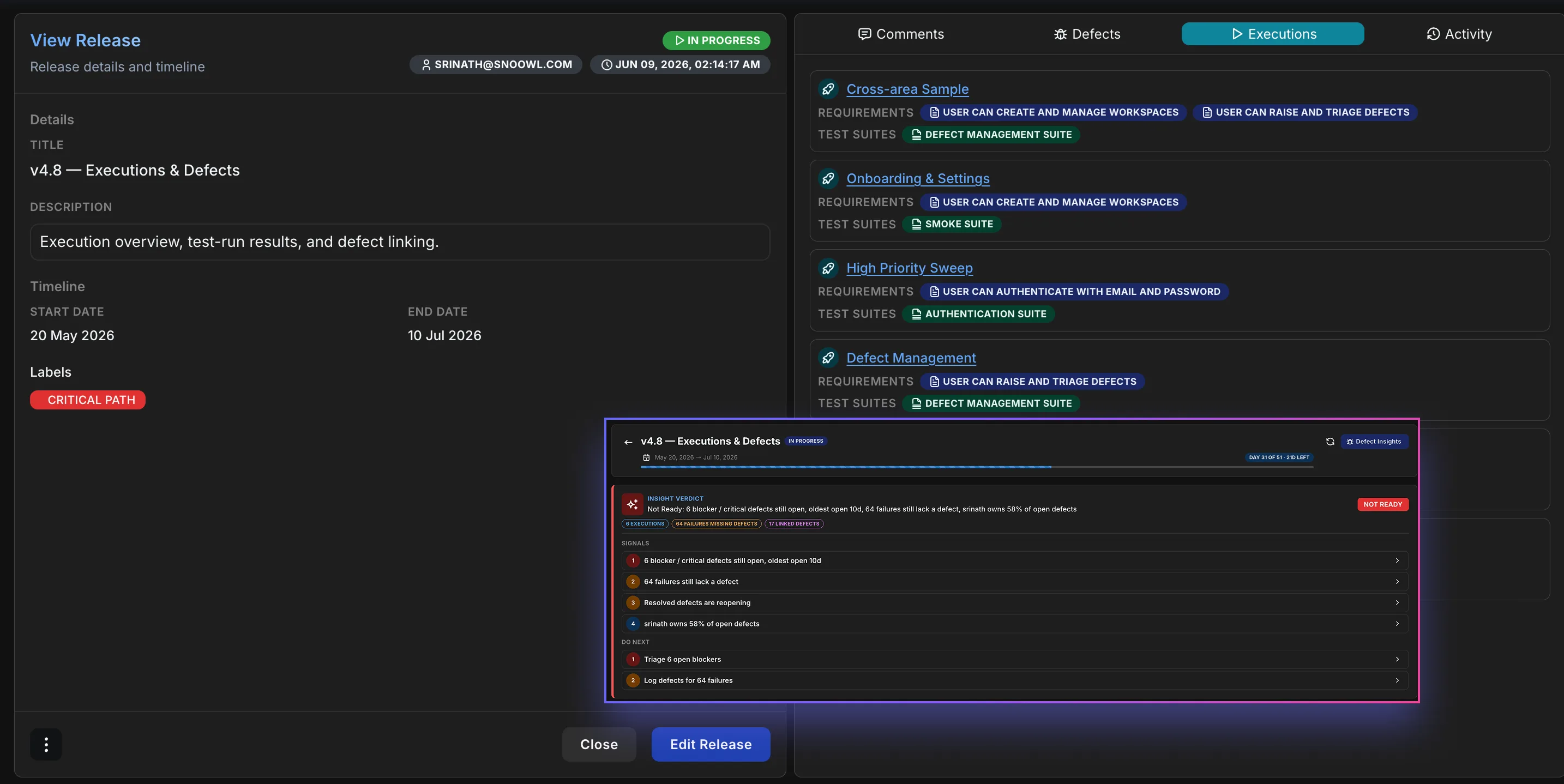
Hawzu vs SpiraTest, at a glance
Comparison reflects publicly available information and is kept as fair as we can make it. Pricing checked 1 Aug 2026 against SpiraTest's own published pricing. Details may change — check their site for the latest. Last updated 13 Sep 2026.
Why teams pick Hawzu
One product with everything in it — you don't move up to a bigger product to get planning or program features.
A scored go/no-go readiness dashboard with an AI-written summary and a frozen sign-off snapshot, so the ship decision is evidenced.
Observatory analytics built around QA questions rather than report templates: flaky detection, defect MTTR and reopen rate, coverage roll-up, project health score.
Self-serve in minutes — no edition sizing exercise to work out how many concurrent seats you need.
AI test case generation and semantic search over your defects, grounded in your real data.
One product also means one place for an agent to ask. Hawzu's MCP endpoint hands a connected client your records — read-only, capped in size, and never spanning more than the workspace it was granted.
When SpiraTest might still make sense
On-premise deployment, including perpetual licences, with a long track record in regulated and validated environments. Hawzu is cloud-only today.
Concurrent-user licensing suits organisations with many occasional testers — unlimited named users sharing a smaller pool of seats can cost far less than per-seat.
Real ALM depth if you need it: risk management, program-level planning and portfolio reporting in SpiraTeam and SpiraPlan.
RemoteLaunch orchestrates external automation runners directly, which goes further than reporting results in via an API.
Common questions
How does concurrent-user licensing compare to Hawzu's pricing?
They're genuinely different shapes. SpiraTest sells editions by simultaneous users with unlimited named accounts, starting around $134/month for a 3-concurrent-user cloud edition — economical if you have many occasional testers. Hawzu is billed per named user, and $20 per member per month billed yearly, with every feature on every plan. If most of your testers log in rarely, do the arithmetic both ways.
Do I need SpiraTeam or SpiraPlan to get the full picture?
SpiraTest covers requirements, tests and defects. Planning, risk and program-level management sit in SpiraTeam and SpiraPlan, so the answer depends on how far past QA you need to go. Hawzu is one product with no upgrade rung — but it's scoped to QA and the release rather than full ALM, so it's narrower than SpiraPlan by design.
Can Hawzu run on-premise like SpiraTest?
Hawzu is cloud-only today; on-prem is on the roadmap, not shipping. If deployment inside your own network is a requirement, SpiraTest is the safer choice.
We use RemoteLaunch to trigger automation. Does Hawzu do that?
No, and it's a real difference. RemoteLaunch orchestrates external test runners from inside SpiraTest. Hawzu is automation-agnostic in the narrower sense: your CI triggers the run, then posts a JUnit/xUnit report or individual results back through the REST API. If you want the test manager to be what kicks off execution, that's a point for Spira.
How do I move SpiraTest data into Hawzu?
Export your test cases to Excel or CSV and run them through Hawzu's import wizard — map Spira's columns onto Hawzu fields, preview a sample, and bring folder structure across with the cases. Embedded images and file links are re-hosted automatically. Send the export to contact@snoowl.com if you'd rather we mapped it.
Does Hawzu do risk management?
No. Risk objects, mitigations and risk-based test prioritisation are SpiraPlan features with no Hawzu equivalent. Hawzu's release readiness scoring weighs execution results, requirement coverage and defect state — useful for a go/no-go, but it isn't formal risk management.
Try Hawzu free
Every feature on every plan. Free for five people, $20 per member after — no credit card.