Hawzu vs ReQtest a transparent ReQtest alternative
ReQtest bundles requirements, bug tracking and test management behind a quote. Hawzu covers the same ground, adds dedicated release management and a scored go/no-go, and publishes its prices — $20 per member per month, free for five. No sales call.
Requirements to release, in one flow.
ReQtest starts from the requirement
Two tools can cover requirements, bugs and tests and still be built for different jobs. ReQtest is organised around specifying a project. Hawzu is organised around shipping one.
ReQtest's heritage is requirements management, and it stayed there. The requirements module is the most developed part of the product, the agile board and reporting are built around it, and there's even a procurement module for evaluating vendors — an unusual inclusion that tells you who it is for. In Nordic enterprises running structured, specification-led projects it has a long track record and local support to match.
That shape suits work where the hard question is did we build what was specified. Requirements are agreed, tests prove them, bugs come back against them, and the project closes when the matrix is green. For public-sector procurement or a fixed-scope programme, that is the right model and it is not the job Hawzu is built for.
It's less suited to continuous delivery, where the hard question is can we ship this Thursday. There's no release object in ReQtest, so nothing measures coverage or defect state against a specific shipment, and no readiness verdict comes out the other end. Pricing is quote-only too, which for a ten-person team evaluating tools means a sales conversation before you can even compare.
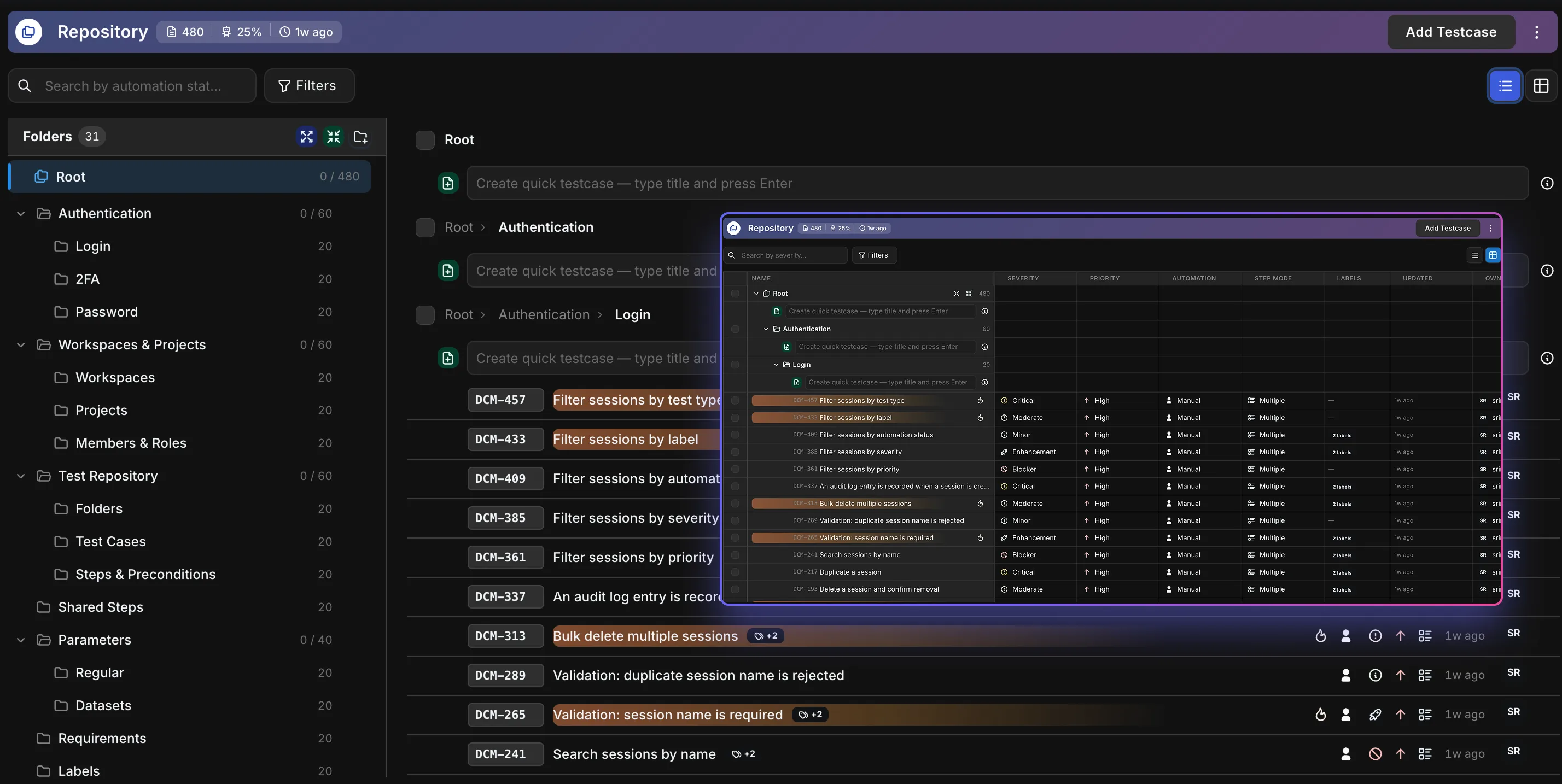
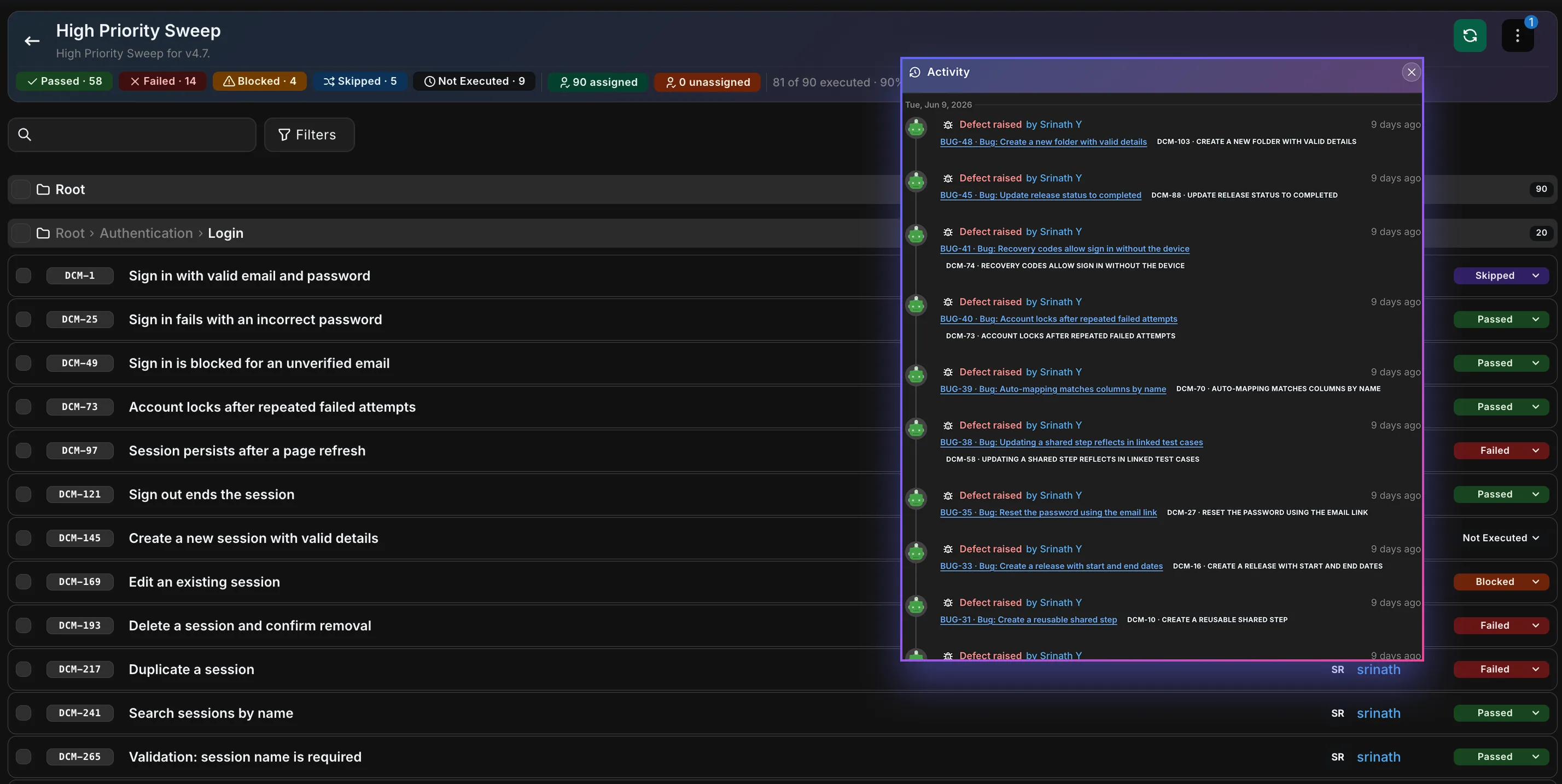
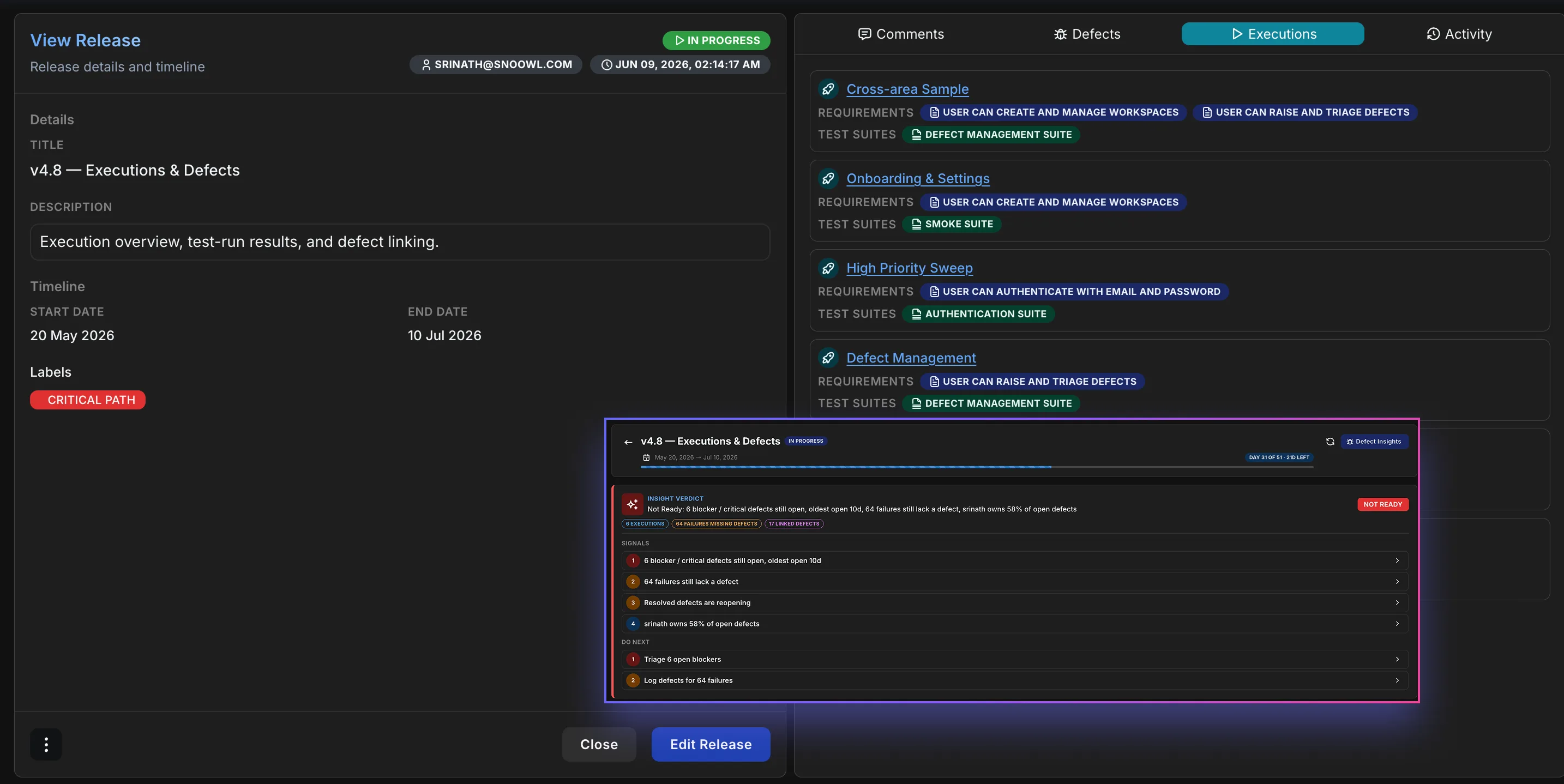
Hawzu covers the same three areas and adds the fourth: executions gated to a release, coverage rolled up a requirement tree for that release, defect aging feeding a scored go/no-go, and a frozen sign-off snapshot. Published pricing, self-serve signup. What it doesn't have is a procurement module, and if you use that one, note it.
See Hawzu in action
Anyone can claim they beat ReQtest. Here's exactly what we built.
Hawzu vs ReQtest, at a glance
Comparison reflects publicly available information and is kept as fair as we can make it. Pricing checked 1 Aug 2026 against ReQtest's own published pricing. Details may change — check their site for the latest. Last updated 13 Sep 2026.
Why teams pick Hawzu
Transparent and self-serve — sign up and start, rather than requesting a quote to find out what it costs.
Dedicated release management with release-gated executions, requirement coverage and burndown against the release.
A scored go/no-go readiness dashboard with an AI-written summary and a frozen sign-off snapshot for the ship decision.
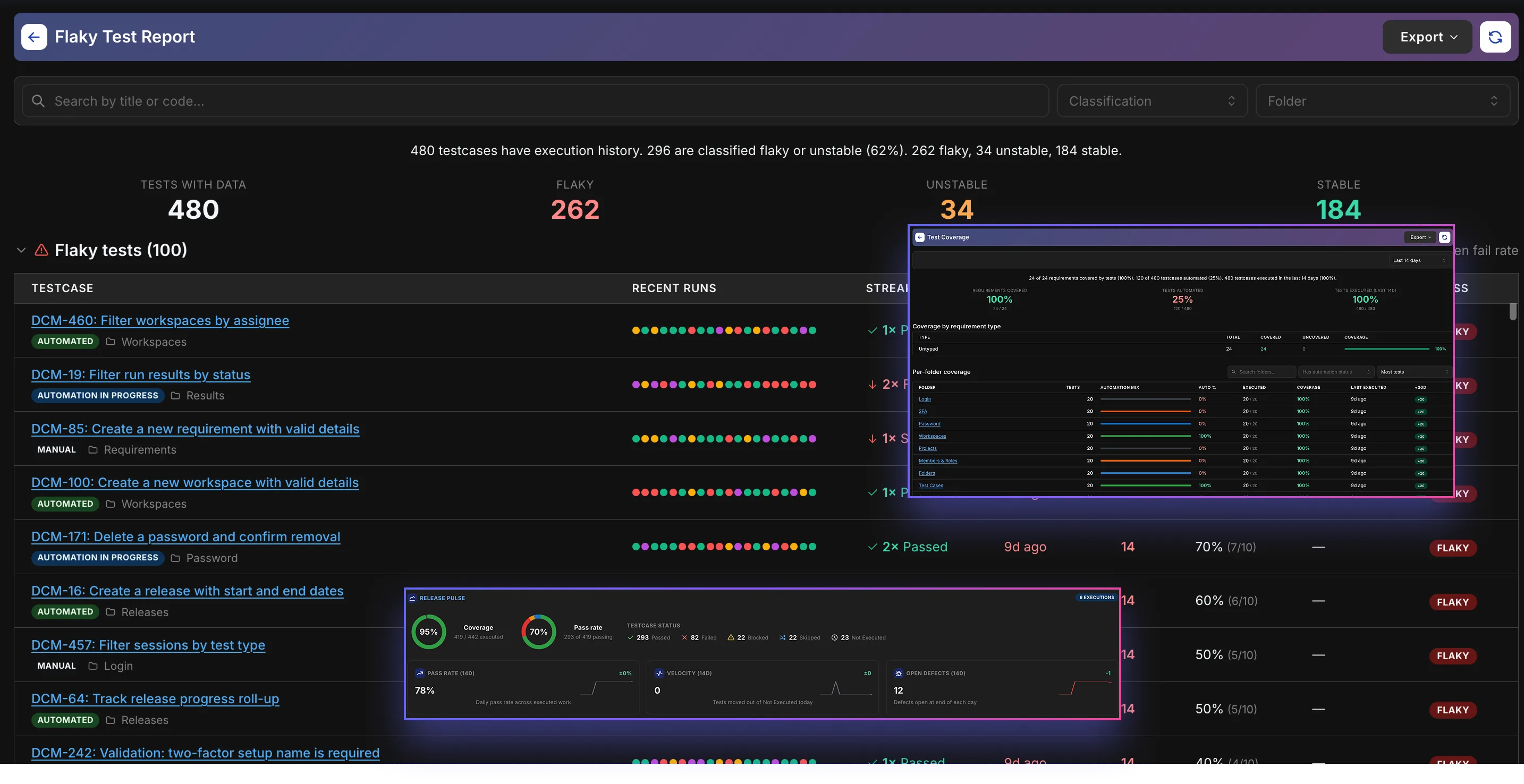
Observatory analytics built for QA questions: flaky-test detection, defect aging and MTTR, reopen rate, project health score.
Automation-agnostic — keep Selenium, Playwright, or Cypress and report results in via API.
Every feature, no quote, no sales call — free for five people, $20 per member after.
You can ask about all three from elsewhere. Hawzu answers MCP, so a client reads requirements, cases and releases with no export, copy or sync — and no path to edit any of it.
When ReQtest might still make sense
ReQtest's requirements management is its heritage and its strongest area — well suited to requirements-led, non-agile projects with formal acceptance.
The procurement module covers ground we don't touch at all, which matters if you're evaluating vendors alongside running the project.
Visual bug reporting with video, image and voice capture makes it easy for non-technical reporters to file something useful.
A long-established presence in Nordic enterprises, with the local support and language coverage that comes with it.
Common questions
What does ReQtest cost compared to Hawzu?
ReQtest doesn't publish a price list — you request a quote, and third-party listings vary widely enough that we won't repeat a number here. Hawzu publishes its prices: $20 per member per month billed yearly, with a free plan for five and every feature on both.
Both cover requirements, tests and bugs — so what's different?
The release. ReQtest is organised around running a requirements-led project; Hawzu is organised around shipping a release. Executions are gated to a release, coverage and burndown are measured against it, and it ends in a scored go/no-go with a frozen sign-off snapshot.
We use ReQtest's procurement module. Does Hawzu have one?
No — that's outside what Hawzu does entirely. If vendor evaluation and procurement sit in the same tool as your requirements today, moving to Hawzu means that workflow goes somewhere else.
How do I move ReQtest data into Hawzu?
Export your requirements and test cases to Excel or CSV and run them through Hawzu's import wizard — map ReQtest's columns onto Hawzu fields, preview a sample, and bring structure across. Embedded images and file links are re-hosted into Hawzu automatically. Send the export to contact@snoowl.com and we'll map it for you.
How does Hawzu handle requirements compared to ReQtest?
Requirements are native objects with hierarchy, sub-requirements and tasks, and coverage rolls up the tree automatically into a traceability matrix. Requirements depth is ReQtest's strongest area and this is comparable ground. Where Hawzu differs is what the coverage feeds: a scored release readiness decision rather than a project report.
Can Hawzu take results from our automated tests?
Yes — post a JUnit or xUnit XML report to a single endpoint, or push individual results through the REST API with a scoped token. Automation is a weaker area for ReQtest, so if a meaningful share of your suite is automated this is one of the clearer practical differences.
Try Hawzu free
Every feature on every plan. Free for five people, $20 per member after — no credit card.